Energy costs

Gas and oil: prices down, but the alert remains high

The heatwave is putting further pressure on gas supplies, whilst the outstanding issues in the US-Iran agreement are keeping tensions high over crude oil

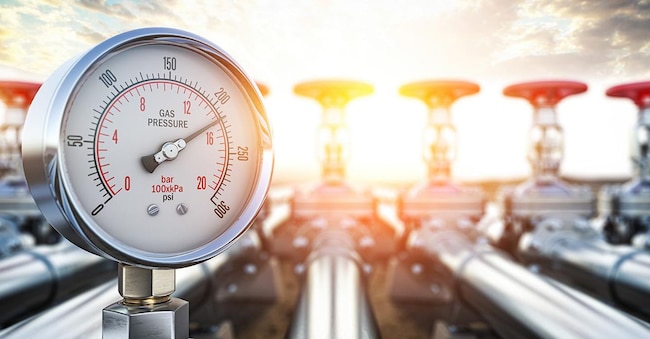
Manometro per la misurazione della pressione del gas su una conduttura. (Adobe Stock)

3' min read

Translated by AI
Versione italiana

3' min read

Translated by AI
Versione italiana

We are a long way from the peaks of 2022, when the Russian invasion of Ukraine sent gas prices soaring. At that time, in fact, the price on the Amsterdam market – Europe’s main trading hub for this commodity – rose above 339 euros per megawatt-hour.

The war in Iran has put renewed pressure on energy costs and, above all, on the price of crude oil, which just a couple of months ago had risen back above $100 a barrel – as it had then – due to the closure of the Strait of Hormuz, through which oil tankers pass. The preliminary agreements between Washington and Tehran, however, have sent oil prices tumbling. Oil has fallen to a four-month low (US WTI at $67 and London Brent at $70).

Loading...

Gas prices, on the other hand, rose above 60 euros last March and are now hovering around 40 euros. This is double the average of 20 euros seen before the Covid-19 pandemic and the subsequent international tensions that disrupted supplies. The main factor driving up gas prices is increased consumption due to the heatwave that has gripped the globe, whilst the issues surrounding oil cannot be considered fully resolved.

Risks associated with catalytic gas

Much of the global turmoil is being felt in gas prices, including the extreme heatwave that is forcing us to use more electricity in an attempt to mitigate the numerous negative effects on daily life.

Norbert Rücker, Head of Economics and Next Generation Research at Julius Baer, explains that the natural gas market is subject to risks that are difficult to control, ranging from geopolitics to weather conditions. “With the rapid reopening of the Strait of Hormuz,” says Rücker, “the focus is shifting from geopolitics to summer weather conditions, against a backdrop where climate change is undeniably altering risk profiles. The war with Iran and the temporary halt to exports from Qatar have led to a supply shortfall, offset by a combination of increased exports from other regions, fuel substitution – particularly in power stations – and the drawing down of stockpiles, although to a much lesser extent than with oil.”

Neutral forecast

The heatwave has already taken its toll, regardless of any forthcoming easing, particularly in Europe, where gas supplies have been depleted since last year. It is not easy to predict when the balance between supply and demand can be restored. “Although the natural gas market,” adds Rücker, “is expected to see an improvement in supply similar to that observed for oil, and downward pressure on prices in the long term, we are maintaining our neutral stance. The risks associated with summer weather conditions will, in fact, persist for some time yet. After the summer, the storage deficit in Europe is expected to narrow.”

Caution over crude oil

The performance of oil on the stock market is linked to various factors, primarily geopolitical issues and the ability to pass through the Strait of Hormuz. “In recent trading sessions,” explains Filippo Diodovich, senior market strategist at IG Italia, “crude oil has remained fairly stable. Prices are still relatively low, but they do nevertheless reflect a slight premium for the geopolitical risk associated with the Strait of Hormuz and tensions in the Middle East.”

According to Diodovich, the premium could rise significantly if negotiations between the United States and Iran fail to clarify key issues such as Iran’s stocks of enriched uranium or the security of shipping in the Strait of Hormuz, and in thethe event that the talks fail, the conflict could flare up again, leading to attacks on energy infrastructure, disruptions to trade routes and new sanctions, although this scenario currently appears unlikely. “For now,” concludes Diodovich, “oil prices appear stable and show no signs of immediate strain. However, given the risks of fresh clashes, uncertainty over the full normalisation of transit through the Strait of Hormuz, fragile negotiations and high temperatures, it is difficult to envisage a significant fall in energy prices in the very short term.”

Copyright reserved ©
Loading...

Brand connect

Loading...

Newsletter

Notizie e approfondimenti sugli avvenimenti politici, economici e finanziari.

Iscriviti