Italy-Great Britain-Japan project

Gcap, the world's largest future fighter-bomber: this is what it will look like

The Gcap, the sixth-generation fighter-bomber developed by Italy, Great Britain and Japan, will be the largest and most advanced combat aircraft ever made

From our correspondent in Farnborough Gianni Dragoni

5' min read

5' min read

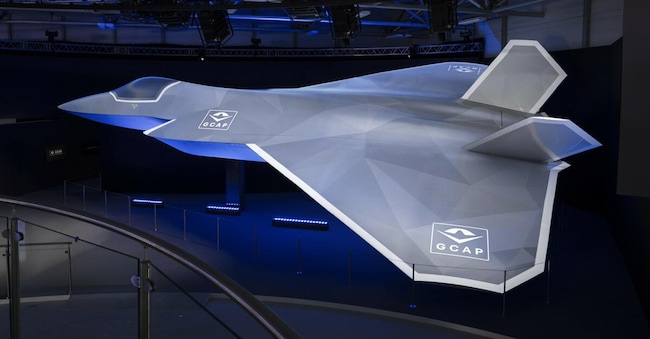
The Gcap, the future fighter-bomber that Britain is studying together with Italy and Japan, will be the world's largest fighter aircraft to date. A new conceptual model of the Gcap, the programme that was launched in 2018 under the name Tempest, was unveiled at Farnborough , in South London, at the opening of the aerospace show that this year sees a massive presence of industrial groups, especially in the defence sector, galvanised by the increase in military spending that was decided following the Russia-Ukraine war.

Strategic Partners

.

The three partner nations of the Global Combat Air Program (Gcap), together for the first time at the Farnborough show, together with the three strategic industrial partners, Bae Systems (Great Britain), Leonardo (Italy) and Mitsubishi Heavy Industries (Japan), illustrated the steps forward in the programme that will lead to the sixth-generation fighter.

Loading...

Bigger wing

.

"The new concept model on display at the Gcap stand features an advanced design with a larger wingspan than previous concepts to improve the aircraft's aerodynamics," says a joint statement from the three industry groups. The new wing has a delta shape and the aircraft, in the presented concept, has impressive dimensions.

Crosetto and the new British Prime Minister

.

The Minister of Defence, Guido Crosetto , who last December signed the international treaty with the other two countries providing for a two-tier structure for the Gcap, a government agency and an industrial structure, with headquarters in Great Britain, arrived in London. Speaking at the event, in the Bae Systems Pavilion, was the new British Prime Minister, Sir Keir Starmer, who said he was 'committed to increasing military spending to 2.5% of GDP'.

Where is the work

?

The aircraft is expected to enter service in 2035. "We are continuing the engineering work," explained Guglielmo Maviglia, director of Gcap for Leonardo. Engineers from the three groups 'are working together under a collaboration agreement on the design and development of the next-generation fighter aircraft using a range of innovative digital tools and technologies, including computer modelling and virtual reality, which will enable the aircraft's design from the concept phase,' the joint statement said.
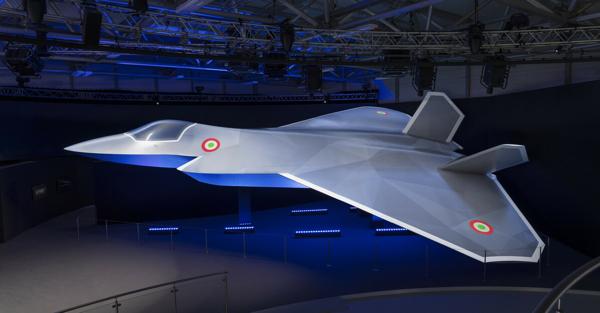
Il nuovo modello del Gcap

Il Gcap, il futuro cacciabombardiere che la Gran Bretagna sta studiando insieme a Italia e Giappone, sarà l’aereo da combattimento più grande finora conosciuto nel mondo

To be determined who does what

.

The division of labour, i.e. who will do what, has not yet been established. In the most important European aircraft programme, the Eurofighter , Leonardo builds the left wing in Turin Caselle. For the Gcap, no decision has yet been made. "The pace of the programme is extraordinary and is centred on solid foundations, an industrial legacy shared with each country, under the leadership of their respective governments. Since the treaty was signed in December 2023, the programme has seen a strong commitment from everyone. Each brings different but complementary qualities and needs. Right now, we are working to exchange mutual knowledge and achieve common goals," Maviglia said.

London will be the Tempest

.

In the UK, the aircraft will be called Tempest, says the three companies' statement, thus confirming the name under which the programme was launched six years ago. Herman Claesen, managing director of Future Combat Air Systems, for Bae Systems, said: 'In the 18 months since the launch of the Global Combat Air Programme, we have worked closely with our industry partners in Japan and Italy, and with the three governments, to understand and align the requirements for a next-generation fighter. The new model, unveiled at the Farnborough International Air Show, shows significant progress in the design and conceptualisation of this future fighter. We will continue to test and evolve the design as we approach the next phase of the programme.

The collaboration with Japan

.

Hitoshi Shiraishi, senior fellow for Gcap at Mitsubishi Heavy Industries said: 'Mhi sees the project as a valuable opportunity to deepen knowledge, as Gcap is a joint development programme between Japan, Great Britain and Italy, we expect to achieve better results and deeper understanding by combining the different cultures, experiences and knowledge of the three industries involved.

Tens of thousands of people expected to work

.

The fighter aircraft, due to enter service in 2035, will be one of the most advanced, interoperable, adaptable and connected aircraft in service in the world, relying on an intelligent weapon system, a software-based interactive cockpit, integrated sensors and a next-generation radar capable of providing 10,000 times more data than current systems. The three companies state that 'Gcap will employ tens of thousands of skilled people in the UK, Japan and Italy, developing industrial skills and technologies for the future'.

Successor of the Eurofighter

.

The programme was launched by Britain in July 2018, at the Farnborough aerospace show. It was joined first by Italy and then Japan. The aim is to make the successor to the Eurofighter Typhoon. The development phase of the new combat aircraft is scheduled to begin in 2024. The aircraft is expected to enter service in 2035. In the meantime, the Italian government has asked Parliament for permission to buy another 24 Eurofighters.

Dopo 35 anni l'Aeronautica Militare dice addio al caccia Amx "Ghibli"

Drone swarms

.

The Gcap aims to produce a sixth-generation fighter-bomber. Sixth generation in the jargon of the arms industry means an aircraft more advanced than the F-35, the deadly, but controversial for its high costs, fighter-bomber produced by Lockheed in an international programme with many countries, to which Italy has also joined. For the sake of simplicity, we speak of an aircraft, but it will be a more complex system, with a combat aircraft accompanied by swarms in which there will also be drones, i.e., unmanned aircraft on board, the technicians in the sector speak of a system of systems. How it will be articulated in concrete terms is a matter of secrecy.

The first accession with Profumo

When the Tempest programme was launched in July 2018 at the Farnborough show the group's CEO was Alessandro Profumo, whom the Merloni government replaced on 9 May 2023 with Roberto Cingolani . The lead partner from the beginning is Bae Systems, the leading European group in the military industry. Leonardo joined initially only through its British electronics subsidiaries. It could not participate through Italian companies until the government gave the green light for industrial participation and financing.

Caccia di sesta generazione Gcap, Crosetto: opportunità irrinunciabile

The start of the Conte government

The green light for direct Italian participation only came later, during the Conte government, when an initial multi-year allocation of two billion euro was made. In 2022, Japan joined and the name was changed to Gcap. This year the development phase should begin. Under the supervision of the government coordination agency, the consortium formed by Leonardo, Mitsubishi and Bae aims to complete the design of the aircraft by 2027.

Italy will spend 8.8 billion for development

The multi-year Defence Planning Document for the three-year period 2023-2025 presented to Parliament by Crosetto last year foresees an increase in the planned expenditure for the programme, from the 3.8 billion already estimated in 2022 to 8.8 billion over a multi-year period until 2037. More than 6 billion were added to the first allocation of the Conte government by the Draghi and Meloni governments, with additional funding approved by Parliament. It is expected that there will be many Italian companies involved in the industrial activity. For now, working directly with the lead company Leonardo are the companies Mbda Italia, Elettronica and, for engines, Avio Aero (controlled by General Electric). This money will only be spent for the industrial development phase, without considering the sums needed for the future purchase of the aircraft that would replace the Eurofighters.

The competing programme between France and Germany

.

In Europe, the Gcap coexists with a similar programme of a new fighter-bomber, the Fcas launched in 2017 by France and Germany. Even this programme is not yet under development. It is the opinion of many analysts that there are not enough resources in Europe for two expensive military aircraft programmes. But to unify them would require convincing France's Dassault to give up its industrial sovereignty. Dassault is the company that made the Mirage and the Rafale, the great competitors of the Eurofighter and the American fighter planes. How this game will end is not yet decided.

Copyright reserved ©
  • Gianni Dragoni

    Gianni DragoniCaporedattore, inviato

    Luogo: Roma

    Lingue parlate: italiano, inglese, francese

    Argomenti: economia, finanza, industria aerospazio, difesa, industria ferroviaria, trasporto aereo, grandi aziende pubbliche, privatizzazioni, bilanci società di calcio, stipendi manager, governance società quotate, conflitti d'interesse

Loading...

Brand connect

Loading...

Newsletter

Notizie e approfondimenti sugli avvenimenti politici, economici e finanziari.

Iscriviti