
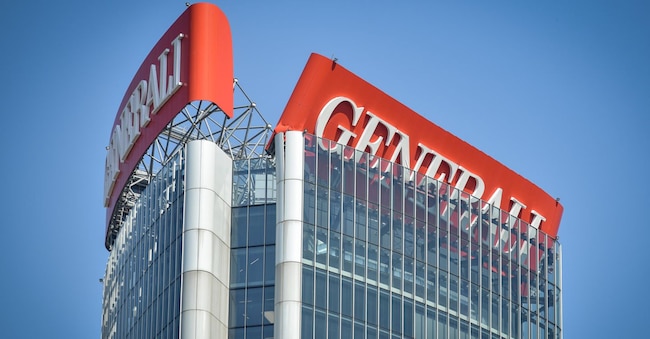
Generali sign, Citylife district returns to normal, but the public prosecutor's office is working on a culpable investigation
It remains to be seen whether the heat of these days may have caused one of the tie rods to collapse. The mystery of the ignored safety signs
by Sara Monaci
2' min read
2' min read
Among the possible causes of the collapse of the Generali sign on the Hadid Tower, in Milan's prestigious Citylife district, is the intense heat of the last few days, which allegedly compromised the internal structure of one of the tie-rods. However, there could also be possible negligence behind the choice of materials.
The report of the Milan Fire Brigade may clarify this soon. From an aerial inspection carried out with drones, according to rumours, the large steel structure was also equipped with safety sensors and it still has to be clarified whether it had reported anything abnormal in recent days. In fact, it is unlikely that normal weather phenomena such as winds or extreme temperatures could have caused a collapse per se, as these factors are usually widely anticipated in the design phase.
Architect Mario Cucinella, who designed the Porta Nuova Unipol Tower in Milan, made a few statements on these issues. According to him, climate change on the design of a skyscraper "has a great impact. For new buildings it is essential to take this into account. Temperatures become an important criterion for designing buildings. So are wind speeds or fire and safety regulations. The sign on the Unipol Tower 'is not designed by me. Even Zaha Hadid did not design the Generali one. These are recognisable buildings even without inscriptions and we would like to avoid them, but the marketing offices think otherwise'.
It will therefore be necessary to reconstruct who designed, contracted and actually built the signs.
The one that collapsed is on the east façade of the 44-storey, 177-metre-high Hadid building, next to the towers of the other archistars Arata Isozaki and Daniel Libeskind. According to an initial reconstruction, as the collapse caused a loud roar, there was a break in one of the steel tie rods, possibly due to the material melting due to high temperatures. Prosecutor Francesca Celle's file for culpable collapse, which has just been opened, will try to clarify this. All possibilities will be examined, reconstructing possible chains of responsibility. The public prosecutor's office led by Marcello Viola will request a technical consultancy. In the meantime, the seizure of the entire roof has been ordered.


