

Medicines, generics do not break through in the South: Calabrians spend twice as much as people from Trentino on branded ones
In southern regions, patients prefer to buy branded medicine, spending up to twice as much more than those in the north. In 2024 this differential was 1 billion

3' min read
3' min read
From Rome on down, generic drugs do not cross an imaginary frontier - a sort of Gothic line - of unfounded prejudices and fears. Less expensive and equal to the branded ones in terms of efficacy and active ingredient, they continue not to make a breach in the hearts of the Sicilians, Apulians, Calabrians, Campanians, Molisians, up to the Marche and the inhabitants of Lazio all willing to spend twice as much - from 20 to 24 euro per head per year more - than those who live in the North where the outlay is almost half: in Bolzano or Trento people spend per capita 11.3 euro and 12.7 euro to get branded medicines, in Lombardy 13.8 euro, in Piedmont 13.6, in Veneto and Emilia Romagna respectively 13.9 and 14.4 euro.
The hefty bill Italians have been paying for not renouncing 'branded' drugs for almost 10 years now totals around a billion a year, as shown by the latest data collected by Egualia - the association of manufacturers of equivalent drugs, i.e. generics - which will be published in these days in their annual report: in 2024 the extra cost paid by citizens (the so-called 'differential') to secure the branded drug was in fact 1.034 billion, in 2017 it was practically at the same level and that is 1.050 billion, demonstrating how some habits are difficult to unhinge. Particularly in the South (including Lazio) where incomes are lowest but where more than half (555 million) of this additional cost is spent despite the many communication campaigns that have taken place over the years on the efficacy of equivalents. So much so that the dossier is now on the table of Health Minister Orazio Schillaci to try to study some instrument that would incentivise their use, at least at a uniform level throughout the country. Not least because Italy is one of the countries at the bottom of the league table in terms of generic consumption, coming third last in Europe.
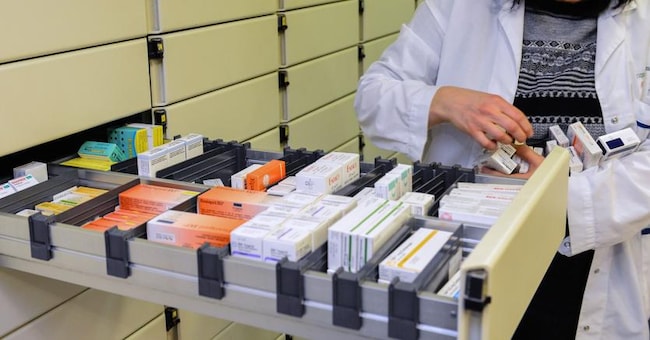
Epuure these medicines - produced on the basis of expired patents, so it is possible to 'copy' the same molecule - have the same active ingredient, the same pharmaceutical form, the same dosage, the same route of administration and the same therapeutic indications as the original. All that changes is the name (which is that of the active ingredient) and the box that contains them, which is different perhaps in shape and colour. Differences that give rise to caution and prejudice among patients, so much so that one in three does not trust and still has doubts as to whether they have the same properties, which is why they spend more to get the branded one. In fact, it should be remembered that if the citizen asks for the 'brand name' medicine instead of the 'generic' one - even though the pharmacist has to offer it to him - he will have to pay the difference between the price of the medicine requested and the reimbursement price of the equivalent. An extra expense all to be borne precisely by the pockets of patients.
"The competition generated by equivalents from 2012 to date has generated savings in terms of lower spending for the SSN of more than EUR 6 billion. The SSN and citizens could benefit further if all regions increased both the use of off-patent drugs and that of equivalent drugs, for the latter at least aligning themselves with the Italian average, which in 2024 stood at 31.7% of volume consumption and 28.8% of net regional SSN expenditure," comments Egualia president Stefano Collatina. He recalls how 'their arrival on the market at a lower price by law than the originator, which in the meantime has lost its patent, leads to a downward realignment of price lists, with a beneficial competitive effect. Citizens of certain regions where the penetration of equivalents is lower could have an even greater advantage: I refer in particular to the inhabitants of southern regions such as Sicily, Apulia, Campania, but also Latium and Calabria. If they had resorted to equivalents like the citizens of Lombardy, Emilia, and Friuli, they could have saved almost 70 million in price differential that they spent out of their own pockets to get the branded drug instead of the equivalent".


