
European Court in Strasbourg orders the Getty to return Lysippos' Victorious Athlete to Italy
The European Court in Strasbourg ruled that Italy has the right to get Lisippus' Victorious Athlete back from the Getty Museum
3' min read
3' min read
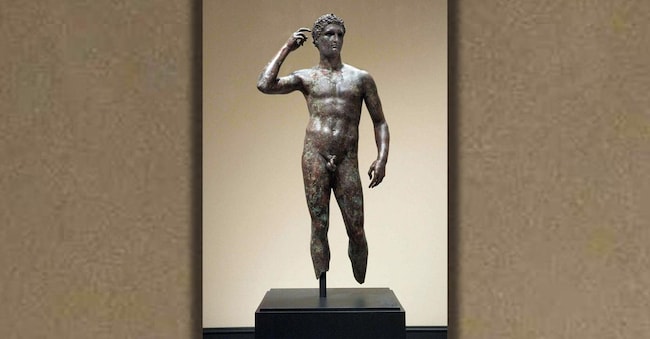
For the European Court in Strasbourg, the Victorious Athlete by Lysippus must return to Italy: our country has won the last round of the legal dispute with the Getty museum. The Court has in fact issued a ruling that unequivocally recognises the Italian State's rights to the work, a bronze statue attributed to the sculptor Lysippus, found in 1964 by Italian fishermen in the waters of the Adriatic Sea off the Marche coast and later stolen abroad.
"Italy, in taking action against the Getty Museum in Malibu to obtain the return of a Greek bronze statue attributed to Lysippus, acted within its rights, without violating the European Convention on Human Rights," the European Court of Human Rights in Strasbourg unanimously ruled in its judgment on the case brought by the J. Paul Getty Trust against the Italian state.
Loading...
European Convention on Human Rights
For the Strasbourg judges, there was no violation of Article 1 of Protocol 1 (protection of property) of the European Convention on Human Rights. The case concerned a confiscation order, issued by the Italian authorities, aimed at recovering the Victorious Athlete, a bronze statue dating back to the classical Greek period (300-100 BC) attributed to Lysippus, fished out by chance from a fishing boat off the coast of Fano in 1964 and purchased by the Getty Museum in 1977.
Getty Villa Museum in Malibu
The controversy over the find has been going on for many years. The statue, which was allegedly illegally acquired by the J. Paul Getty Trust, is currently at the Getty Villa Museum in Malibu (California, USA). The Italian authorities, the Court recalls, acted with the aim of recovering a cultural heritage illegally exported. The Court also mentions, in particular, the 'negligence' or 'bad faith' of the Getty Trust, which purchased the statue despite being aware of the Italian State's claims and its efforts to recover it. Therefore, the confiscation measure is 'proportionate to the aim of ensuring the return of an object that is part of Italy's cultural heritage'.
Getty, which bought it in 1977 for $4 million, has long defended its right to the statue, arguing that it was found in international waters and was never part of Italy's cultural heritage.


Brand connect
Loading...
