

Ghost nets haunt the seabed
A consortium funded by the National Recovery and Resilience Plan (PNRR) has mapped an area equivalent to 200 football pitches across Sicily, Campania, Puglia, Marche and Veneto, and recovered 14 tonnes of waste (fishing nets and gear). Cecilia Silvestri (GhostNets project): ‘We also handle the recycling of these materials. In some cases, through the pyrolysis process, they are turned into fuel for energy production.’

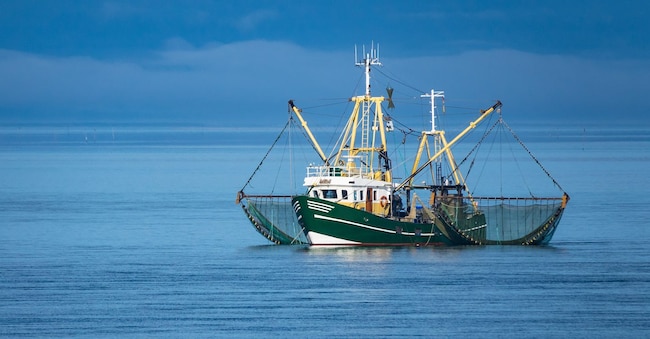
Fourteen tonnes of ghost nets recovered, an area mapped equivalent to 200 football pitches and an area cleared equivalent to 50. And a model to be replicated across the entire Mediterranean region. This is not an end in itself but a starting point: the GhostNets project, which lasted five years and was funded by the PNRR Mer (Marine Ecosystem Restoration), which has a budget of 400 million euros and is led by ISPRA, which ‘entrusted the economic operators Fondazione Marevivo, Castalia Consorzio Stabile and CoNISMa, the National Inter-University Consortium for Marine Sciences, to carry out the GhostNets operation, which involved the recovery of fishing nets and gear abandoned or accidentally lost at sea’. ‘The programme was concluded in June as planned,’ emphasises Cecilia Silvestri, the lead researcher on the GhostNets project, which specifically addresses ghost nets, ‘we had 400 million, and 4.7 were dedicated specifically to the recovery of ghost nets’. The project also involved the construction of a vessel and all the necessary equipment to map and sample the seabed to a depth of 4,000 metres. The programme included measures to restore and protect marine habitats, strengthen the national system for monitoring marine and coastal ecosystems, and map coastal and marine habitats of conservation interest in Italian waters.
“The work involved sampling an area covering more than 200 football pitches, sites where an assessment of the extent of damage was carried out,” he adds. “In the next phase, remediation was carried out and, in some cases, restoration work was undertaken.” Following the survey of the areas, operations covered 20 marine zones. These ranged from Sicily – including Syracuse, Avola and Milazzo – to Chioggia, continuing along the coasts of the Naples area in Campania, Lazio and Puglia, as well as the Marche and Emilia-Romagna. Then came the Mar Piccolo in Taranto and the Gaiola Underwater Park, where ‘60,000 square metres of seabed were inspected, and over 30 ghost nets, some up to 260 metres long (roughly equivalent to a 100-storey skyscraper), were recovered from a depth of 40–60 metres’. That’s not all. “Areas covering the same size as 50 football pitches have been cleared,” the researcher adds, “that is, 360,000 square metres.” “Analysis of the samples collected,” she adds, “revealed that 86 per cent of the waste on the seabed stems from fishing activities. We’re talking about 14 tonnes collected from 20 sites.”
And then disposal with a focus on the circular economy. A two-pronged approach is being taken for ghost nets and other recovered waste. “In the first, the focus is on material recovery; following the circular economy model, the waste is processed and the raw materials are recovered,” the researcher continues, “whilst in the second, through the pyrolysis process, the waste is converted into fuel for energy production.” A new initiative is now underway, starting with a vessel equipped with technological equipment capable of mapping and sampling the seabed to a depth of 4,000 metres, as well as very high-resolution acoustic instrumentation. “The work that has been carried out,” she adds, “can be replicated anywhere, because this is the most comprehensive and up-to-date study of the entire Mediterranean basin, where other initiatives are being pursued, albeit not in such a structured manner. Take, for example, Spain, Greece and France, as well as numerous associations and the CNR.” As the expert points out, it is mainly non-profit organisations that operate across the Mediterranean. In Greece, there is Enaleia, a social and environmental organisation that successfully engages local fishermen in removing litter and fishing gear from the seabed and coastlines. In Spain, there are the Fundación Oceanogràfic and the Fundación Azul Marino. The long-running Mare Nostrum campaign is active in France, where Sea Shepherd France operates, as well as the Marseille-based association Palana Environnement. Initiatives are also underway in Morocco, where international cooperation projects involving local fishermen are being carried out.
Just a few days ago, researchers from the CNR IRBI, who are working on the acoustic survey known as Medias 2026 (which has been temporarily suspended), identified and recovered a huge drifting net weighing 4 tonnes in the waters off Termini Imerese. The phenomenon of ghost nets has become the focus of numerous projects, including the Green Plasma initiative, promoted by the Polytechnic University of the Marche, which involves technology capable of processing up to 100 kilograms of non-recyclable marine plastic per day, transforming it into syngas, a hydrogen-rich combustible gas that can be used to generate electricity directly in ports and collection areas.

