Agriculture

Giansanti: ‘When it comes to agricultural work, we must punish exploitation, not administrative errors’

The COPA President comments on CAP reform. “We need a unified EU framework for employment. We must maintain the status quo on resources, allocating them to active farmers.”

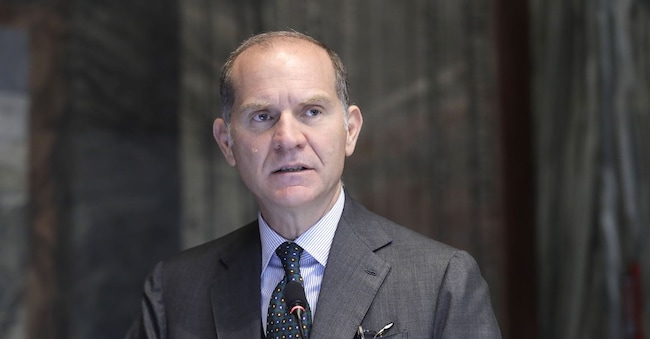
Massimiliano Giansanti Presidente Copa Cogeca (Imagoeconomica)

4' min read

Translated by AI
Versione italiana

4' min read

Translated by AI
Versione italiana

Zero tolerance for illegal labour recruitment in agriculture, whilst also distinguishing between cases of labour exploitation and mere administrative errors, which should not result in cuts to EU aid in the same way as serious infringements. Furthermore, the status quo for the Common Agricultural Policy is confirmed, with the retention of the two-pillar structure, whereby resources are reserved for active farmers without any overlap or confusion with rural or inland areas.

This is the ‘agenda’ of measures that Massimiliano Giansanti, president of Copa Cogeca (and also of Confagricoltura), the umbrella organisation for European farmers’ associations, has identified ahead of the negotiations on the reform of the EU’s Common Agricultural Policy. ‘It is important,’ explains Giansanti, ‘that European agriculture ministers have finally launched a debate on substantive issues. It is now essential that, by the end of the year, an agreement be reached on the financial framework and a general consensus be established that will lead to the stabilisation of funding for the sector. These resources have been fiercely defended through farmers’ demonstrations and the decisive action of the Italian Prime Minister, Giorgia Meloni. The hope is that 10 per cent of the rural target (in addition to CAP funds) will now be allocated, along with an advance of two-thirds of the next medium-term CAP reform. And that the resources will be allocated to active farmers without reference to inland or rural areas.”

Loading...

In short, there is no overlap with other areas.

We need to maintain a regulatory framework dedicated entirely to agricultural activity. We aim to preserve the status quo through two pillars: a system that allows for the flexibility needed to adapt the CAP to the diverse agricultural sectors of the 27 Member States.

And what about ‘social conditionality’ – that is, the possibility of excluding companies that do not comply with labour regulations from receiving EU funding?

We need to clear up any misunderstandings. We are faced with a fragmented regulatory framework in Europe. When it comes to labour, we have 27 different regulatory frameworks. What is punishable in Italia is not elsewhere, and vice versa. And this can result in advantages for some and disadvantages for others. Let us make one thing clear: we are all against illegal labour recruitment and are convinced that this practice must be eradicated. We are all convinced that if a company is found to be exploiting workers, it should not have access to public funds. However, if a company has committed a minor offence or made an administrative error, it cannot be subject to both a fine and a reduction in EU funding.

The problem is that there is no uniform legislation on labour matters. 

That’s right, and that is why we at Copa have adopted a position backed by an absolute majority: not to apply social conditionality, at least until there is a framework legislation on labour that applies to everyone.

Another key issue has also come to the fore in the discussion so far: risk management.

This was a significant achievement by our Minister for Agriculture, Lollobrigida. The issue of risk management had not yet been brought to the table in the CAP reform discussions. It is a key issue in the context of climate change. The insurance system is, in fact, the tool for stabilising farmers’ incomes and enabling effective action to be taken in the face of adverse weather events which, unfortunately, are becoming increasingly frequent.

Loading...

Progress has been made, but to many the negotiations seem to be running a little behind schedule. 

It is true that we are behind schedule on the CAP and the Multiannual Financial Framework. This is a cause for concern amongst farmers. We have submitted a document setting out our key points. We cannot remain in a state of uncertainty. In the coming weeks, we will also be organising street demonstrations to ensure that the voice of European farmers is heard at the prime ministers’ table.

The budget bill has also recently been passed in Italia, containing a number of significant measures for the agricultural sector.

I am very pleased with the Government’s work. We had called for the stabilisation of the agricultural income tax (IRPEF), the continuation of the agricultural diesel scheme and an incentive scheme for technological innovation such as ‘Agricoltura 4.0’. We just hope that, during the parliamentary debate, further resources can be found to allocate to technological innovation.

Have your concerns been eased, at least a little?

Concerns remain about the market crisis. I am thinking, for example, of the fresh-cut produce sector. Production costs and the road haulage crisis have forced many farms out of the market, and they have often been replaced by imported produce. A sector worth one billion euros in Italia is at risk. There needs to be a better distribution of value throughout the supply chain to ensure the economic sustainability of upstream farms.

Copyright reserved ©
Loading...

Brand connect

Loading...

Newsletter

Notizie e approfondimenti sugli avvenimenti politici, economici e finanziari.

Iscriviti