World Economic Forum

Global Gender Gap, still 123 years to achieve gender equality

Italy remains at the bottom of the league table due to unsatisfactory data on labour and political participation

by Monica D'Ascenzo

4' min read

4' min read

Italy lives at the bottom of the league table. Once again, the Global Gender Gap, compiled annually by the World Economic Forum, certifies how far Italy is from the standards of excellence in terms of gender equality and how it is positioned in the lower half of the list of 148 countries taken into consideration. In fact, the 2025 edition certifies that we have moved from 87th place to 85th. A slight improvement, but whether this is due to a step forward by Italy or a step backward by a couple of nations that were ahead of us last year is to be understood. Another figure may better illustrate Italy's position: in Europe we are 35th out of 40 countries, and only Macedonia, Romania, the Czech Republic, Hungary and Turkey appear after us. All the others are ahead of us whether they are Mediterranean, Nordic, Baltic or former Russian countries.

Access to Education

.

Keeping Italy afloat once again is the education sector, where it ranks 51st with a score of 0.998. Girls, who have made up more than half of all graduates in Italy since the early 1990s, now account for 59.9% of all graduates, according to the latest Almalaurea data. There is still a fundamental difference in female percentages between Stem subjects and the humanities, with the former still standing at 41.1%, while in the education and training (94.5%), linguistics (84.5%), psychology (81.1%), healthcare (75.1%) and art and design (72.1%) groups, women are still clearly in the majority. IT and ICT is a sore point, accounting for only 14.5%, as well as

Loading...

industrial and information engineering 26.3% and exercise and sports sciences 30.8%. The fact remains that female students graduate more often and have higher marks than their male peers.

The Labour Node

.

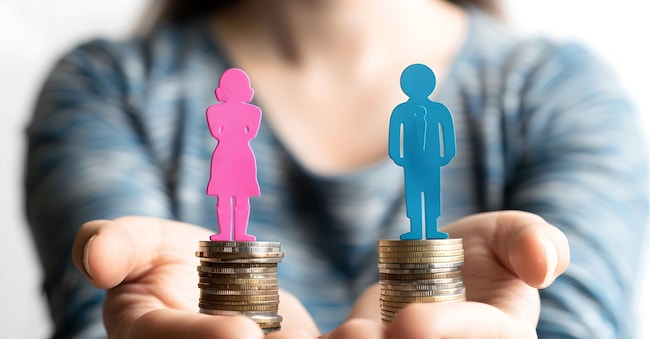
The problem comes in the world of work, as highlighted once again by the Global Gender Gap. Italy's real Achilles heel is in fact female employment, access to careers and the wage gap: in this case the score is only 0.599, which makes the country slip to 117th place. While it is true, in fact, that the percentage of women in work is close to the historical maximum (54.1%), it is also true that the country is far from the Lisbon objectives that indicated 60% as the target in 2010 (15 years ago) and is below the European average by 12.6 points with the lowest value among the 27 EU countries, according to the Cnel-Istat 2025 report "Women's work between obstacles and opportunities".

"With the availability of talent now recognised as one of the main obstacles to economic and business strategies, countries that are able to tap into the full pool of available skills - by fully integrating the vast and still underutilised potential of women - will have a clear competitive advantage, laying a stronger foundation for long-term sustainable growth," warns the Wef report, which indicates that globally, the presence of women in the economy still remains limited to 40.2% of the workforce and 28.8% of management roles.

Career question

.

And it is not a question of preparation, so much so that only 29.5% of female graduates on the labour market reach top positions, despite representing 40.3% of the total workforce. The situation is not dissimilar among women with master's or bachelor's degrees, where the presence at the top stabilises at 30.7% and 30.8% respectively. "As the level of education increases, the gap between the female presence in the labour force and that in management roles widens, signalling a clear mismatch between educational success and real economic inclusion. This disparity highlights the inefficiency of current systems in fully utilising women's skills in decision-making processes and at the top of the economy," the report's authors note.

It is precisely career is another sore point in Italy: among executives only 3 out of 10 are women and last year the trend was halted with a 1.2 per cent drop, according to Linkedin data included in the report of the Global Gender Gap. Closing the picture is the wage gap, which stands at around 12% on average. As of 7 June 202, however, on this front in Europe, companies will have to comply with the EU directive on wage transparency, which introduces stringent new obligations: from indicating pay bands in job advertisements to guaranteeing employees the right to know the criteria behind their salaries, from publishing regular reports on gender pay gaps to implementing processes to mitigate gaps of more than 5%.

A legislative initiative that could help Europe take the lead as the geographical area with the fastest time to achieve parity. Currently, if at the global level the World Economic Forum indicates that it will take 123 years to reach parity, Europe comes in at 'only' 76 years second only to Latin America and the Caribbean (57 years). North America will need 89 years, while at the tail end is Central Asia with 208 years.

The shortage of women in politics

.

If women's employment is indispensable for building a more equitable society, the global sore point is political participation. The improvements since 2006 are undeniable: female ministers make up 25% compared to 12% 20 years ago and the percentage of female prime ministers rose to 33% at the end of last year from 18% in 2006. Political participation, however, is insufficient to make a concrete contribution to government strategies and visions in favour of gender equality. Also because the presence of a few women in or at the head of the executive is not enough. Take Italy: in spite of boasting the first woman prime minister in its history and 33% of women on the parliamentary benches, it scores very low on the World Economic Forum scorecard with 0.255.

'Women in Politics' is the title of the report published yesterday by the Inter-Parliamentary Union (IPU) and UN Women, which shows that men outnumber women by more than three times in executive and legislative positions. As of 1 January 2025, the percentage of women heading ministries has fallen to 22.9%, down from 23.3% a year ago. The analysis shows that only nine countries, mostly in Europe, have achieved gender parity in cabinets: these are Nicaragua (64.3%), Finland (61.1%), Iceland and Liechtenstein (60%), Estonia (58.3%), Andorra, Chile, Spain and the United Kingdom (all 50%). A deterioration from the 15 countries with parity in 2024.


Copyright reserved ©
Loading...

Brand connect

Loading...

Newsletter

Notizie e approfondimenti sugli avvenimenti politici, economici e finanziari.

Iscriviti