Regulations

Winter tyres: it’s time for them. Here’s what you need to know

Winter regulations are in force in a great many areas. Here are the rules, the duration of the period, the approved equipment and the penalties for non-compliance.

3' min read

Translated by AI
Versione italiana

3' min read

Translated by AI
Versione italiana

It is now officially time to drive on most Italian roads with winter tyres or to carry the so-called anti-skid equipment – namely snow chains or snow socks – which must be type-approved.


Loading...

Winter tyres: there aren’t just ‘thermal’ tyres, but also all-season tyres


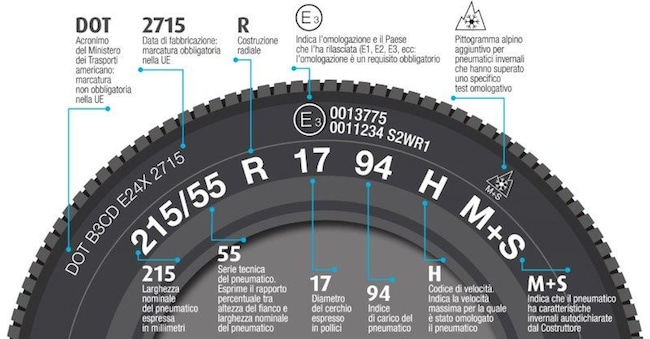
Classic winter tyres, often referred to as ‘thermal’ tyres, are ideal for those who drive many kilometres on snow or, in any case, in very cold areas. They may be fitted until 15 May, even if they have a lower speed rating than that specified for summer tyres in the vehicle registration document, provided it is not lower than the letter Q, which corresponds to a maximum speed of 160 per hour. Alongside these specialist tyres are all-season tyres – also known as ‘light-duty winter tyres’ – which are suitable for those who do not live in alpine regions, where they do not frequently encounter snow-covered roads and where temperatures rarely fall to just below 0° and do not exceed 25°. Regardless of the type, all these tyres must comply with the dimensions stated in the vehicle registration document and bear the M+S marking on the sidewalls, or the variants MS, M/S, M-S and M&S. The presence of the 3PMSF alpine pictogram (the outline of a three-peaked mountain enclosing a snowflake) is not compulsory for compliance, but certifies that the tyres have passed specific tests on snow and at low temperatures. Although the Highway Code does not require it, it is always recommended to fit four winter or all-season tyres to ensure consistent grip on both axles. In fact, this recommendation ensures optimum traction and handling, and therefore maximum safety not only on snow, but also on cold and wet tarmac.
 

Winter tyres: where to find out more


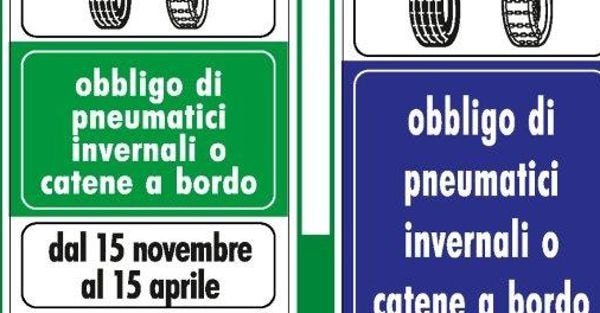
As these regulations are issued by the operators of specific road sections and are often applied in a ‘patchy’ manner, it is essential to check which sections are subject to restrictions – which, in any case, can be identified by specific road signs. To plan your journeys without any surprises, the up-to-date list of affected sections is available on the websites of ANAS, motorway operators and Pneumatici Sotto Controllo. The requirement applies to passenger cars, commercial vehicles and lorries. Those using duly type-approved all-season tyres may drive freely all year round. Snow chains and snow socks, which must be type-approved in accordance with the European standard UNI EN 16662-1:2020 or the equivalent Austrian standards ÖNORM V5117 and V5121, are a legally valid solution, but remain advisable primarily for those who encounter winter conditions only sporadically. It should be noted that the winter regulations do not apply to motorbikes and mopeds, for which there is a complete ban on riding when there is snow or ice on the roads.


Winter tyres: penalties for failing to comply with the regulations


The winter regulations remain in force until 15 April, but anyone with tyres with a speed rating lower than that stated on their vehicle registration certificate has until 15 May to fit summer tyres. After this date, you risk fines ranging from 430 to 1,731 euros and the suspension of your vehicle registration certificate. If, on the other hand, the speed rating is the same as or higher than that on the vehicle registration certificate, there are no penalties, although it is strongly advised against using summer tyres in summer as the heat accelerates wear and tear and impairs road holding. Anyone driving without the required equipment where it is compulsory risks fines ranging from €42 to €1,731 in built-up areas and from €87 to €344 on rural roads and motorways. In addition to the fine, three points will be deducted from your driving licence and you will be ordered not to continue your journey until the vehicle is brought into compliance, either by fitting snow chains immediately or by calling a breakdown service; failing to stop will result in further penalties.

Copyright reserved ©

Brand connect

Loading...

Newsletter

Notizie e approfondimenti sugli avvenimenti politici, economici e finanziari.

Iscriviti