
Pos, goodbye receipts: account statements are enough to document payments
For citizens and businesses, it becomes optional to keep the receipt: you can download the bank document and keep it for ten years

Key points
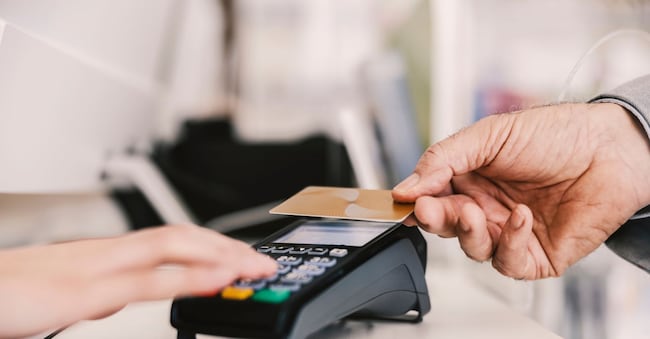
Bank account statements instead of POS receipts to document electronic payments made by citizens and businesses: communications and documentation sent, also in digital format, by banks and financial intermediaries may in fact be used instead of paper receipts, generated by terminals enabled to make payments by credit, debit and prepaid card, or other digital means. Complying, however, with a twofold condition:
- The bank documents must firstly contain information on the individual transactions, and thus date, amount and beneficiary;
- secondly, they must be retained in accordance with the timeframes and methods set out in Article 2220 of the Civil Code, and thus for at least ten years and, if in digital format, by activating certified electronic storage systems.
The physical custody of POS receipts is in fact particularly burdensome for businesses with a high volume of daily transactions. It is therefore a significant simplification of storage obligations in all cases in which the proof of electronic payment constitutes the element that allows the recognition of the deductibility of any charges, such as travel or mission expenses, and entertainment expenses.
The novelty of Dl Pnrr
The new provision, dictated by Article 8, paragraph 1 of the Dl 19/2026 (Dl Pnrr, whose final vote of confidence is expected today in the Senate chamber), and not amended during conversion, recognises instead that the POS paper receipts may be fully replaced by bank statements or other documentation issued by the credit institution or intermediary on the basis of Article 119 of the Tub, the Consolidated Banking Act.
The reference to documentation also in digital format expressly enables the usability and subsequent preservation of statements of account transmitted via home banking or app. In this case, since they are computerised documents, they must be sent to a regulation-compliant electronic storage system for a period of, again, ten years. The illustrative report on the decree also specifies that the measure does not affect the control activities of the tax authorities: bank documents, being traceable by definition, continue to meet the requirement ofpayment traceability.
The digitisation process
This confirms, in an evolutionary manner, the framework already outlined by the practice of the Inland Revenue Agency for the 730 and Income tax return models: the extract account had already been identified as a possible proof of traceable payment, albeit optionally, residually and not additionally. The impression is that of an acceleration towards thefull digitalisation of expenditure documents: Article 1, paragraph 4, of the ministerial decree of 7 December 2016 already provides for the possibility of issuing, upon agreement with the recipient, the receipt in electronic form, guaranteeing its authenticity and integrity. Moreover, the Resolution of the Finance Committee of the Chamber of Deputies No. 7-00286, dated 17 June 2025, has already committed the Government to adopt measures with the obligation for theelectronic recorders to generate and digitally transmit the document to the purchaser.

