
New Danish government is born, Frederiksen starts from Greenland
The social democratic premier will lead the country for the third time, with a minority executive that shifts its centre of gravity more to the left but appears fragile. Defence of Greenland and support for Ukraine remain high on the agenda

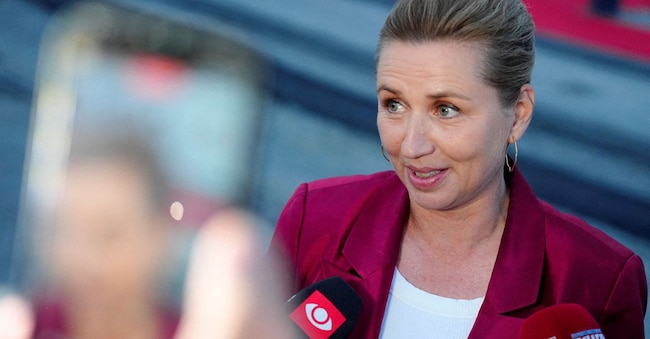
Mette Frederiksen will lead Denmark for the third time. More than two months after winning elections with the worst result since 1903, the Social Democratic leader announced to the king the agreement to form a minority government. It will be made up of two parties from the previous coalition - in addition to the Social Democrats, the Moderates of former premier Lars Løkke Rasmussen - the Ecological Left, runner-up in the March vote, and the Social-Liberal Party: four parties instead of the three of the last legislature. Even so, however, the governing coalition will only be able to count on 82 seats out of 179 and will need external support, which according to the Danish media is expected to come mostly from the Red-Green Alliance, further to the left of the governing bloc.
An ambitious bet
'The government agreement,' comments Christoffer Hentzer-Dausgaard, political scientist at the University of Copenhagen, 'is very ambitious, but I suspect it will be difficult to implement it. It is a minority government with four parties and no fixed base to support the whole programme. Which means that the executive expects to lean alternately on the votes of the extreme red-green left and those of the centre-right - Liberals and Conservatives - especially on tax cuts. This is a different picture from the minority government led by Frederiksen in 2019, which had a memorandum of understanding with the left-wing parties that could guarantee a relatively stable majority."
The formation of the executive was not easy, however, with a very fragmented parliament: as many as 12 parties almost all with fewer than 20 seats. Frederiksen's first attempt to form a government failed, but even his attempt to create an alternative centre-right executive quickly foundered, putting the experienced social-democratic leader, 48 years old, back in the field as the only option for not going back to the polls. She is thus on her way to becoming the longest-serving prime minister in post-war Danish history, with a path that many see already mapped out for a future prestigious international appointment (for example leading NATO).
Continuity on Greenland
After all, it was the international stature Frederiksen gained in opposing US President Donald Trump's aims for Greenland that was his greatest electoral strength, the one that curbed his substantial decline in popularity. And it is from here that the premier starts: 'The government,' reads the document outlining her policy agenda, 'will stand firm on sovereignty, territorial integrity and the Kingdom's right to self-determination. Which means that it is up to Denmark, Greenland and the Faroe Islands (the Kingdom's three entities) to decide on their own future, as the executive itself has made clear, then reiterating its unwavering support for Ukraine.
In a sign of continuity, Foreign Minister Rasmussen, who had already played a central role in previous talks with the United States on the disputed island, has been confirmed. To Finance will go Peter Hummelgaard. a social democrat, while Economy Minister will be Pia Olsen Dyhr, leader of the ecologist Left.


