
Germany: Scholz torpedoes Finance Minister Lindner, in his place Kukies. Confidence vote in January
Majority coalition blows up due to rifts over economic policy, possible early vote in spring, but the Cdu is calling for an accelerated timetable. To Finance goes Jorg Kukies, one of the main architects of the joint EU loan programme to deal with the consequences of the Covid-19 pandemic
from our correspondent in Berlin Gianluca Di Donfrancesco
 Aggiungi Il Sole 24 Ore
ai preferiti su Google
4' min read
Key points
4' min read
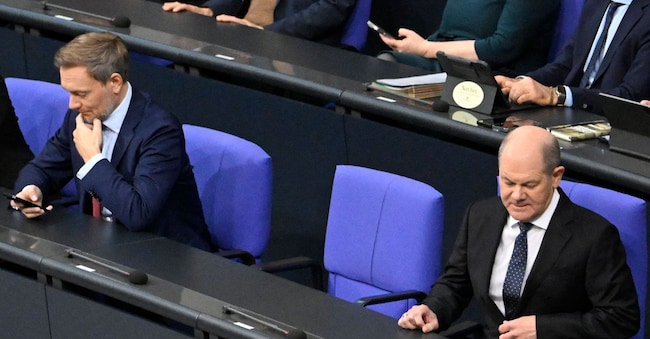
The traffic light has gone out: Chancellor Olaf Scholz has sacked Finance Minister Christian Lindner, in a spin-off with no return in the crisis of the government coalition between the SPD, Greens and Liberals. It was impossible to find a compromise to overcome the rifts over economic policy, with the country teetering on the brink of recession for the second year in a row. Social Democrat Scholz will undergo a confidence vote in mid-January, a step that could trigger new elections in March.
The charges against Lindner
.Very harsh words about Lindner: 'Whoever joins a government,' Scholz said at a press conference on 6 November, 'must act seriously and responsibly and must be prepared to compromise in the interests of all citizens. But Christian Lindner cares about the short-term survival of his party'. And again: 'There is no basis of trust for further cooperation.
The political crisis erupts in the aftermath of Donald Trump's victory in the US presidential election: the tariffs he threatens to adopt are an added risk for a strongly export-oriented economy like Germany's. And it comes amidst the clash between trade unions and one of the country's iconic industries, Volkswagen, which is threatening to close plants at home for the first time in its history.
On 7 November, the Transport Minister, the liberal Volker Wissing, who had asked Lindner not to break away, decided to leave the party and remain in office in the Scholz government, signalling a rift within the FDP as well.
Emergency Summits
.In order to try to keep the traffic light coalition alive, Scholz had called yet another summit in the chancellery with Lindner and the green Robert Habeck, Minister of Economics, who had also made important concessions on the energy transition front. The meeting started shortly after 6pm and was expected to last all night. Instead, it was traumatically resolved by the evening. The most difficult knot was (and remains) the coverage for the more than 10 billion hole in the 2025 budget manoeuvre, which has been pending before Parliament since 14 November. Lindner imposed his own recipes for 'an economic turnaround' in a document published in recent days, which was rejected by the SPD. The now former minister put on the table as an alternative the proposal of an early vote at the beginning of 2025, compared to the September deadline.


