
Germany, so the Traffic Light goes haywire: Spd, Greens and Liberals in short order on growth
The leaders of the German government coalition are proposing conflicting initiatives and recipes to revive the crisis-ridden economy, while trade unions go on strike and large groups close plants or cancel investments. The competition between allies to recover electoral consensus jeopardises the Executive's stability

3' min read
3' min read
For the German government coalition, November threatens to be the cruellest of months. With the strikes called by Volkswagen workers, against the closure of factories in Germany, the economic crisis in the locomotive of Europe is taking one more turn, in a spiral that threatens to explode social tensions and political balances. The Semaphore parties, the Spd, the Greens and the Liberals, already seem to be campaigning, each with its own agenda and its own recipe. Each in search of a way out of the vertical collapse in consensus.
In the balance
.The vote is less than a year away: the polls will open on 28 September 2025, if the government led by Olaf Scholz makes it to its natural term. A huge 'if'. In the middle of next month, parliament will have to approve the budget manoeuvre, drafted by the majority parties amidst a thousand quarrels. There is still a hole of over 10 billion euro to be covered (which would increase with the latest spending proposals) and the debt brake, enshrined in the Constitution, complicates everything.
The Liberals (Fdp) defend it, oppose subsidies and propose recipes centred on cutting red tape, in opposition to the incentives wanted by the Greens and the SPD. The Social Democrats seek resources to subsidise the energy costs of big industry and the purchase of electric cars. The Greens, then, are against backward steps on energy transition, which the Fdp is questioning.
The compromise will have to overcome friendly fire, as well as that of the Cdu and the Afd, the ultra-right that triumphed in the regional elections and is ready to use the weapons of anti-system propaganda to grow in consensus again.
Everyone for himself
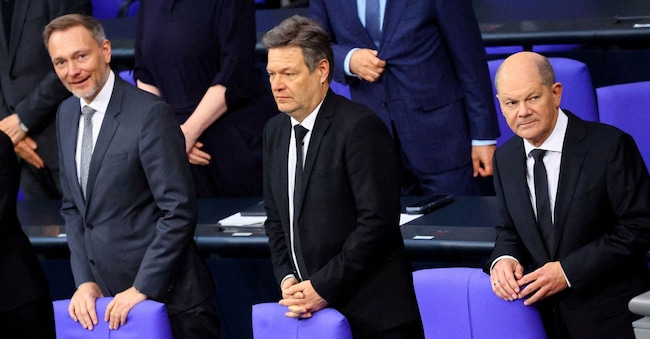
.The day of Tuesday 29 October was emblematic. Social Democrat Chancellor Scholz summoned representatives of industry and trade unions. The (his) Finance Minister, Christian Lindner, leader of the Fdp, summoned SMEs and the professions. Like perfect separates, neither invited the other and both excluded the third partner, the Minister of Economics, the green Robert Habeck. Who, in turn, had the week before made a splendidly independent proposal for a multi-billion euro fund for Germany to modernise infrastructure and provide a 10% investment premium for all companies. A proposal ridiculed by the Liberals. And before that, it was Scholz who had attempted the breakthrough, announcing a 'pact for industry' two weeks earlier.


