
Government at an impasse over the NRRP, decree blocked in the Chamber of Deputies. 3 billion at risk
No solution has been found to the deadlock over the Intercity tenders requested by the EU. Between 1 and 3 billion euros are at risk

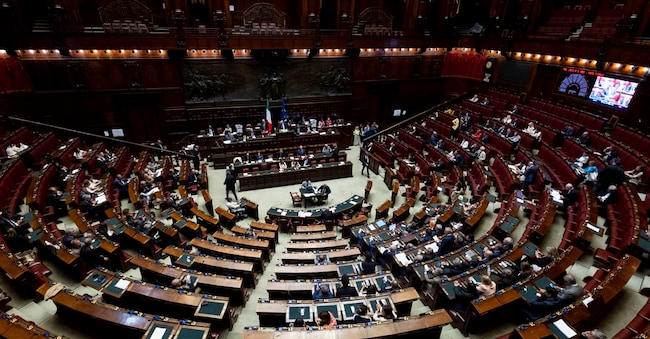
In a situation already complicated by political preferences, EU defence loans and wiretapping, the NRRP is now also threatening to cause a breakdown within the Government and the ruling coalition.
All About Trains
The bone of contention this time is competition in the rail sector, at the heart of a chapter already marred by the sudden collapse of the plan to set up a company to purchase trains (Rosco), which was abandoned immediately after it had been agreed with Brussels. The crux of the matter, linked to Article 1 of the NRRP decree currently under consideration by the Chamber of Deputies, concerns the tenders for Intercity services.
Tug-of-war with the EU
The proposal, devised in ministerial circles and set out in Article 1, paragraph 1, introduces the possibility of basing the tender on a single national lot, setting aside the multi-lot scenario defined by the Draghi Government’s 2021 Competition Act (Law 118/2022). This proposal has met with strong opposition from the European Commission, which views this mechanism as an insurmountable obstacle to potential competitors of Trenitalia. The EU’s request is to structure the tenders into several regional lots and to establish precise criteria for uniformity and quality of service. However, this has so far been rejected by Rome.
The political deadlock
The amendment tabled, with Silvana Comaroli (Lega) as the lead signatory, attempts to set out a detailed procedure, packed with deadlines and reports, and introduces the classification of ‘essential infrastructure’ for ‘the rolling stock used by the outgoing operator’ – without actually addressing the problem. Also still on the table is the social clause loudly demanded by the PD to prevent competition based on labour costs, but which has not yet been included. At stake is the final instalment of the National Recovery and Resilience Plan (PNRR), or more precisely a sum that officials estimate at between 1 and 3 billion; but it is not only this instalment that is in jeopardy, but also full compliance with the Plan’s objectives, which Prime Minister Giorgia Meloni has so far vigorously defended.Whilst the Chamber of Deputies sets the amendment aside and discusses other amendments, tensions are running high between Montecitorio, Palazzo Chigi, the Ministry of Infrastructure and the General Accounting Office, where it is impossible to give the green light to a proposal that risks slashing PNRR funds. In the Transatlantico corridor, leading figures from Fratelli d’Italia are glued to their mobile phones, attempting to broker a compromise that, however, is failing to take shape. By evening, therefore, the Chamber’s proceedings have come to a halt. The matter will be discussed again this morning, provided that a night’s sleep brings clarity. The timeframe is extremely tight, as the decree is at the first reading stage and must be converted into law by 25 August: in short, even MPs’ summer holidays could be at risk. The whirlwind of speculation paints a shifting picture of responsibility, involving the Minister for the National Recovery and Resilience Plan (PNRR), Tommaso Foti, as well as the Minister for Infrastructure, Matteo Salvini, and even extending to the Ministry of the Economy, where, however, attempts are being made to manage a clash that originated elsewhere: on an issue that appears to be fuelling a new standoff between Giorgia Meloni and Matteo Salvini.


