
Government secures postponement of the mini-package tax
Mef communiqué in preparation to confirm the suspension of the two-euro subsidy on non-EU shipments until June and the goodbye to the 'made in the EU' clause for over-depreciation

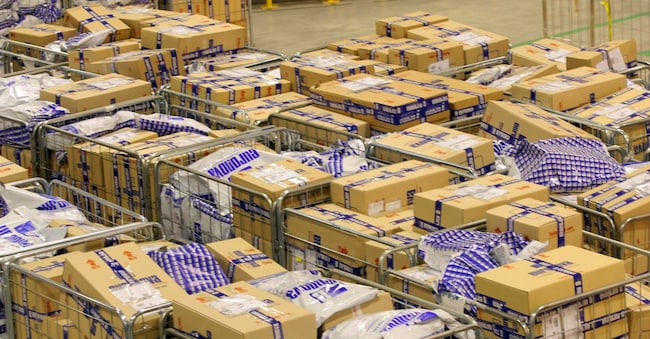
A 'communiqué law' is being prepared at the Ministry of the Economy to armour the suspension of the two-euro contribution on extra-EU parcels until 30 June and the goodbye to the 'made in the EU' clause for hyper-amortisation. But also to announce that the system for calculating VAT on exchanges based on the costs referable to the goods and services exchanged (see also the report on page 29) will only be triggered by contracts signed from 2026, maintaining the mechanism anchored to the normal value for previous ones and of multi-year duration. With the postponement of the arrival of the tax decree in the Council of Ministers, the government is in any case aiming to put some firm points on the measures under consideration, also to give greater certainty to operators. Starting with the suspension of the contribution on non-EU mini-packages.
The administrative stand-by mechanism ended at the end of February, and in fact the application would start on 15 March. This is why the communiqué serves to specify that the executive will intervene in one of the next Council meetings to temporarily block the application and then decide how to proceed. Also because from 1 July the new EUR 3 tariffs will be applied to all EU countries for parcels of modest value from non-EU countries (this is the case, for example, with China, but also with the United States and the United Kingdom). Moreover, in two answers to parliamentary questions, the Economy had already specified that the postponement until the June deadline did not require coverage because the revenue forecasts are from July. Without forgetting then that an appeal by Confetra to the Lazio Regional Administrative Court is pending on the contribution, with a precautionary hearing scheduled for 23 March.While waiting for the primary regulation, the law release also serves to provide a message of clarity to companies interested in the incentives of the new Transition 5.0 plan and that were planning to purchase goods produced in factories outside the EU or the European Economic Area.
The restriction on the goods that can be purchased by taking advantage of the hyper-amortisation, on the other hand, had appeared highly controversial from the outset because it would have the effect of limiting the number of machinery that can be subsidised and of cutting out non-EU suppliers offering products that are in any case competitive, such as those from the United States, Japan or Korea, as well as those from China, which immediately seemed to be the real target of the initiative. For this, in fact, one still has to wait for the primary regulation. And considering that, once the agreement of the Ministry of the Economy has been acquired, the measure will in any case have to be scrutinised by the Court of Auditors, the risk of having the rules operational in late spring becomes more and more concrete. Not to mention that it will be necessary to intervene quickly, again through a regulation, to solve the problem of companies that had booked for tax credits under the old 5.0 plan but had ended up on the waiting list after resources were exhausted.The tax decree - destined to land on the table of one of the next Council of Ministers - will also include the postponement by two months (from 1 March to 1 May) of the application of the withholding tax on commissions received by travel and tourism agencies, as well as by agents, consignees and maritime and air brokers, and agents and commission agents of oil companies. In this case, the arrival of the postponement had already been anticipated in a press release issued by the Ministry of the Economy on 27 February.


