
Vendemmia 2025 in Valle d'Aosta: quality beats tariffs and widens markets
Favourable climate and temperature fluctuations create the conditions for an excellent wine year. The sector is looking not only at the USA but also at China, Japan and Singapore

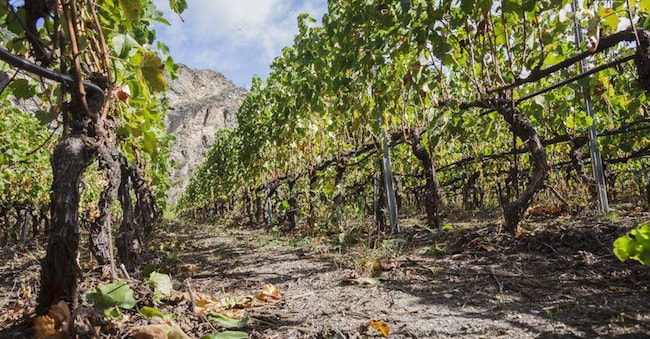
"Excellent production and very interesting quality," are the characteristics of the 2025 harvest in Valle d'Aosta in the opinion of Nicolas Bovard, president of the Consortium of Aosta Valley Wines, a reality that represents "97% of production, with six cooperative wineries and 56 member companies.
Anche se il confronto con il 2024 è impari - lo scorso anno si registrarono un luglio piovoso, un’epidemia di peronospora e, infine, un settembre con forti piogge che portarono a perdere in media la metà della produzione, con punte del 60% per alcune varietà di uve - quest’anno «il clima è stato decisamente più favorevole e nessuno dei produttori che abbiamo sentito si lamenta» conferma Elio Gasco, direttore di Coldiretti Valle d’Aosta. Insomma, ci sono le premesse per “un’ottima annata”, come il titolo del film del 2006 di Ridley Scott con Russel Crowe, ma il clima ha influito comunque su lavoro dei viticoltori. «Freddo di notte, caldo di giorno: l’escursione termica è una delle condizioni ideali per un’ottima annata» spiega André Gerbore, presidente della cooperativa Cave des onze communes, realtà nata nel 1984, con la prima vendemmia da 50mila bottiglie nel 1990 e che oggi può contare su 76 ettari coltivati e una produzione salita a 600mila bottiglie di vino. «Per noi - sottol
'It was an early harvest,' Nicolas Bovard confirms, 'which began on 13 August for the grapes destined for sparkling wines, continued on the 23rd of the same month for the Blanc de Morgex, and the following week for the other whites. The harvest will end around mid-October with the latest variety: Fumin, which is usually harvested at the end of the month.
The most interesting prospects, according to the president of the Wine Consortium, come from Petite Arvine (a white grape variety of Swiss origin but now 'adopted' by the Aosta Valley) and Petit Rouge, the basis of Torrette, one of the region's symbolic wines. The Wine Consortium has a production of around two million bottles a year, thanks to the 330 hectares of vines claimed as DOC (the total number of hectares is 400). "Many companies have invested in new plantings: the prospect is to increase by about a million bottles over the next ten years," says Bovard.
In the meantime, however, the uncertainties linked to the tariffs imposed by Trump's United States at 15% are looming, even though Valle d'Aosta's wine-growing industry, which is focused on quality, should not be particularly affected. More than anything else,' Elio Gasco explains, 'the chaos generated by the tariffs risks creating problems on the one hand and speculation on the other. It is a situation that concerns all agriculture, not just wine, and we do not see European policies that would shelter the sector from this turbulence. The European Union gives the feeling of being squeezed between the other superpowers: we are hanging on to the international situation.


