
Iss Report

Pregnancy: from alcohol to tablets more care in the first thousand days but not in the South

The behaviour of mothers and families is improving but Italia remains far from the standards. President Bellantone: 'Reduce inequalities'
by Ernesto Diffidenti

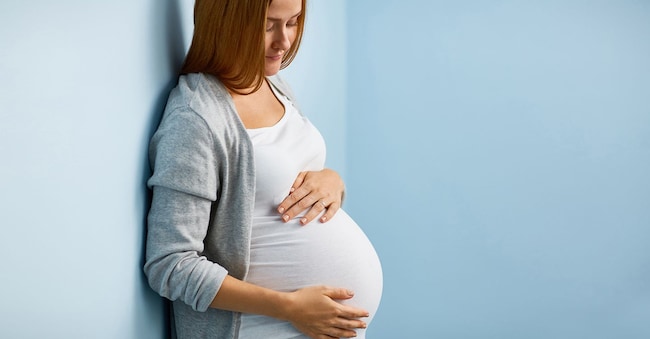
Blond pregnant woman leaning on to blue wall caressing her big belly gently pressmaster - stock.adobe.com

4' min read

Translated by AI
Versione italiana

4' min read

Translated by AI
Versione italiana

Women's behaviour during pregnancy and families' behaviour in the two years following the birth has an impact on children's health, but the recommended standards and territorial and social differences, particularly in the South, are still far from being met. This is the message that emerges from the latest data collection of the 0-2 years surveillance system promoted by the Ministry of Health, coordinated by the Istituto Superiore di Sanità and carried out in collaboration with the Regions.

"Not all boys and girls are born and grow up in the same conditions," says Rocco Bellantone, president of the Iss. Social, economic and cultural inequalities already manifest their effect before birth and this effect tends to widen in the first years of life, conditioning health at all stages of life. For this reason, public health that is attentive to the first thousand days cannot separate health promotion from the reduction of health inequalities by building fairer and more equitable communities'.

Loading...

First encouraging signs of prevention

The data, however, show encouraging signs: few women now report smoking or drinking alcohol during pregnancy. However, there is still ample room for improvement, both with respect to behaviours 'traditionally' at the centre of prevention policies such as the appropriate intake of folic acid and breastfeeding, and with respect to emerging issues such as children's exposure to TV, tablets and mobile phones and the spread of shared reading in the family. There is still a lot to be done also on parenting support, the Iss report highlights, with data showing good participation of mothers in birth accompaniment meetings, but few mothers receive a home visit after childbirth and just over half are fathers who take leave, with important territorial differences.

"In this edition," explains Enrica Pizzi, scientific head of the surveillance, "almost all the indicators analysed show a positive trend compared to the 2022 survey, although there is considerable room for improvement. Moreover, the results confirm a strong relationship between the socio-demographic characteristics of mothers, such as level of education and geographical area of residence, and adherence to recommendations in the first thousand days".

The behaviours on folic acid, smoking and alcohol

Folic acid is one of the clearest examples of the gap between knowledge and correct use. 93.2% of mothers claim to have taken it during pregnancy, but only 35.4% did so appropriately. Most start when the pregnancy is already underway, reducing the preventive effect. The lowest figure is in Campania, with 24.6%, the highest in Veneto, with 44.4%.

Smoking during pregnancy affects 5.5% of mothers. The share ranges from 3.2% in the autonomous province of Bolzano to 7.9% in Lazio. After childbirth, however, the figure increases in all regions: during breastfeeding the highest figure is 10.6% in Sicily. In the same phase, the use of electronic cigarettes and heated tobacco also increases. At the time of the survey, 30.2% of the mothers had a smoking partner or other cohabitees.

The majority of women do not consume alcohol during pregnancy, but a proportion continue to do so in small quantities. 7.4% report drinking once or twice a month, 1.1% 3 or 4 times a month and 0.4% 2 or more times a week. In lactation, consumption is more widespread in all regions. The highest percentages, both during pregnancy and after childbirth, are concentrated among mothers in Northern Italia.

On breastfeeding, the territorial divide appears early. At 2-3 months old, 48.2% of children receive only breast milk, but the quota drops to 31.3% in Campania and rises to 62% in the Autonomous Province of Trento. At 4-5 months exclusive breastfeeding is reduced to 39.3%: in Sicily it stops at 23.6%, in the Autonomous Province of Trento it reaches 58.1%. Between 12 and 15 months a share of 26.8% in Sicily and 54.1% in Friuli-Venezia Giulia continues to receive breast milk. 13.1% of children have never received it.

Data on safe sleep, readings, videos and vaccines

Safe sleep shows a better but uneven picture. 70% of mothers put their 4-5 month old child to sleep on their stomach, a position that reduces the risk of sudden cot death syndrome. Sicily records the lowest value, with 58.8%, while Umbria reaches 79.2%.

Shared reading remains low in the first months. In the 2 to 5 months bracket, 53.3% of children had not had a book read to them in the week preceding the interview. Friuli-Venezia Giulia stops at 33.7%, Sicily reaches 68.2%. In the Mezzogiorno, the shares of children to whom a book is read every day are also lower.

Screens enter children's lives when they are still very young. Between 2 and 5 months, 14.6% spend time in front of television, computers, tablets or smartphones. In the autonomous province of Trento the share is 6.9%, in Sicily 24.9%. Most stay under an hour a day, but 3.4% get at least one or two hours a day. Between 11 and 15 months this exposure increases everywhere: the share of children spending at least one or two hours a day in front of a screen ranges from 5% in Veneto to 36.5% in Sicily.

"On vaccinations, the intention to complete the planned calendar prevails," the Iss report concludes. 74.4% of mothers say they want to carry out all the vaccinations, with values ranging from 63.6% in Sicily to 84.6% in Basilicata. 21.2% intend to limit themselves to the compulsory vaccinations, while 4.2% say they are undecided'.

Copyright reserved ©
Loading...

Brand connect

Loading...

Newsletter

Notizie e approfondimenti sugli avvenimenti politici, economici e finanziari.

Iscriviti