
Greenwashing Directive: a historic milestone for certified products
“Ethical labelling requires reliable data and guarantees from independent third-party bodies,” says Paolo Pastore, chief executive of Fairtrade Italia, during the promotional weeks for certified products

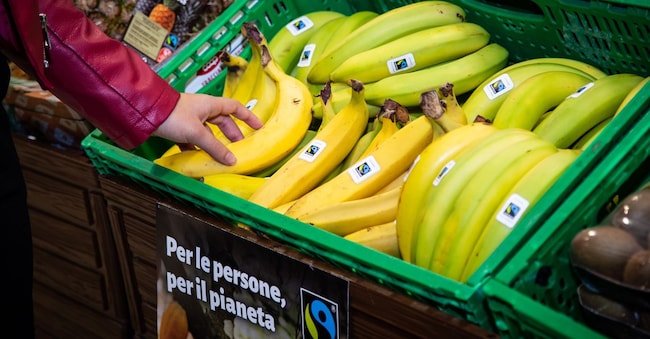
It is not simply a matter of ‘discounted’ prices or special offers. It is about a supply chain (that is transparent and responsible), traceability and a balanced power dynamic between producers and the market: the key ingredients of what is known as ‘responsible shopping’. These are the elements that characterise Fairtrade Weeks, scheduled from 24 September to 4 November and promoted by Fairtrade Italia, involving supermarkets and e-commerce platforms of partner brands with special promotions on certified products. Throughout the initiative, partner brands’ supermarkets and online shops will be offering special promotions on certified products, to make ethical choices accessible to consumers across Italia.
Certified and discounted products
The range is very wide: coffee, cocoa and bananas are the main items, along with tea, rice and sugar. These are joined by breakfast cereals, chocolate bars, fruit juices, biscuits, snack cakes, ice cream, crackers and baked goods.
An edition which, as the organisers point out, ‘takes on particular significance’ because, from 27 September, the European EmpCo (Empowering Consumers for the Green Transition) directive, , comes into force, prohibiting generic green claims on labels and requiring third-party, independent verification.
“The entry into force of the EmpCo Directive marks a historic milestone: ethical labelling requires reliable data and guarantees from independent third-party bodies,” emphasises Paolo Pastore, Director-General of Fairtrade Italia. “ In this context, Fairtrade Italia represents an indispensable strategic partner for businesses, capable of combining the protection of producers’ rights with the traceability and regulatory compliance demanded by the market. Fairtrade Weeks are designed precisely to encourage increasingly informed choices, transforming every purchase into a concrete act of change throughout the entire supply chain, from the field to the shop shelf.”
The Minimum Price
There are two key instruments: ‘The Fairtrade Minimum Price, which acts as a safety net against market crashes,’ they emphasise, ‘and the Fairtrade Premium, the additional sum that cooperatives manage independently to fund schools, clinics and infrastructure, ensuring stability where the conventional market creates uncertainty.’

