
Greyhound racing: no proof of danger for the Council of State
A ruling by administrative judges rejects the appeals of associations on the greyhound sports track in Maserada sul Piave
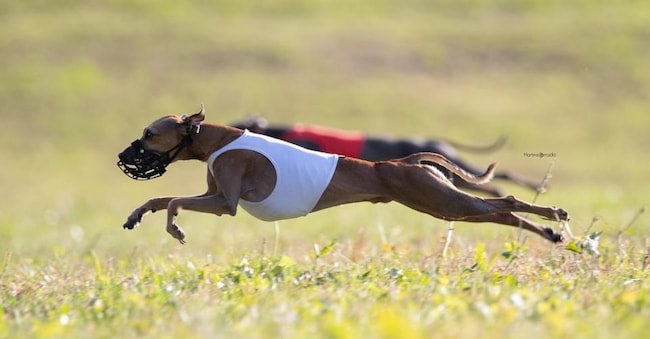
The legal clash between animal rights activists and Enci over the greyhound track in Maserada sul Piave has come to a final conclusion, and the balance for those who opposed the structure stops at a double hurdle: the timing of the administrative procedures, but also the lack of evidence on the alleged danger of the track itself. The National League for the Defence of Dogs, Pet Levrieri Onlus, Lav, Enpa and Oipa had taken the field against the municipal administration and the Enci Servizi company, which had built the track. Their aim was to have the licence for the construction revoked.
What the Council of State has decided
The main reason for the decision of the Council of State that closed the case (judgement 1453/2026), is the lateness of the appeals (objected to by Enci), but the question of the risks to dogs is also addressed, albeit in an incidental manner. The heart of the animal-rights offensive was actually based on the idea that the runway represented an objective danger to animals, and it is good to point out how the Council of State resolved it. Point 9.6.2 of the judgement deals specifically with some of the grounds of appeal presented by the animal-rights associations, which focused on the objections related to Article 12 of the agreement stipulated between the municipality of Maserada sul Piave and Enci, which allows the municipality to terminate the agreement in the event of conduct detrimental to the health and safety of greyhounds. The associations claimed that Article 12 of the agreement manifested a 'defect of preliminary investigation' on the part of the administration, which approved the project without adequately assessing the risks. In their opinion, the technical characteristics of the track (oval structure and starting box) and the way the races are run (muzzled dogs running behind a mechanical laughing stock) are entirely identical to those found in the world of commercial racing, and studies on that type of reality were brought in to support this thesis. Because of these similarities, the associations inferred an 'in re ipsa' (intrinsic) dangerousness of the planned activity. Analysing the allegation on the runway's alleged intrinsic riskiness, the Council of State defined the associations' grievance as 'generic', formulated in an 'apodictic manner and lacking argumentative support'. In legal jargon, the judges stated that the accusation was presented as an absolute and irrefutable truth, but without providing the necessary demonstrations and arguments to support it.
But is the track a cynodrome?
Article 12 of the agreement between the municipality of Maserada and the Enci therefore provides for the possibility of revocation if the health of the dogs is not guaranteed. The Maserada municipality, however, has never received any reports of dangerous situations for dogs. In fact, the mayor, Lamberto Marini, explains: 'Not only has no one ever reported problems of this kind to us, but many people in Maserada now go to see these activities, and the passion and care that the owners have for their dogs has been perceived'. And he adds: 'We often use the word "cynodrome", like the one that was closed in Rome in 2002, but this term makes people think of a very different structure from a simple sand ring like the Maserada track'.
But then can commercial racing data be 'used' to derive the dangerousness of tracks like Maserada? Apparently not. Some time ago, the Enci had circulated the data of the races held and it turned out that there had been more than 2,000 passages on the track without accidents. According to Gaetano Turrini, a whippet breeder: 'In Italia, greyhound racing was born in the late seventies and early eighties of the last century and has always been completely separate from that of commercial dog racing. Many of us did not even know of their existence. The greyhounds' sporting journey in Italia officially began in 1980 in Innsbruck (Austria). On 20 September of that year, 4 out of 6 Italian dogs presented received their first racing licences. As there were no approved fields for racing in Italia, an agreement was made with the Swiss federation to allow Italian dogs to obtain 'foreign licences' (the licence is a test of the dog's aptitude for racing and the absence of aggression during racing towards other subjects, ed.). The structural turning point came when the Swiss centre in Sant'Antonino closed. The Italian group made a deal to take back their high-quality equipment and, in 1983 in Schio (in the province of Vicenza), built Italy's first regulation track'. At the moment, Italia has only one track, that of Maserada, but in neighbouring countries, such as Switzerland or Austria, there is more than one: the comparison, the experts point out, should be made with those tracks, not with commercial cinodromes. And also with Italian tracks that have closed over time (again for organisational reasons), the last two at Castano Primo in the province of Milan and at Poianella di Bressanvido (Vicenza). As for the effects of the activity on the dogs, Turrini explains: 'It is an activity that preserves the greyhounds' breed aptitudes and ensures their physical and temperamental health'. Angelo Anselmi, breeder of small Italian greyhounds and veterinary surgeon, also recalls: 'Since the end of the 1990s, I have been following as veterinary manager the Swiss Fci (international cynological federation, ed.) amateur track in Lostallo, not far from Bellinzona. The amateur races are aptitude tests for greyhound breeds, which are absolutely safe and whose only purpose is to assess the greyhound's aptitude for what it has been selected for for centuries (hunting on sight and in this area, chasing a hare-like hound). The owner brings his dog to watch him run and have fun and the only concern is that he runs safely. It would make no sense and it would not be possible to 'force the greyhound to run' and there is only the pleasure of seeing them fulfilled. It is an environment that has nothing to do with the professional world, which is alien to us passionate greyhound lovers'.

