
Live
War: latest news. Iranian oil tankers pass through US blockade zone. G7 leaders: agreement is a positive step, we are ready to contribute
The contents of the draft agreement
For feedback, please contact
english@ilsole24ore.com
Summary by points
17 June 2026Pinned update
The contents of the draft agreement
The United States and Iran are preparing to formally sign an interim peace agreement that has already led both sides to claim victory, although the details of the deal are only emerging piecemeal and energy sector experts are sceptical about how quickly the Strait of Hormuz can be reopened.
The text of the so-called memorandum of understanding – which paves the way for two months of negotiations on Iran’s nuclear programme and other issues – has not yet been published. A near-final draft shows that Iran is set to receive a sanctions waiver allowing it to sell oil immediately, whilst other financial incentives will be deferred.
A US official has stated that the full agreement could be published within the next two days, ahead of the signing ceremony. The event is scheduled to take place at Bürgenstock, a mountain resort overlooking Lake Lucerne, the Swiss Foreign Ministry announced on Tuesday. Vice-President J.D. Vance is expected to lead the US delegation, whilst Iran will likely be represented by the Speaker of Parliament, Mohammad Bagher Ghalibaf.
President Donald Trump is in France for the G7 summit, where the war with Iran – which has caused energy prices to soar – is at the centre of the debate. European countries such as France, the United Kingdom and Italia are ready to help clear mines from the Strait of Hormuz, if necessary, although they are concerned about the potential risks to their own ships and sceptical about the possibility of a full reopening by Friday, as promised by Trump.
Speaking at the summit on Tuesday, Trump stated that the deal was “a done deal” and would prevent Iran from developing nuclear weapons, adding that the United States would not pay war reparations or invest money in Iran. The President said that the leaders in Tehran “must prove their worth, I believe, before any of us can take action”.
On Tuesday, Trump also held talks with the President of the United Arab Emirates, Sheikh Mohamed bin Zayed, and with the Emir of Qatar, Sheikh Tamim bin Hamad. These countries could, together with the United States, contribute to the creation of a $300 billion development fund for Iran following the conflict. The draft states that the United States and its regional partners will draw up a plan to provide this sum to support Iran’s reconstruction and economic development.
The United States will turn to other countries and the private sector to secure investment commitments, a US official has said. Iran claims that the war, which began on 28 February with an Israeli-US air strike, has cost it over 250 billion dollars in economic damage.
Iranian officials have stated that the memorandum of understanding would allow them to access tens of billions of dollars in funds frozen in countries such as Qatar. The draft seen by Bloomberg states that the United States undertakes to “unfreeze and make fully available” these funds, without, however, setting a timeframe.
Iran has been subject to US sanctions ever since the 1979 revolution that overthrew the Shah. According to an analysis by the Atlantic Council, around $12 billion of Iranian funds were frozen at the time. In the decades that followed, the United States and other countries imposed further sanctions, particularly in the run-up to the entry into force of the Joint Comprehensive Plan of Action (JCPOA) on Iran’s nuclear programme, which came into effect in 2015.
Estimates of the total value of Iranian government assets held in accounts worldwide vary considerably, ranging from $24 billion to over $100 billion. In 2023, the Biden administration had planned to make $6 billion from Iranian oil revenues available to Iran via a humanitarian aid account managed by Qatar, but this plan was suspended following the Hamas attacks on Israel on 7 October 2023.
Oil prices have plummeted since Trump stated at the end of last week that a deal was imminent. Brent rose slightly early on Wednesday, after falling by around 5% to close the previous session below $79.
The fall in demand in China, as well as the release of emergency oil reserves by the United States and other countries, has contributed to the fall in prices. It is likely that these reserves will need to be replenished once the Strait of Hormuz reopens.
Many European governments, investors in the energy sector and shipping companies have doubts about how quickly the Strait – through which a significant proportion of the world’s supplies of oil, liquefied natural gas and aluminium pass – will be able to return to pre-war conditions.
In addition to the potential need to clear the canal, there is the long-term question of whether Iran will allow free passage.
Tehran has indicated that it will impose shipping fees on vessels following the 60-day negotiation period provided for in the new talks between the United States and Iran. On Tuesday, during his meeting with the leader of the United Arab Emirates, Trump stated that the Strait would be open ‘permanently’ without tolls. The previous day, a senior US official had told journalists that the status of the Strait beyond the 60-day negotiation period would be up for discussion.
On Monday, Vance defended the deal, stating that it would be based on a verification system to ensure that Iran honours its commitments. Senate Republicans have said they are putting pressure on the Trump administration to provide details and have suggested that Congress will ultimately vote on the final deal.
G7, Macron: US-Iran agreement is a good thing; the Strait of Hormuz must remain open
The G7 welcomed the declaration of intent between the United States and Iran and reaffirmed the need to ensure unhindered and toll-free passage through the Strait of Hormuz. French President Emmanuel Macron made this statement at the closing press conference of the Evian summit, explaining that the issue had been discussed with Qatar, Egypt and the United Arab Emirates. “We unanimously welcomed the positive agreement reached between the United States of America and Iran, brokered by President Trump,” Macron said. “It is an agreement we support because it puts an end to a situation of extreme instability, the consequences of which for our economies were terrible,” added the French President, emphasising that the effects of the crisis were visible “in everyday life”, affecting businesses and citizens.
Macron explained that the G7 had reaffirmed a key principle for international energy and trade security. “The right to unhindered transit through the Strait of Hormuz, free of tolls, was the cornerstone of this agreement from the outset,” he said, adding that this principle “takes effect immediately”. The French President then indicated that France and the United Kingdom were willing to support the resumption of maritime traffic in the area. “We agreed that the multinational, independent defence initiative, co-developed by France and the United Kingdom, was ready to play an important role in facilitating the resumption of maritime traffic in the Strait of Hormuz, whilst protecting merchant ships,” he said.
Iran, Meloni: peace is fragile; the Israeli elections must not jeopardise it
In the Middle East, we must ‘promote lasting and structural solutions that go beyond the logic of short-term truces. We expect Israel to act as a positive force in the peace process”, in the hope that “the election campaign” in Israel “does not jeopardise the process that the United States has set in motion”. This was stated by Prime Minister Giorgia Meloni at a press conference during the G7 summit in Evian. Subsequently, responding to a question on the subject, the Prime Minister emphasised once again: “Peace is fragile; it must be built and nurtured every day, and that is what we will do”. On Israel, “I said that we must be wary of an internal debate during the election campaign, which can take on more extreme tones. I have read Ben Gvir’s comments, in which he says he does not feel bound by Trump; we must be mindful of this dynamic. Just as we must assess how sincere Iran is in wanting to turn the page on this issue. There is a fragility, but it could lead to a more stable situation than before the war: it depends on how we work over the coming months.”
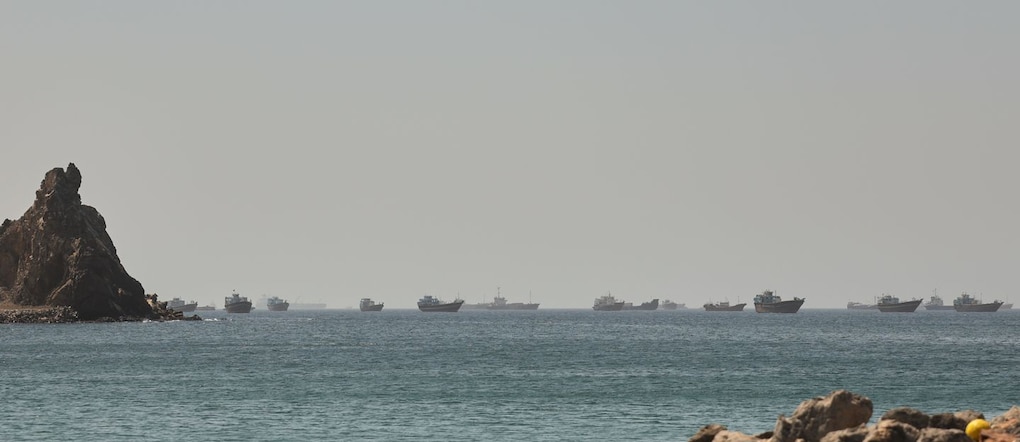
Petroliere e navi mercantili nel Golfo di Oman , lungo le rotte marittime che collegano lo Stretto di Hormuz e il Mar Arabico, martedì 16 giugno 2026. (AP Photo) Associate Press/ LaPresse APN
Ask the editorial team
Have questions or feedback about this article? Contact our editorial team.
Trump: ‘Obama’s Iran deal was stupid; mine is a nuclear barrier’
“Obama’s deal with Iran was the most stupid of them all. A path to nuclear weapons. Mine is a wall.” Donald Trump reiterated this on the sidelines of a meeting with Indian Prime Minister Narendra Modi at the G7 summit.
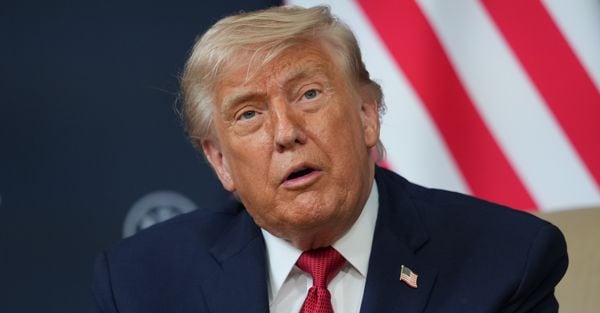
Il presidente degli Stati Uniti Donald Trump incontra il presidente egiziano Abdel Fattah al-Sisi a margine del vertice del G7, mercoledì 17 giugno 2026, a Evian-les-Bains, in Francia. (Foto AP/Julia Demaree Nikhinson) Associated Press/ LaPresse Solo Italia e Spagna
Most popular stories
Iran, Vance: ‘The text of the agreement will be made public by Friday’
The text of the agreement between the United States and Iran will be made public ‘by Friday at the latest’, although the White House is pushing to bring forward its publication. Vice-President Jd Vance made this statement in an interview with CBS, explaining that mediators from Qatar and Pakistan had requested a delay in its release. “We are trying to persuade them to publish it today, because we want to tell the American people what is in this agreement,” said Vance, adding that the document had been “misrepresented” in the public debate and describing it as “a good deal for the American people”. In outlining the contents of the agreement, Vance explained that the Strait of Hormuz would be reopened ‘immediately’ and that the framework of the agreement provides for benefits for Tehran only in return for substantial changes: “If the Iranians give us what we need regarding an end to the funding of terrorism and a commitment to no longer pursue a nuclear weapon, then they will be able to secure certain benefits and be reintegrated into the global economy.” The Vice-President also clarified that “when I speak of benefits, I am referring to an easing of sanctions”, emphasising that “none of these benefits will go to Iran unless it fundamentally changes its behaviour”. On the energy front, he finally said he expected a ‘very significant’ drop in petrol prices in the coming weeks.
17 June 2026
Trump: ‘The G7 was a great success’
“The G7 was a great success.” Donald Trump wrote this on Truth, claiming that the topic the leaders wanted to discuss most “is the fact that Iran will not have nuclear weapons and that the Strait of Hormuz will be opened immediately”.
17 June 2026
G7 leaders: free passage through the Strait of Hormuz is essential to mitigate the impact on growth
‘Although the global economy is already grappling with the lingering effects of pre-existing shocks and structural changes affecting global trade and investment, we recognise that global economic uncertainty has heightened the risks to growth. Pressures on supply chains for energy, agricultural inputs and fertilisers have increased, affecting industries, farmers and households everywhere, particularly in the most vulnerable countries. We recognise that a swift return to free and secure transit through the Strait of Hormuz, without any form of toll, and a lasting solution to the conflict, are imperative to mitigate these negative impacts and support more balanced global growth.” This is stated in the final declaration signed by the G7 leaders on ‘more balanced, sustainable and resilient growth’.
17 June 2026
Draft EU summit document: strengthening the Aspides mission to ensure stability in the Gulf
‘The European Council welcomes the efforts announced by Member States and partners to ensure freedom of navigation in the Strait of Hormuz, once the necessary conditions have been met. Any agreement concerning Hormuz must not restrict freedom of navigation or alter its governance. The European Council recalls the role of the Aspides maritime defence operation, emphasises its potential contribution to the stabilisation of the region and calls for its strengthening, in line with its mandate.” This is the text of the latest draft conclusions of the EU summit, which Coreper is due to examine this evening.
17 June 2026
Iran, Tajani: our embassy in Tehran reopens on Friday
“I am pleased to announce to this Parliament that our embassy in Tehran will reopen its doors on Friday.” This was announced by the Foreign Minister, Antonio Tajani, during Question Time in the Chamber of Deputies. “Our ambassador will return to the capital together with all the diplomats and officials from the Foreign Ministry,” Tajani added.
17 June 2026
Iran, Tajani: I will ask Araghchi to release the Italian merchant vessel
“Today I will also be speaking with the Iranian Foreign Minister, Mr Araghchi, and I will confirm to him the Italian government’s full support for dialogue aimed at transforming the agreement with the United States into a lasting peace. I will emphasise the paramount importance of the release of the Italian merchant ship blocked in the Strait of Hormuz, to which we are fully committed.” This was stated by Foreign Minister Antonio Tajani whilst responding, during Question Time in the Chamber of Deputies, to a question from the Fratelli d’Italia group regarding the agreement reached between Iran and the United States for a ceasefire. “The government,” Tajani continued, “has from the outset, together with its European partners in the G7 and in the region, supported the path of dialogue and negotiation. The agreement demonstrates that diplomacy can produce concrete results even in the most difficult situations. It is now essential to step up diplomatic efforts to reach a comprehensive and lasting agreement that addresses all outstanding issues.” According to Tajani, “the prospect of Iran possessing nuclear weapons must be definitively averted, and full respect for freedom of navigation through the Strait of Hormuz must be ensured; this is a fundamental principle for our country, for our economy and for the security of supply chains.” “Italia, together with its allied partners,” Tajani reiterated, “is ready to play its part within the framework of a multilateral naval mission aimed at ensuring the clearance of mines and the reopening of the Strait. As the Prime Minister has emphasised, our participation is conditional upon the achievement of a stable ceasefire and broad international consensus on the mission’s mandate; we are working on this in close coordination with Defence Minister Guido Crosetto. ‘Once these conditions have been met, we will return to Parliament together to seek authorisation from both Houses.’
17 June 2026
Merz: ‘The agreement with Iran is a success, but a second round of negotiations is needed’
The agreement reached by the US with Iran is “a great success”. This was stated by German Chancellor Friedrich Merz, who added, however, that “a second round of talks” is now needed. Speaking at a press conference on the sidelines of the G7 summit in Evian, Merz said: “The fact that oil prices continue to fall is a positive sign, and it is hoped that supplies can be restored systematically.” “The decisions reached in these negotiations must be followed by further ones. A second round of negotiations is needed”, he explained. “We are all in complete agreement on the objectives,” added the Chancellor, “the Strait of Hormuz must be kept open without any restrictions, no ifs or buts. And Iran must demonstrate that it is putting an end to its nuclear programme in a sustainable manner. Peace must endure, and this applies not only to Iran but also to Lebanon.”
17 June 2026
Trump: if Iran doesn’t behave itself, we’ll start dropping bombs on them again
“This is not a final agreement; it is a memorandum of understanding, and if I don’t like it, we’ll go back to shooting at them, to dropping bombs on their heads. If I don’t like it, if they don’t behave themselves, we’ll go back to dropping bombs right on their heads.” These were the words of US President Donald Trump at a press conference with Egyptian President Al-Sisi on the sidelines of the G7 summit.
17 June 2026
Lavrov speaks to Araghchi: ‘We support the agreement; Israel must respect it’
Moscow supports the agreement between Iran and the United States. This was stated by Russian Foreign Minister Sergei Lavrov during a telephone conversation with his Iranian counterpart Abbas Araghchi, according to a statement from the Russian Foreign Ministry. “The Russian minister expressed his support for the memorandum of understanding reached thanks to the effective mediation of Pakistan and Qatar, aimed at easing tensions in the region. The importance of all parties involved in the armed conflict, including Israel, adhering to it was emphasised,” reads the summary of the telephone call.
17 June 2026
Bloomberg reveals the text of the US-Iran agreement: ‘nuclear, Hormuz and sanctions’
An end to the war on all fronts, including Lebanon; the lifting of the US naval blockade in the Strait of Hormuz; and the restoration of maritime traffic by Tehran “to pre-war levels” within thirty days, taking into account the time required to clear the sea route of mines. These are some of the 14 key points of the agreement between the US and Iran, a copy of which has been published by Bloomberg and other media outlets. The text of the agreement also stipulates that the Islamic Republic “will never produce nuclear weapons”, whilst “the fate of enriched uranium will be dealt with appropriately” in the final agreement. Meanwhile, “Iran and the United States agree to maintain the status quo: Tehran will freeze its nuclear programme at its current stage, whilst Washington undertakes not to impose new sanctions against Iran and not to strengthen its military presence in the region”. For their part, the United States also commits, “together with regional partners, to drawing up a comprehensive plan – agreed between the parties – for the reconstruction and economic development of Iran, guaranteeing a minimum of $300 billion in funding”, with an implementation mechanism to be finalised within 60 days. Provision is also made for the “unfreezing of frozen Iranian assets” and the granting of “exemptions for Iranian oil exports”. Finally, following the signing of the memorandum, “the final agreement will be approved by means of a binding resolution of the United Nations Security Council”.
17 June 2026
Rutte: ‘The agreement with Iran is a good thing; US action improves security’
At the end of the general audience, the Pope expressed his “satisfaction at the reaching of an agreement between the Islamic Republic of Iran and the United States of America, which is to be signed on Friday, as an encouraging result of patient dialogue and negotiation. “I express my gratitude to the countries that have worked to facilitate the meeting between the parties and make this agreement possible. I hope that this agreement will help to strengthen mutual trust, security and stability in the Middle East by promoting paths of dialogue and cooperation between peoples.”
17 June 2026
Iran: US Ambassador to Israel calls for ‘Hezbollah and Hamas members to be deported to Tehran’
“Iran is calling on Israel to cease defending its border against Hezbollah. The peace plan for Gaza depends on the disarmament of Hamas. Idea: all members of Hezbollah and Hamas should be deported to the ‘mother ship’ in Iran”. This is the proposal put forward by the US Ambassador to Israel, Mike Huckabee, ahead of the signing of the agreement between the US and Iran on Friday in Switzerland. “The result? Lebanon and Israel free from Iran’s terrorist proxies. Let’s give peace a chance!”, he added on
17 June 2026
Iran, Araghchi: peace deal with the US requires Israel’s withdrawal from Lebanon
A peace agreement with the United States would require Israel to withdraw from Lebanon. This was stated by Iran’s Foreign Minister, amid growing fears that the Jewish state could undermine diplomatic efforts to finally bring an end to the war in the Middle East, with Donald Trump even criticising his ally and war partner – Benjamin Netanyahu – calling him irresponsible.
“Unless Israeli forces withdraw from the territories occupied during this war, the conflict cannot be considered fully over,” clarified the Iranian Foreign Minister, Abbas Araghchi.
A Hezbollah media relations official also stated that the group had received assurances from Iran that the Islamic Republic would call for the withdrawal of Israeli troops from Lebanon in the next phase of talks with the United States.
The comments came as Donald Trump, speaking at the G7 leaders’ summit, attacked Israeli Prime Minister Benjamin Netanyahu, stating that he must behave “more responsibly in Lebanon”, and adding that a recent Israeli air strike on Beirut was “cowardly”.
17 June 2026
Media reports: Israeli settlers set fire to two mosques north of Ramallah
Israeli settlers set fire to the entrances of two mosques in the villages of Jaljulia and Mazra’a al-Nubani, north of Ramallah, and daubed the walls with racist and hate-inciting slogans. This has been reported by Palestinian media, which have published images of the incident. According to sources at the Wafa news agency, residents confronted the settlers as they attempted to set fire to the mosque, whilst Israeli forces subsequently stormed the town, firing tear gas and stun grenades. (
17 June 2026
AI: the Pentagon confirms that Musk’s Grok was used in attacks against Tehran

Elon Musk’s artificial intelligence system, Grok, was used in attacks against Iran. This was revealed by the US government in a legal submission filed in defence of the gas turbines at a massive data centre operated by xAI, the company owned by the billionaire, which is the subject of an environmental lawsuit.
17 June 2026
G7 leaders welcome US-Iran agreement, ready to contribute
The G7 leaders “welcome the announcement of the agreement between the United States and Iran, reached under the firm leadership of President Donald Trump, with the support of the mediating countries” and support its implementation, stating they are “ready to contribute”. This is set out in a statement. “We have agreed that the multinational, independent defence initiative led by France and the United Kingdom can play an important role in facilitating the resumption of maritime traffic through the Strait of Hormuz, protecting merchant ships, reassuring commercial shipping operators and supporting the verification of the removal of all mines.”
17 June 2026
Iran, G7: agreement offers historic opportunity to counter nuclear threats
“We recognise the turning point and the opportunity that are currently presenting themselves in the Middle East” and “we welcome the announcement of the agreement between the United States and Iran, reached under the strong leadership of President Trump, with the support of the mediating countries, which offers a historic opportunity to prevent Iran from acquiring nuclear weapons and to address the threats posed by its regional and ballistic activities. We support this agreement and stand ready to contribute to its implementation.” This is the text of a statement issued by the G7 leaders, meeting in Evian, on geopolitical issues.
“We reaffirm,” the statement continues, “that the right of transit without restrictions or tolls is the cornerstone of international trade. We agree that the multinational, independent and defensive initiative led by France and the United Kingdom can play an important role in facilitating the resumption of maritime traffic through the Strait of Hormuz, protecting merchant ships, reassuring commercial shipping operators and supporting the verification of the removal of all mines”.
17 June 2026
Media: the 300 million fund will be used to encourage investment in Iran
A $300 billion private fund to encourage investment in Iran. This is provided for in the framework agreement between the United States and Iran, which is due to be signed on Friday. Reuters reports this on its website, citing a source with direct knowledge of the agreement and adding that more than half of the sum has already been committed. The fund will consist entirely of private-sector resources. The high-level Iranian source stated that Tehran had initially demanded $400 billion in war reparations from the United States, but Washington refused. This led to the idea of the fund, which will be called the Reconstruction and Development Fund. The new fund is, in fact, designed as a private investment vehicle; it is not a reconstruction or reparations programme, and will not include any government funding or subsidies. Companies based in the United States, the Arab Gulf states, Asia, South America and Africa have agreed to commit to the funding. The promised investments cover energy, logistics, manufacturing and transport. Reuters notes that Iran has attracted virtually no significant foreign direct investment over the past four decades due to US and international sanctions.
17 June 2026
Tehran and Israel must stop their aggression against Lebanon, or we will respond
The operational headquarters of the Iranian Armed Forces has warned that if the Israeli army does not halt its aggression in southern Lebanon, it “must expect a harsh response from the powerful armed forces of the Islamic Republic of Iran”. This was reported by Tasnim. “Over the past two days, the Israeli army has violated the ceasefire in southern Lebanon no fewer than 84 times, despite the US President’s declaration of an end to hostilities, continuing to commit atrocities and kill the oppressed people of Lebanon.”
17 June 2026
Iranian oil tankers have passed through the US blockade zone for the first time in two months
The maritime monitoring platform TankerTrackers has reported that a number of oil tankers from Tehran have passed through the blockade zone around Iranian ports imposed by the United States for around two months, on the eve of the signing of an agreement between Iran and the US scheduled for Friday.
“At least two supertankers belonging to the National Iranian Tanker Company (NITC), named Diona and Hero2, have breached the perimeter of the US naval blockade, carrying a total of 3.8 million barrels of Iranian crude oil”, the website reported, adding later that a third tanker “carrying 1 million barrels of oil” had also crossed the blockade. “These are Iran’s first crude oil exports in two months,” concluded TankerTrackers, citing digital tracking data corroborated by satellite imagery.
