
US-China summit, Trump: 'Cut tariffs and agreement on rare earths' Then the announcement: 'We will resume nuclear tests'
The presidents of the United States and China met for the first time since 2019 to try to avert an escalation of the trade war

From our correspondent
NEW DELHI - Il presidente degli Stati Uniti Donald Trump ha annunciato di aver raggiunto un accordo con il suo omologo cinese Xi Jinping per ridurre i dazi Usa contro i prodotti made in China in cambio della ripresa degli acquisti di soia statunitense da parte di Pechino, della prosecuzione delle esportazioni di terre rare e di una stretta sul commercio illecito dei precursori chimici per la produzione di fentanyl. E, poi, l’annuncio su Truth: «Ho dato istruzioni al dipartimento della Guerra di iniziare a testare le nostre armi nucleari. Questo processo inizierà immediatamente», ha detto Trump. Che ha spiegato: «Gli Stati Uniti possiedono più armi nucleari di qualsiasi altro Paese. Questo obiettivo è stato raggiunto, incluso un completo ammodernamento e rinnovamento delle armi esistenti, durante il mio primo mandato» Infine: «A causa dell’enorme potere distruttivo, odiavo farlo, ma non avevo scelta! La Russia è seconda e la Cina è terza, a distanza, ma sarà come noi entro 5 anni».
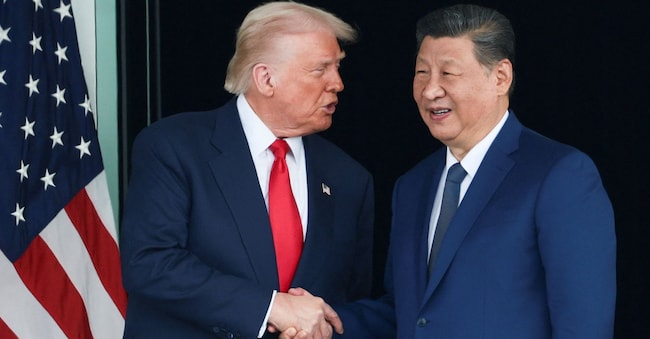
Trump and Xi met on Thursday for over an hour and a half in Busan, South Korea, to try to defuse the risk of a new escalation in the trade war between the two largest economies on the planet. The meeting ended in a cordial atmosphere - the two shook hands and the US president accompanied Xi to his car, before boarding Air Force One and returning to the US - but without any joint statements.
Shortly afterwards, in the air, the US president began speaking to reporters, explaining that anti-Chinese tariffs related to fentanyl will drop from 20 to 10 per cent - bringing the total from 57 to 47 per cent - and that China will 'purchase huge quantities of American soybeans'. In recent weeks, Beijing had announced severe restrictions on the export of rare earths, a group of metals that are difficult to extract and process and are crucial in the consumer electronics, transport, defence, and renewable energy sectors, in which China dominates the world market. Trump had threatened to impose 100 per cent tariffs in retaliation.
In more detail, China has announced that it will suspend for one year the export limits announced on 9 October, however, the moratorium seems to leave in place the restrictions introduced in April, which limit the export of seven rare earths and, in particular, certain magnets that are crucial for car makers, defence companies and chip manufacturers. It was precisely the limits decided in April that, in the space of a few weeks, caused shortages throughout the automotive supply chain, forcing some manufacturers to suspend production at some plants.


