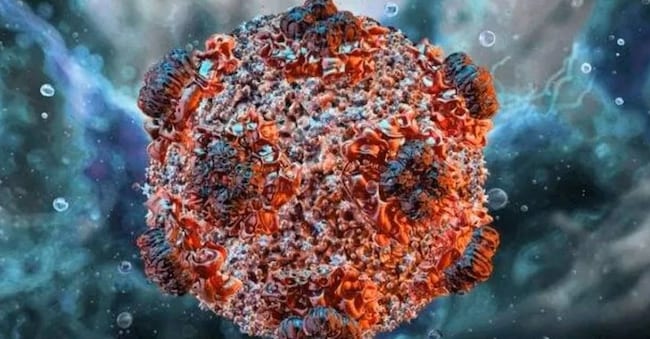
In quarantine 12 employees of a Dutch hospital
A dozen employees of the University Medical Centre Nijmegen will undergo a precautionary quarantine for six weeks after a possible exposure to the Hantavirus.
This was stated by the Radboudumc hospital quoted by the Dutch media, explaining that workers did not follow the specific protocol in handling the blood and urine of a patient who had been hospitalised since 6 May because he tested positive for the viral infection after travelling on the cruise ship Hondius.
Oms confirms two more cases worldwide: total rises to 9 cases plus 11 reports
Of the people who were on board the ship, four are under observation in Italia, in Veneto, Tuscany, Campania and Calabria.
"Currently there is no alarm, we are not facing a new Covid. I want to reiterate this firmly. In Italia there are no positive cases'. The hantavirus is 'a virus that we already know about, so it is not appearing now in the medical health world.
Certainly there is a more aggressive variant, which is the American variant, which affects the lungs and is more lethal. But the fundamental difference with Covid is that it has a low contagiousness'. Thus Mara Campitiello, head of the Department of Prevention, Research and Health Emergencies at the Ministry of Health, speaking this morning on Rtl 125.
'Currently in Italia,' Campitiello recalled, 'there are4 passengers in active surveillance. When we were informed by the Netherlands that 4 passengers were in Italia, of whom 2 with Italian nationality and 2 foreigners, and they were on the flight where the other passenger who died of the antivirus boarded for a few minutes and then immediately got off, the Ministry of Health immediately contacted them. I myself contacted them on their mobile phones, made sure they had no symptoms, and the next day, having sent the information to the regions, they were taken in charge by the relevant regions, which we recall are: Campania, Calabria, Veneto and Tuscany.
They are currently under active health surveillance and in fiduciary isolation, which is,' Campitiello points out, 'only as a precautionary measure because they do not currently show any symptoms'.
Hantavirus in the world
There are 338 cases of hantavirus currently documented worldwide, according to the HantavirusLIve platform, which publishes data on the spread of all such viruses, including the Andes hantavirus.
There are 145 under observation in 70 countries. However, the map, fed by official reports from all over the world, is missing data from China, where hantaviruses are widespread.
According to estimates by the Rare Diseases Observatory of the Istituto Superiore di Santà, in East Asia, especially in China and South Korea, haemorrhagic fever with kidney syndrome caused by hantaviruses that are transmitted directly from animals to humans continue to cause thousands of cases every year, although a progressive reduction has been observed in recent years.
France: eight people at risk of hantavirus hospitalised or being hospitalised
The eight people at risk of Hantavirus in France are already ''admitted'' to hospital or ''in the process'' of being admitted, according to the Paris government's strict new regulations, according to French Health Minister Stéphanie Rist, speaking before members of the Assemblée Nationale.
All took the 25 April flight, also KLM, from St Helena to Johannesburg with the sick passenger.
Hantavirus: Paris, no certainty that virus has not mutated
Rist, speaking at the National Assembly, stated that he was 'not sure that the virus has not yet mutated'. "There are aspects that we do not know", "we still do not have the complete sequencing of the virus.
We cannot state with certainty that this virus has not yet mutated,' he said, according to French broadcaster BfmTv.
The infected Frenchwoman is still serious and in intensive care
The Frenchwoman contaminated by the hantavirus and who returned to France two days ago to the public hospital Bichat (XVIII arrondissement) in Paris with the first symptomsis still 'in serious condition' hospitalised in intensive care. This was stated by the Minister of Health, Stéphanie Rist.
The woman fpresented a severe form of the disease that caused her life-threatening pulmonary and cardiac problems. This was reported by Dr Xavier Lescure, an infectious disease specialist at the French hospital Bichat. He added that the woman is connected to a life support device that pumps blood through an artificial lung, supplying her with oxygen and pumping it back into her body. The hope is that the device will relieve enough pressure on her lungs and heart to allow them time to recover. Lescure called it 'the final phase of supportive care'.