

Health Ageism in Rare Diseases: A Challenge to Face for an Ageing Society
We must ensure that every person regardless of age or the rarity of their condition receives the attention and care they deserve: only in this way will we be able to build a health and social system that is truly fair to all and sustainable

3' min read
3' min read
In Italy, the subject of ageing and that of rare diseases seem, at first sight, to belong to two distant worlds. On the one hand, the elderly represent an increasingly large segment of the population; on the other, the rare disease patients are about two million, a minority that often struggles to find space in the public debate. However, these two realities are not as far apart as one might think.
New Challenges for the Social and Healthcare System
Rare diseases are no longer exclusively a matter of neonatology or paediatrics. Thanks to advances in science, many people with rare diseases are living longer and getting older. Moreover, some rare diseases, such as cardiac amyloidosis, typically manifest themselves in adulthood, progressing with age. This brings us to a crucial point: in an ageing society, rare diseases and ageing not only meet, but often overlap, creating complex challenges for the health and social system.
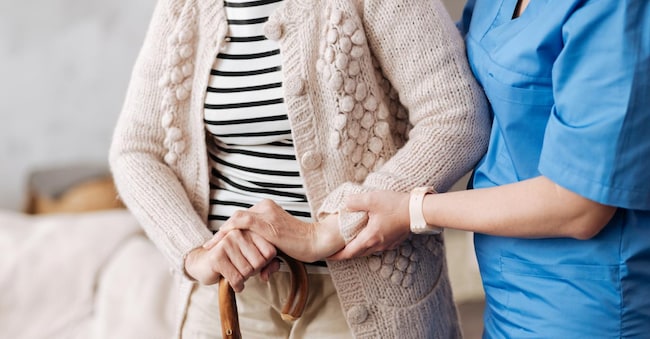
One of the most worrying aspects of this complexity is the risk of ageism, i.e. systematic discrimination against older people. It is a phenomenon that manifests itself in many ways, but in the health context it takes on particularly serious contours. Often, in fact, there is a tendency to regard the elderly as a person 'expiring', for whom it is not worth investing resources or care. This approach is not only ethically unacceptable, it is also short-sighted: life expectancy is getting longer, and many people over 60 have years of active and productive life ahead of them.
What is ageism
Ageism also results in unequal treatment between different age groups, but a person's life does not lose value with age, and the right to diagnosis and treatment must be guaranteed to all, regardless of age. Another crucial aspect is the changing social context in which the elderly live. Increasingly, the elderly are not part of large families and may find themselves living alone or with an equally elderly spouse. This scenario becomes even more complex when the elderly person is also a rare sufferer, turning the spouse into a caregiver. The role of the caregiver is often overwhelming, especially when it comes to children who do not live with the sick parent. These caregivers have to juggle work, family and the needs of the patient, dealing not only with the emotional burden, but also the bureaucratic and financial one. It is essential that the health and social care system strives to reduce these burdens by providing financial support and simplifying bureaucratic procedures.
What to do beyond 'labels'
.To meet these challenges, some concrete actions that the health and social system should take are necessary. First of all, it is essential to create a transition pathway for patients with pathologies that start in childhood, but with which they also live in adulthood. At the same time, it is necessary to integrate internal medicine and geriatrics into the multidisciplinary care, and to address training on rare diseases to them as well. Moreover, equal access to all therapies, care and care pathways must be guaranteed, even for rare patients in old age: excluding them would mean feeding a form of ageism that an ageing society cannot afford. It is also essential to integrate hospital care pathways with a genuine health and social network, capable of responding to the specific needs of the adult person, including through simple and accessible digital tools. And finally, a focus on diagnosis linked to onset in adulthood with the possibility of access to genetic testing, if necessary and indicated.

