

Health professions: evaluations underway to postpone exclusivity to 2026
Minister Schillaci at the Chamber of Deputies: 'Incomplete regional data, caution needed'. Pressure on Campania to catch up on the Pnrr

Key points
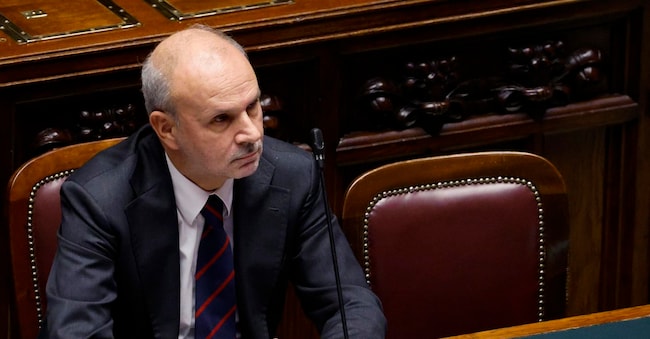
The exclusivity obligation for healthcare professionals such as nurses and physiotherapists employed by the SSN could be postponed for another year, until 31 December 2026. The Minister of Health, Orazio Schillaci, mentioned this during Question Time at the Chamber of Deputies, stressing that the data currently collected does not allow to outline a homogeneous picture on a national level. 'An incompleteness,' he said, 'that imposes some caution on us'.
Regions behind in sending data
The ministry has asked the regions and autonomous provinces to transmit, on a quarterly basis, the data on authorisation requests for free-professional activities in the health sector: the number of requests received, accepted and rejected, as well as the adoption or non-adoption of the envisaged company regulations. "But not all the Regions," explained Schillaci, "have provided the requested data, and not all the companies and bodies of the SSN have adopted the regulation. According to the first data collected, the most frequent authorisations granted concern nurses, physiotherapists, dieticians, speech therapists, developmental neuro-psychomotricity therapists and cardiovascular physiopathology and perfusion technicians.
The objectives of the extension
Because of these delays, Schillaci is considering taking the necessary steps to propose an extension of the deadline set by the regulation from 31 December 2025 to 31 December 2026. There are two objectives: on the one hand, to meet the growing need for services required by the healthcare system, and on the other hand, to enhance the value of the personnel belonging to the healthcare sector, allowing them to carry out their activities, in line with what is already envisaged for medical management personnel, outside working hours.
Campania's delays on Pnrr
During the Question Time, the Minister of Health also answered a question on the Campania Region's delays in implementing the Pnrr. According to the latest Agenas report, there are no active Community Hospitals out of the 191 planned, and only one Community Hospital out of 61 is active. "The Report's data on the first six months of 2025 are correct and, for the Campania Region, they highlight a serious delay that we cannot hide or minimise," Schillaci pointed out, stressing that "we cannot allow resources that have already been allocated to remain on paper while citizens crowd emergency rooms because there is no alternative in the area. The minister also intervened on the possibility of exercising substitutive powers. 'The Campania Region states that the facilities are implemented by the ASLs as delegated implementing bodies,' he added. 'Fine, but this cannot be an alibi. The Region has the duty to coordinate, control, intervene'. On substitute powers, the minister recalled that 'the instrument exists and will be activated if necessary. At the moment we are working in close connection with the Campania Region with the aim of speeding up and making up for lost time'.
No private drift
Another question called on the minister to answer on the initiatives to support the regions for the reduction of waiting lists and the full delivery of the Lea, in order to avoid processes of privatisation of public healthcare. "We need clarity when we speak of a private drift,' Schillaci said. 'The relationship between the public and private sectors in healthcare must be understood as a model of virtuous integration, not as mere opposition. The public sector maintains its central and guarantee role, while the accredited private sector operates in a complementary manner, within a regulated system. The objective is to ensure timely, appropriate and universal access to healthcare services for citizens'. For the minister, however, some things need to be tidied up 'but the system, despite everything, works. It is a system that employs hundreds of thousands of people and makes us one of the longest-living nations in the world, and Italy's 23,500 centenarians prove this every day. Those with government responsibilities cannot afford the luxury of demagogy. They must reckon with real budgets,' he concluded, 'and not with imaginary ones. And when these accounts are made - as the 7.4 billion increase in 2026 shows - the results are measurable and verifiable. The rest is just background noise'

