

Budget: 2.4 billion allocated to the health service, but this is only enough to cover the additional expenditure
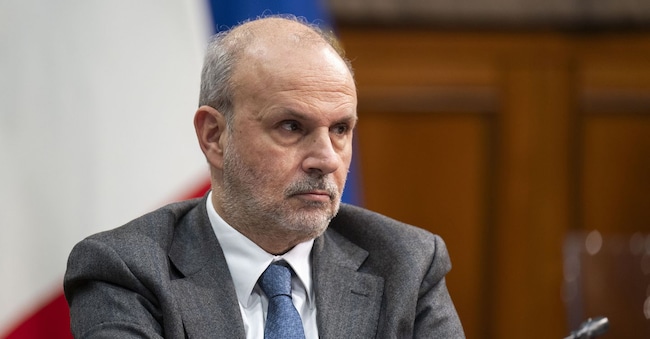
Health Minister Orazio Schillaci has submitted a detailed list of requests totalling 5.5 billion to the Ministry of the Economy

Key points
The final decision on the resources allocated to the health service will only be made once the text of the budget bill expected next week, but from the outline emerging in the Budget Policy Document sent to Brussels, the figure that stands out is the decimal point of GDP (0.10 per cent) allocated to healthcare: 2.4 billion. This figure is much lower (less than half) than that requested by Health Minister Orazio Schillaci, who submitted a detailed list of requests totalling 5.5 billion to the Ministry of Economy and Finance (MEF), and by the regions, which were asking for 18 billion over three years – approximately 6 billion more per year – in investment in the National Health Service. This allocation, incidentally, falls to 0.08 per cent of GDP in 2028 and to 0.07 per cent in 2029 in the Budget Policy Document.
The budget process and Minister Schillaci’s requests
Over the coming days, Schillaci will continue to press for an increase in the available funding, which for 2027 will also include one billion inherited from last year’s Budget Act, bringing the total resources to 3.4 billion. This figure amounts to just over 2 per cent of the National Health Fund – which will be worth 143 billion in 2026 – and is, on its own, just enough to cushion the impact of inflation on healthcare spending, starting, for example, with pharmaceutical costs. Minister Schillaci has been working for weeks on a wide-ranging programme of potential measures: the top priority is healthcare staff, for whom the request is for 1 billion to be allocated to waiting lists and local recruitment (500 million), increases in staff allowances (150 million) and doctors’ exclusive practice allowances (350 million). Other requests include prevention (580 million), the National Health Plan (350 million) and other measures such as funding for Alzheimer’s care fees (110 million) and funding for the dementia plan (100 million). Not to mention measures for the pharmaceutical sector, which plans to raise the ceiling on available funds. Now, for the ministry’s officials – whilst awaiting clarity on the final funds available – the work of reviewing and making cuts begins.
Bertolaso (Lombardy): “Let’s hope these rumours are unfounded”
As regards healthcare funding in the budget, “we are monitoring the situation very closely, albeit with some concern. We hope that the rumours currently doing the rounds are just the usual gossip with no basis in fact”. So said the Lombardy Region’s Welfare Councillor, Guido Bertolaso, on the sidelines of an event organised by Areu in Piazza Città di Lombardia. “The government,” explained Bertolaso, “has always been very attentive to all healthcare issues. Meloni has repeatedly emphasised that healthcare is an absolute priority for the whole country. Now, with the budget, it is a matter of moving from commitments to concrete action.” “I know that Minister Schillaci is determined, and Minister Giorgetti knows the issue inside out because he is always on the ball, so – the councillor continued – I am certain that the budget will include the necessary funding to enable the whole country to continue improving that universal healthcare system which, let us not forget, is truly a unique reality for us that is, in fact, unrivalled anywhere in the world.”


