

Healthcare gets more funds for 2026, but the great unknown of the health professions crisis remains
Health Fund reaches 143 billion, more resources for drugs. For personnel mini-increases and a first tranche of recruitments: for doctors it is a 'disaster for the National Health Service and professionals'

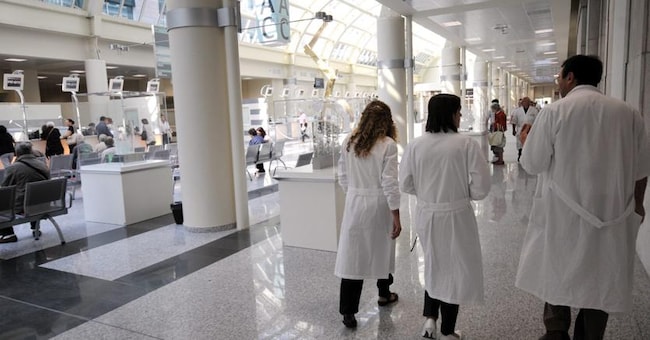
In 2026, the health sector will collect 2.4 billion more from the manoeuvre, reaching 143 billion, thanks also to the resources allocated last year, and among its priorities it will send a first signal to the health personnel, the real emergency of the National Health Service, with mini-increases in the pay envelope for doctors and nurses and a first tranche of recruitments. Measures deemed totally inadequate by doctors, who call the manoeuvre 'a drift' and a 'disaster for the National Health Service and professionals', announcing mobilisations and barricades. The disappointment was too bitter for the Mef's stop in extremis to an amendment that would have made the extra-contractual resources earmarked for increases as early as 1 January immediately available. Defending the manoeuvre is Health Minister Schillaci, who speaks of an 'extraordinary increase in resources for healthcare', pointing out the investments in prevention: from the funds for mental health (80 million in 2026) to the approximately 240 million to strengthen cancer screening.
Among the latest changes approved is the one on pharmaceuticals, which gives a breath of fresh air to companies, since the pharmaceutical expenditure ceiling that determines the payback for companies (direct purchases) increases by 0.30% on the health fund instead of 0.20%: a total of more than 400 million. From 2026, the total health fund share for drugs thus becomes 15.65% (+0.35%). The further increase in the ceiling on direct purchases is covered by a cut of 140 million in the fund for innovative drugs (which is in surplus every year), thus decreasing from 1,300 million a year to 1,160 million. Also abolished is the payback on contracted expenditure that cost the companies 170 million a year. While for medical device companies the expenditure ceiling increases by 0.20% (from 4.4% to 4.6% of the health fund): practically 280 million more. A compulsory audit is also envisaged for all Regions that do not respect the minimum levels of care (the so-called Lea) for citizens: they will have two years to comply (but no sanctions are envisaged). Approved in extremis also a further extension from 2027 to 2029 for the derogation of qualifications for those health professionals coming from outside the EU: a simplification born during the Covid that over the years looks more and more like a dangerous 'shortcut' as shown by the case of foreign nurses at San Raffaele that has raised much controversy.
But let us come to the main measures: the extra resources will be used first of all for recruitment and to raise salaries by increasing the specificity allowance. On the first front, however, compared to the eve when a much more robust three-year recruitment plan of 25-30 thousand entries was imagined, the numbers are reduced to only 6,300 nurses and about a thousand doctors, in practice just over 7 thousand new health workers to be hired thanks to the 450 million 'reserved' from 2026 onwards. On the salary increase front, the manoeuvre further strengthens the specificity allowance for doctors and nurses, an item that was already financed last year, so that in 2026 the white coats will have a total of about 3,000 euro more in their pay envelope - 230 euro gross per month - thanks also to the 2025 manoeuvre increases, while nurses will see their salaries increase by 1,630 euro gross per year (about 125 euro gross per month). To see these increases, however, health workers will have to wait for the renewal of the contracts, and since the contracts for the three-year period 2022-2024 were recently signed, it will still take some time. The regions will also be able to increase the variable part of the salaries of those working in emergency rooms. More funds will also be provided for hospital tariffs (the Drg) already increased by 1 billion for 2026 and 1.350 billion from 2027: resources that should allow private facilities to update the contracts of their staff. In order to reduce waiting lists, the expenditure ceiling for the purchase of services from accredited private providers is also increased by one point. Finally, the manoeuvre allocates EUR 50 million a year to definitively stabilise the pharmacy of services, where it will become increasingly the rule to provide even some basic diagnostic services such as an Ecg or a blood pressure monitor.


