

Healthcare sector seeks funding in the budget, but Italia remains at the bottom of the table in Europe when it comes to spending
An analysis of Italian healthcare expenditure within the OECD and European context highlights a situation of persistent underfunding compared with its main partners and the average for advanced countries

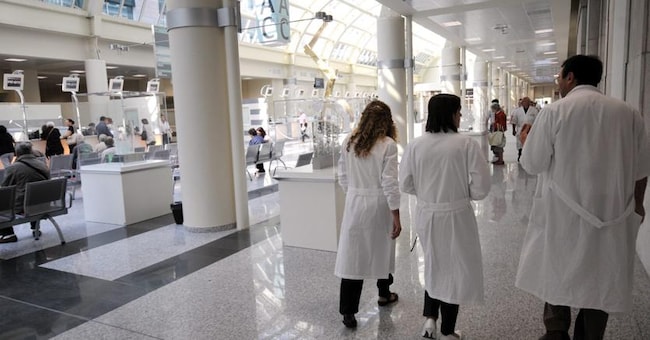
With the 2027 budget just around the corner, Health Minister Orazio Schillaci is aiming to increase public healthcare expenditure as a proportion of GDP to 6.4 per cent, which would mean a need for increase of 4–5 billion. However, even once this target is reached, Italy would still lag far behind many OECD countries and its major EU partners: currently, only the Slovak Republic has healthcare expenditure equivalent to 6.4 per cent of GDP.
An analysis of Italian healthcare expenditure within the OECD and European context – according to newly published data – highlights a situation of persistent underfunding compared with its main partners and the average for advanced economies.
In 2025, Italian public healthcare expenditure accounted for 6.2 per cent of GDP, placing our country in twenty-fifth place out of 38 OECD countries. Even when private healthcare expenditure, which accounts for 2.2 per cent of GDP, is taken into account, Italy’s total expenditure stands at 8.4 per cent of GDP, well below the levels seen in Germany (12.7 per cent), France (11.3 per cent) and the United Kingdom (11.3 per cent). Expressed in euros per capita at purchasing power parity, Italia ranks twenty-fourth with €2,438 in public spending and eighteenth with €854 in private spending. Germany spends 5,385 euros per capita on public healthcare, France 3,854, Belgium 3,760, the United Kingdom 3,675 and Spain 2,467 euros, whilst the OECD average stands at 2,999 euros.
Although our country boasts a universal healthcare system, it faces a number of critical challenges. The gap compared with its main European partners is significant in both absolute and relative terms. Even with the hoped-for increase in public spending to 6.4 per cent of GDP, Italia would still lag far behind the levels seen in Germany, France and the United Kingdom. The proportion of private spending, although lower than in some countries such as Belgium and Switzerland, is a cause for concern, particularly for the most vulnerable sections of the population, who risk going without treatment for financial reasons.
Underfunding often results in inequalities in access to services between the north and south, with longer waiting times and a reduced availability of services in certain regions. The ageing of the Italian population is leading to growing demand for health and social care services, with significant implications for the sustainability of the system. A comparison with countries such as Germany and France highlights the need for greater investment in technology, digitalisation and healthcare staff in order to maintain high standards of quality and safety in care.

