
Climate

Heatwave: two elderly patients admitted to San Martino Hospital in Genoa have died

The man was 86 years old and had been at the Policlinico for two days, whilst the woman – aged 74 – had arrived at the hospital this morning. Mayor Salis said: “This is a time of grief for our community.”
by Pietro Menzani

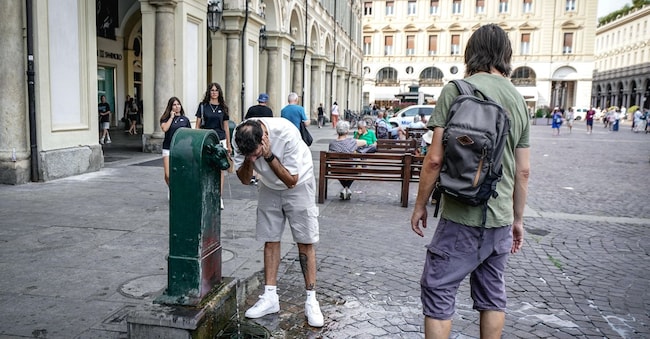
Una persona si rinfresca ad una fontana detta Turet per combattere il caldo estivo in piazza San Carlo. Torino (ANSA/TINO ROMANO)

3' min read

Translated by AI
Versione italiana

3' min read

Translated by AI
Versione italiana

The heatwave has claimed its first victims. An 86-year-old man and a 74-year-old woman have died as a result of the extreme temperatures that have hit the country. Both were being treated at the Policlinico San Martino hospital in Genoa. The man had been admitted to hospital in a critical condition two days ago, with a fever of up to 42 degrees and severe dehydration, whilst the woman had been at the hospital since this morning following a cardiac arrest, with a fever of 43 degrees and suffering from severe hyperthermia. Over the past 24 hours, there have been ten visits to the A&E departments in the Ligurian capital due to the heat.

The mayor’s reaction

“On behalf of the entire city council and the city of Genoa,” wrote Silvia Salis, the Mayor of Genoa, in a statement, “I wish to express my deepest condolences and my sincere sympathy to the families of the two people who lost their lives as a result of heatstroke. This is a time of grief for our community, reminding us just how dramatically extreme weather events can affect our daily lives and our health.”

Loading...

The mayor added that “we are facing several consecutive days of ‘red alert’, with temperatures that are putting a severe strain on the most vulnerable members of our society. We have activated the Heatwave Plan, but individual prevention remains the most valuable tool we have. For this reason, I am making a heartfelt appeal to all the people of Genoa to responsibly follow the key common-sense guidelines. Please do not underestimate the risks and follow these recommendations to protect yourselves and your loved ones’, reminding residents to avoid going out during the hottest hours of the day, to stay well hydrated, and to limit non-essential travel and strenuous outdoor physical activity between 11 am and 6 pm.

“I would ask everyone to pay close attention to the elderly, young children and people with chronic conditions. Keep in daily contact with elderly relatives or neighbours who live alone, making sure they are well and that their living space is kept cool,” concluded Salis.

Heatwave

The situation remains critical across much of the country: in Italia, according to the Ministry of Health’s daily bulletin, the number of cities on ‘red alert’ (the highest emergency level) rose to 25 on 30 June, with the addition of Cagliari, Catania and Trieste.

In addition, the Ministry reports that over 400 calls were made last week to the freephone number 1500, which is operational from 22 June to 11 September. The service provides members of the public with information and advice on heatwaves. The majority of enquiries relate to cardiovascular issues (57%) and psychosocial issues (37%).

Visits to A&E departments have also risen following the extreme temperatures that have hit the country. Alessandro Riccardi, president of the Italian Society of Emergency and Urgent Medicine (Simeu), estimates that there has been a 10–15 per cent increase in visits to A&E departments in major cities.

The Ministry of Health

The two elderly people who died in Genoa are the first victims of the unusual heatwave that has hit Italia. Until now, as Maria Rosaria Campitiello, head of the Prevention Department at the Ministry of Health, had explained prior to the incident, there had been no record of ‘a peak or increase in heat-related deaths among the over-65s’. Campitiello’s statements followed alarming estimates released by the World Health Organisation, which spoke of 1,300 excess deaths in Europe linked to high temperatures since 21 June.

According to Campitiello, the figures from the WHO – which has also stated that Europe is warming at twice the global average rate – “are estimates” obtained using “a statistical methodology based on projected mortality”. The figures from the Ministry of Health, on the other hand, are ‘actual data on how many deaths there actually were. A distinction must therefore be made, because otherwise one is comparing two different types of assessment’. Furthermore, the head of the Prevention Department had explained that the Italian population is ‘much more accustomed to high temperatures than people in northern Europe’.

In any case, the Ministry’s recommendation remains to remain vigilant and not to overcrowd A&E departments unless there is a genuine emergency: ‘We are monitoring the situation, not least because we need to provide the public with accurate information, without causing undue alarm, whilst assessing the real danger, particularly for the most vulnerable groups such as the elderly, children and pregnant women.’

Copyright reserved ©

Brand connect

Loading...

Newsletter

Notizie e approfondimenti sugli avvenimenti politici, economici e finanziari.

Iscriviti