

Here is the identikit of the caregiver (52% are men), the burden of care and the role of the social network
The project coordinated by the Università Cattolica del Sacro Cuore is dedicated to caregivers and those who offer them support

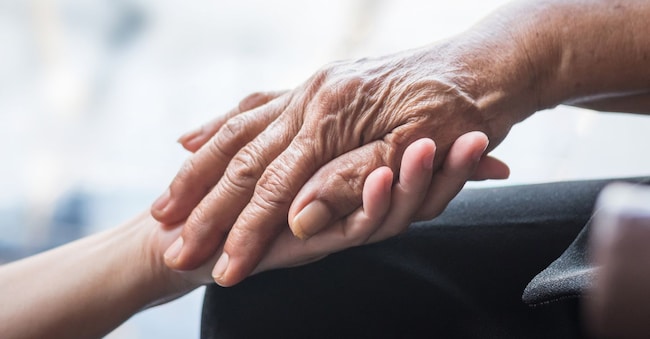
In Italy, family solidarity is not just a value, but a daily practice deeply rooted in the collective culture. Observing it closely means questioning how perceived reciprocal obligations between individuals influence personal and family choices and even recourse to care services. Informal support networks, in fact, can represent both a fundamental resource and a constraint that guides, sometimes limits, life paths. It is precisely from this perspective that the project of major national interest PRIN 22 "Il capitale sociale nelle pratiche di care in Italia: Caregiving e social support in tempi di pandemia" (Social capital as resource of care practice in Italy: Caregiving and social support in pandemic time), carried out in partnership between the Università Cattolica del Sacro Cuore sede di Milano (principal investigator) and the Universities of Verona and Molise, was born. This research is innovative both in terms of the object of study and the methodological framework adopted.
At the centre of the survey is not only the informal caregiver - the person who takes care of a frail, sick or disabled person - but the entire relational network in which this function is embedded. The researchers' gaze thus shifts from the predominantly functional role of caregiving to its relational dimension: caregiving is never about a single individual, but involves family, friends, neighbours, proximity networks that may support, support, or be profoundly affected by the care situation. This is the case, for example, of young carers, whose possibility of planning for the future may be severely limited. Caring for a vulnerable person, research shows, modifies pre-existing social networks: it can strengthen ties, generate new ones or, on the contrary, break some of them. In any case, caregiving goes far beyond the action of the individual and produces widespread effects on the entire relational network. From the methodological point of view, the study adopted an articulated design combining qualitative surveys and a quantitative survey at national level, conducted on a representative sample of the population aged 18 years and over resident in Italy, according to proportions by sex, age and geographical macro-area.
Data from the survey of 1,504 people paint a significant picture: 86.8% of respondents claim to have provided help to at least one person in the last 12 months. Of these, almost 29% claim to have provided help at least once a week to one or more vulnerable persons. Caregivers do not belong to a single age group: 27.2% are elderly, 16.8% young people under 35, while the majority (56%) are adults. The gender figure is also striking: 52.7% of carers are male, a sign that caring is no longer an exclusively female task. One of the most relevant elements emerging from the analysis concerns the role of the social network. Its presence - or absence - and the quality of the relationships that make it up profoundly influence the caregiving experience and its consequences. The researchers identify different configurations: from solitary and isolated caregivers, lacking support, to those who are supported by an "alter ego" who can replace them in the care tasks; up to the forms of shared caregiving, in which a restricted group of people share responsibilities and tasks, or to widespread caregiving, which involves a significant part of the network.
The relationship with health and welfare services is another crucial junction. Three main profiles emerge from the analysis. The public service "loyalists", who express confidence in the NHS and in the skills of professionals, often with a note of surprise at a positive experience perceived as almost exceptional. The "mistrustful" of the public service, who resort mainly to the private sector because they judge public services to be inadequate, poorly personalised or difficult to access. Finally, the 'recompositional realists', who combine the use of the public service with private or third sector services to meet specific needs and complement the intervention of professionals. The common denominator, however, remains the burden of care. For all the carers involved, the demand is clear and urgent: more services, more accessible, capable of concretely supporting those who care for others every day.
* Professor of Sociology of Cultural and Communicative Processes at Catholic University

