
Meet Qira, the next generation of Lenovo’s personal assistant that cares about your privacy

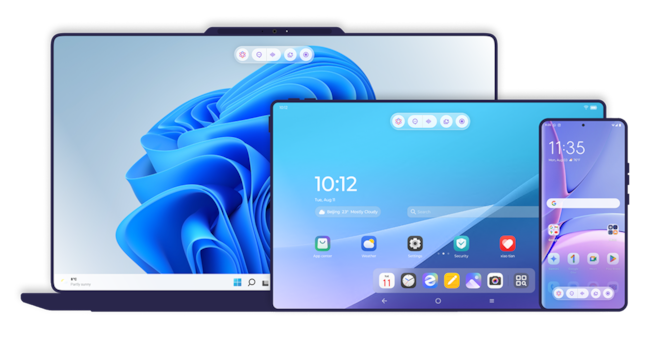
BERLIN – IFA is undoubtedly an excellent showcase for high-tech products, but these days it is not enough simply to provide users with processing power and memory; they need services that help them live and work better. Lenovo has chosen to focus on AI, presenting the latest developments in its Qira service and the strategy that is shaping its evolution. Described as a “Personal AI”, it accompanies the user across all Lenovo and Motorola devices, promising not to send data to the cloud except in specific cases where it is impossible to process requests locally.
Here in Berlin, Qira has taken a significant leap forward, becoming available on 80 Lenovo devices, up from the 14 announced at the start of the year. The assistant synchronises information across the user’s various devices, retrieving data and reducing the need to constantly switch between apps. The assistant will also be coming to Motorola phones compatible with the Android 17 operating system update, with a phased roll-out covering selected models from the Edge, Signature and Razr ranges. Furthermore, the ecosystem is expanding for the first time to include wearables, thanks to integration with the new Moto Watch Ultra, which allows the assistant to be activated simply by raising your wrist or speaking a voice command. This feature could mark a turning point in the way we use AI assistants, making it much quicker and more convenient to ask our devices questions. From a productivity perspective, the partnership with Workato enables Qira to connect to everyday applications such as Gmail, Google Calendar, Google Contacts, Outlook Mail, Outlook Calendar and Slack, introducing the ‘Catch Me Up’ feature – a summary of all important tasks in one place. This is complemented by integrations with Notion, for accessing and editing projects directly via the assistant, and with Perplexity for conducting in-depth visual and text-based searches. Data management is based on a philosophy that Lenovo describes as strictly ‘local-first’, whereby information from the personal knowledge base is encrypted and stored on the device, with data sent to the cloud limited exclusively to what is strictly necessary to fulfil the request. “For Lenovo, Qira is not a way of tying users to its systems,” says Luca Rossi, Executive Vice-President and President of Lenovo’s IDG, “but a way of improving their working and private lives. There are no barriers or lock-in mechanisms. The data always belongs to the user and remains wherever the user wants it to be.”
“The number of customised computers we sell through the shop on the Lenovo portal,” says Alessandro De Lio, Lenovo’s PC and Smart Devices Leader, “is constantly growing. This means that users are looking for devices that are increasingly tailored to their needs. Qira can meet this need by helping them find their data and documents regardless of the device they’re using, making their lives easier.”
Using full-scale LLMs on devices without relying on the cloud is currently impossible due to the processing power required to achieve satisfactory performance, but the use of mini-assistants such as Qira is already sufficient to speed up and simplify a great many tasks. We hope Lenovo will extend the use of Qira beyond its own ecosystem, or that this initiative will serve as an example for someone to develop a similar system that includes devices from different brands, as we are finally beginning to glimpse the considerable potential of ‘on-device’ AI.

