

Melanoma: hereditary one in ten cases, watch out for the sun's rays
For the president of Imi, Daniela Massi, constant dermatological check-ups are necessary and even more protection from radiation is also needed in spring

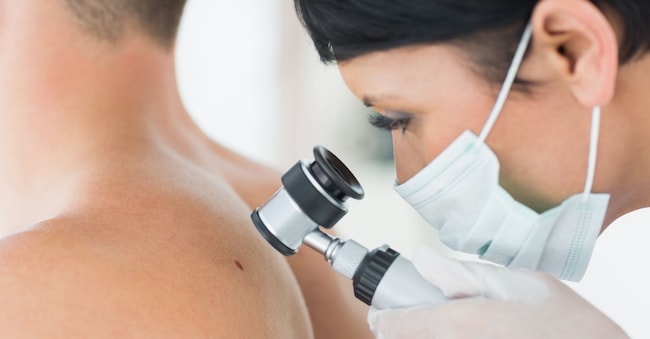
Statistics do not lie. And they indicate that more or less 10% of people who discover they have melanoma have at least one first-degree relative with the same malignancy. Not only that. It should also be kept in mind that single genes can be responsible for multiple carcinomas, not just skin cancers. This is why check-ups must be regular and constant through dermatological examinations and, regardless of the genetic constitution, it is basic for everyone to protect themselves from the sun's rays already in this season. That is, to focus directly on primary prevention, preserving the skin from the action of the sun's radiation. Indicating these recommendations are the experts of the Intergruppo Melanoma Italia (IMI), through its president Daniela Massi.
The role of genetics
Let us return to the numbers. More than 2,600 cases a year in Italia may be hereditary-familial and therefore linked to germline pathogenic variants ('mutations'), transmitted from parents to offspring, which increase the oncological risk. As if that were not enough, one in ten patients has at least one first-degree relative affected by the same skin cancer. But beware. In the great complexity of human DNA, one must always remember that hereditary cases may not limit their effects to the skin. "The onset of neoplasia can be conditioned by individual genes such as CDKN2A, CDK4, BAP1, POT1 or MITF, which are in turn responsible for other tumours including those of the pancreas, kidney or mesothelioma,' stresses Daniela Massi. If there is a suspicion of a hereditary syndrome or patients suffering from multiple melanoma, one of which arose at a young age, we recommend genetic counselling and the performance of some specific tests that can confirm heredity in a variable percentage of up to 30% (around 700 cases). As IMI we are promoting a genetic teleconsultation service throughout the country to facilitate appropriate access to genetic counselling and testing also for patients who do not have access to such a service close to home'.
How to behave
Experts recommend constant skin surveillance through dermatological examinations or examinations such as dermatoscopy. Above all, they recall how good sun exposure rules should always be followed throughout the year, starting with the use of sun filter creams and other means of photo-protection. At the same time, as Mass recalls, the use of artificial tanning devices is strongly discouraged. And for those with hereditary melanomas, however, surveillance should not be limited to the skin alone but should be extended to other organs. 'Screening examinations are also useful for detecting other neoplasms such as pancreatic carcinomas, renal or ocular neoplasms, or pleural tumours,' resumes the IMI president. Therefore, neoplasms associated with melanoma must also be taken into account to identify individuals at increased risk. These courses of treatment and prevention must follow certified protocols and must always be prescribed by the entire multidisciplinary team attending the patient. Eudofamily surveillance is increasingly based on personalised monitoring plans'.
Therapy results
In Italia, some 221,000 people live with a previous diagnosis of melanoma, one of the most aggressive skin cancers. For years, there has been a steady increase in the number of cases, but mortality has remained essentially stable. In Italia, five-year survival rates stand at 88% for men and 91% for women. This is thanks to increasingly effective treatment approaches. 'The most recent therapeutic innovations concern new immunotherapy strategies and combined approaches to overcome treatment resistance,' Massi reports. 'The use of new immunomodulating molecules, including bispecific antibodies, capable of enhancing the cells' response to anti-tumour drugs is also being studied. Vaccines are also becoming a reality and can be used in combination with immunotherapy in research protocols. An area of great interest is that of new targeted molecules and the development of further combinations. Then there are the multimodal approaches that combine surgery, radiotherapy and systemic therapies. They are gaining in importance in improving patient survival. In parallel, researchers are developing new predictive biomarkers, and liquid biopsy is also playing an increasing role in early monitoring of tumour recurrence. It can also be used to monitor and evaluate the response of the malignancy to administered treatments'.
IMI's commitment
IMI has been working since 1998 to promote research, specialist training and public awareness on melanoma in Italy. It includes oncologists, anatomo-pathologists and dermatologists and other health professionals, and also promotes multicentre and multidisciplinary studies. "We are currently coordinating several clinical research projects both on melanoma and other skin cancers," concludes Ma Massi. "In particular, we are working on new immunotherapy drug trials. Of great interest is a multicentre observational study on the real-world results of neo-adjuvant therapy in unresectable melanoma. A recent real-world study showed that continuing immunotherapy after 2 years in patients with brain metastases may not be necessary. Another independent research concerns the impact of adjuvant therapy on the fertility of young female cancer patients with a high risk of recurrence, as well as the chronic effect of therapies in young adults. Italia is at the forefront in the world in terms of clinical research on one of the main cancers that arises at a young age. Precision oncology and the personalisation of therapies and prevention are also advancing in the management of this neoplasm. It is an evolution in which the anatomo-pathologist also plays an important role because melanoma is a very heterogeneous disease from a biological point of view. Diagnosis and subsequent therapies depend on slide evaluations, today also digital, which condition the choices of the multidisciplinary team'.

