Here is DeepSeek V4, the return of the 'Sputnik effect': China bets on low cost
The new model brings the context to one million tokens, relies on agents and reduces costs, and is also based on Huawei chips.
by Luca Tremolada
 Aggiungi Il Sole 24 Ore
ai preferiti su Google
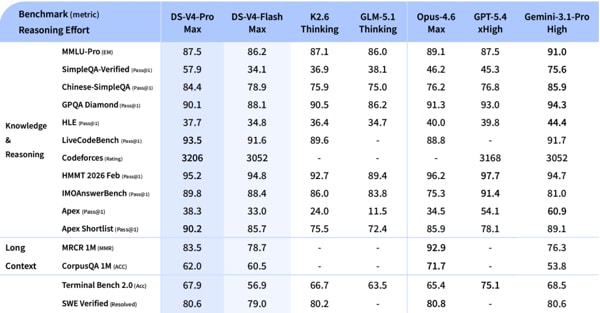
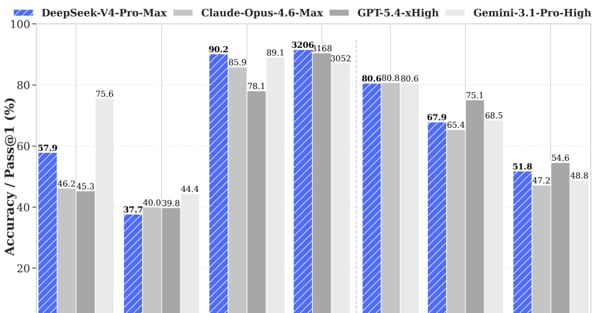
DeepSeek's new move is not just a product update. It is a system signal. With the V4 model just released in preview, the Hangzhou company is back on the market more than a year after its debut that surprised everyone: a low-cost chatbot, based on the R1 model, capable of competing with US models. At the time, it was referred to as the 'Sputnik effect'. Not so much for the absolute technological superiority, but for the strategic shock: the idea that the Western advantage was no longer untouchable.
Today the leap is different. The heart of DeepSeek-V4, the Chinese company claims, is context: up to one million tokens. It is not a contest of numbers. It is a change of units. It means being able to work on entire archives, code repositories, contracts, textual datasets without fragmenting the problem. AI no longer answers a question, but accompanies a process. This is where agents come in: systems that plan, remember, execute. DeepSeek insists precisely on this axis, claiming the ability to reason and manage complex tasks.
The second element is cost. Once again, DeepSeek tries to compress the price curve. It is a consistent strategy: lowering the barrier of entry and pushing towards affordable 'industrial' AI. It is not certain that the declared numbers will hold up on a large scale, but the message to the market is clear: competition is also played on efficiency, not just performance.
The third point is perhaps the most political. Huawei chips were also used in the development and validation of DeepSeek-V4. The technical report states that the model was developed with a multi-platform approach that actively includes Huawei's Ascend NPUs as an integral part of its computing and optimisation infrastructure. It means that ithe model also runs on Huawei's chips. In the context of US restrictions on advanced semiconductors, this detail weighs heavily. It means that the Chinese ecosystem - hardware and software - is seeking its own self-sufficiency. Not perfect, but operational. And that is what matters.
DeepSeek-V4 comes in two variants, Pro and Flash, both open source. Again, this is not just a technical choice. Open source becomes a lever of dissemination and influence: more developers, more integrations, more indirect data. It is a strategy already seen, but now applied to increasingly competitive models.