Digital Economy

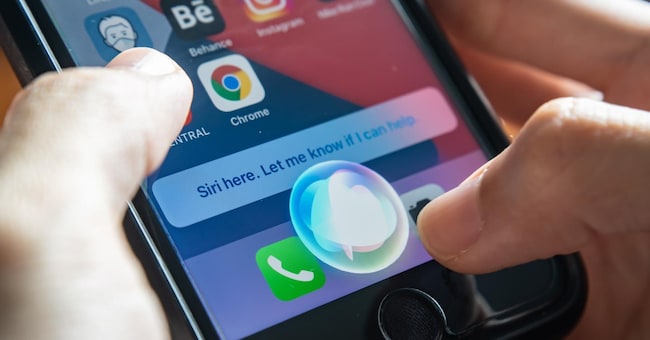
Here's how Apple plans to transform Siri with artificial intelligence in June

According to the New York Times, the likely timing of the announcement seems to be the annual developers' conference, 10 June

by Alessandro Longo

4' min read

4' min read

Apple's Siri will embrace generative artificial intelligence, like ChatGpt, and it's about time: Google has already started down this path in smartphones and so has Amazon's Alexa assistant.

The likely time of the announcement seems to be the annual developers' conference, on 10 June, according to a leaked company plan revealed by the New York Times.

Loading...

In short, with the new Siri we will be able to converse in full, perform tasks and get information in a more comprehensive and articulate manner.

How will the new Siri be?

Voice assistants belong to a different technological generation than chatbots powered by generative AI, although both use artificial intelligence.

Chatbots are based on so-called large language models, systems trained to recognise and generate text (audio, images...) on the basis of huge data sets collected from the web.

Siri, Alexa and Google Assistant, on the other hand, are essentially 'command and control' systems. They work with a script; they are able to understand a finite list of questions and requests such as "What's the weather like now?" or "Turn on the bedroom lights". If a user asks the virtual assistant to do something that is not within its code, the virtual assistant says that it does not know what to do or that it did not understand.

Siri with generative AI will therefore have two major innovations. It will do better things that the current Siri does and it will do entirely new things. The first is the ability to make more articulate requests, with more natural language and without the need to repeat the context. For example, after asking what the weather is tomorrow in a certain place we could add 'what clothes do you recommend', without having to repeat the city and the day. But we could also make complex requests by speaking normally, instead of breaking them up into many separate commands ('set a timer at 12 o'clock, for one hour, then when it finishes set another one for then minutes and send a message to my mother').

Siri will understand us better and more easily.

For new things, on the other hand, there is a vast and unknown prairie, but early rumours speak of typical generative AI tasks such as summarising a text, generating music or even autonomous agent functions, such as those that Amazon is introducing in Alexa (in the form of a skill) or Google in the Gemini app. For example, recommending a restaurant and making a reservation, all by voice.

Apple will run the new Siri on iPhones instead of remotely via the cloud. In this way, it will be able to guarantee greater data privacy, an increasingly central theme in its corporate philosophy (and marketing).

At the same time, a Siri running locally will also save Apple money, because cloud-based AI has a certain computing cost for the service provider (12 cents per thousand prompts in the case of ChatGpt).

Apple is reportedly boosting the iPhone's Ram for this purpose, in order to make the new Siri run smoothly. The fact remains, however, that at present, the AI language models that can run locally are much smaller than the ChatGpt-type large language models we are used to. Consequently, they are more prone to errors. The subject is a delicate one and justifies the caution with which Apple has so far moved. It certainly does not want to replace the old, outdated but reliable Siri with an assistant all genius and unruliness, which we cannot trust.

The competition, Google and Alexa

With caution, others are also moving. Google launched the Gemini app on an experimental basis this year and those who install it make it the default assistant on smartphones. It is not yet possible in Italy, however. Some voice features of the Google Assistant are also not yet available via the Gemini app, e.g. media control, reminders and routines.

Alexa now has three skills for generative AI: Splash, which allows you to create music; Volley Games, a quiz; Character.ai which, like the site of the same name, allows you to talk to a historical figure such as Marx or Einstein.

Amazon last year also talked about the possibility of programming complex routines with voice: 'Alexa, every night at 9pm, announces it's bedtime for the kids, dims the upstairs lights, turns on the porch light, and turns on the fan in the bedroom'.

The company has been working on it for a few months and, from rumours that have emerged this year, it appears that the first results are not encouraging, due to the excessive number of errors.

The road, however, is marked out. Apple itself, despite its classic caution, could no longer afford to stand still on artificial intelligence (it is the only big tech company not to have launched a product). The risk is losing market share in its core business, smartphones; precisely at a time when the climate is increasingly difficult and ultra-competitive due to the rise of Chinese brands. Apple's sales fell in almost every market in the world, according to the tech giant's latest results in May. The company said demand for its smartphones fell by more than 10 per cent in the first three months of this year, while overall sales declined in all geographic regions except Europe.

Copyright reserved ©
Loading...

Brand connect

Loading...

Newsletter

Notizie e approfondimenti sugli avvenimenti politici, economici e finanziari.

Iscriviti