
Here's how certifications increase the value of Italian agri-food products
Quality labels are the second criterion of customers' choice after prices and promotions: the most appreciated are 100% Italian (71%) and sustainability of the product in respect of the environment (73%)

4' min read
Key points
4' min read
In an increasingly competitive market, certifications in the agri-food sector represent not only an element of guarantee for the consumer, but also an important enhancement tool for Italian companies, especially on foreign markets. "Certification is now perceived by both the business world and consumers as an element of guarantee," explains Giuseppe Liberatore, Managing Director Industry Food of Conforma, the association that brings together Italian certification bodies. "The fact that there is a third party body that verifies the accuracy of what is stated on the label is increasingly seen as an added value.
Priorities in the selection criteria
.The importance of certifications is clear from the 2024 edition of the focus 'The value of certifications in the perception of producers and consumers' by Nomisma Wine Monitor, according to which 'labels' are the second criterion of choice after prices and promotions: in particular those for '100% Italian' (71%) and those for sustainability and 'environmentally friendly product' (73%). The PDO/PGI label is relevant for 70% of consumers, much more so than the organic label (51%), which has the same value as the well-known producer's brand.
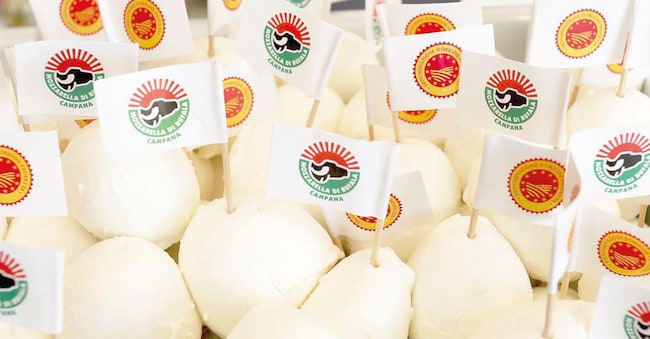
This is a complex and articulated system that includes regulated or voluntary certifications. The first type concerns productions subject to precise regulations established by the State or the European Union, such as the PDO (Protected Designation of Origin) and the PGI (Protected Geographical Indication). The production value of the so-called 'PDO economy', according to Ismea, now exceeds 20 billion Euro, with a significant impact on national exports. Particularly growing (+3.5%) is the food sector, which exceeds 9 billion Euro, while bottled wine stands at 11 billion.
'Some certification systems are very popular and represent added value,' explains Liberatore. A concrete example is the label on Italian PDO wines: 'On the neck of the bottles there is a status mark with an alphanumeric code. Through this code or QR code, any consumer in the world can verify the authenticity of the product. It is an element of great value for the guarantee and traceability that we offer abroad'.
The Gs1 Immagino census
.In the large-scale retail trade, 3,186 products bore the European CE conformity mark and 7,991 bore the 'Eu Organic' (organic) mark as at June 2024: these are among the label information monitored by the Gs1 Immagino Observatory, which also registers most voluntary CSR (Corporate Social Responsibility) certifications. Gs1 surveyed 15,717 references that convey this type of information, equal to more than one product in 10 of those found in supermarkets (11.4% of the shopping basket examined) for a turnover of 6.9 billion (+2.9% per year), although in volume terms their performance has fallen slightly (-1.6%), but consistent with the negative trend in consumption in general.


