Innovation

Hi-tech solutions in agriculture, investments at 2.5 billion

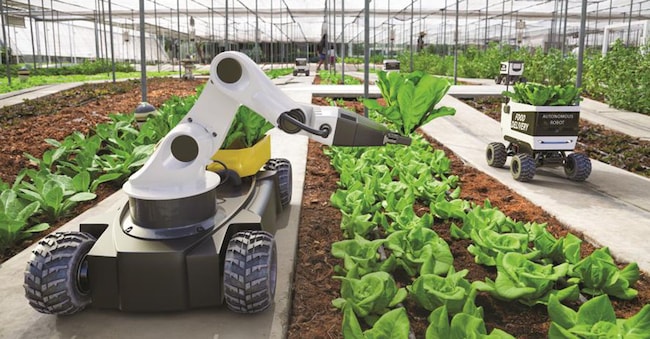
According to the Smart Agrifood Observatory of the Politecnico di Milano and Rise of the University of Brescia, in 2025 growth of 9% will be achieved mainly for software that improves productivity and sustainability. But areas covered will not go beyond 10%

by Giorgio dell'Orefice

3' min read

Translated by AI
Versione italiana

3' min read

Translated by AI
Versione italiana

In the uncertainties of international markets, farmers are clinging to technology. This is what data from the 2025 report of the Smart Agrifood Observatory of the Milan Polytechnic and the Rise Observatory of the University of Brescia suggest.

After a year of stopping or simply slowing down, investments in Agriculture 4.0 have therefore started up again. The market in Italy for technological solutions for agriculture - from drones to latest-generation agricultural machinery, from fertirrigation controllers to software for managing crop operations - reached a value of2.5 billion euro in 2025, a growth of 9% compared to last year.

Loading...

Growth despite market uncertainties

"Despite the persistence and aggravation, in some cases, of critical geopolitical, economic and environmental factors," comment the Smart Agrifood Observatory, "in 2025 the global sector continued to believe in and invest in digital innovation. Worldwide, the resources raised by start-ups have grown again, reaching USD 11.5 billion (+21%). Food eCommerce start-ups remain the most funded (with 77% of capital raised). More and more innovative companies are offering Agriculture 4.0 solutions, responding to the primary sector's growing need for technologies focused on targeted and measurable goals, such as carbon sequestration, greenhouse gas emission reduction, resource optimisation and productivity enhancement.

The growth (in line with the European trend) is mainly driven by software solutions: Farm management information systems increase by 17%, while decision support systems grow by 26%. Investments in connected machinery (+2%) and telemetry and control solutions (+3%) are also positive, confirming a gradual rebalancing of the market.

The surfaces increase little

However, it should be emphasised that with the value of the investments, the areas managed with Agriculture 4.0 technologies did not grow either, which in fact came to a share of 10% of the total compared to 9.5% last year. A much less than proportional development, therefore, compared to the growth in turnover. Basically, those companies that have already invested in the past (42% of the total with 21% that would invest even in the absence of incentives) are relaunching their hi-tech bet, while the other 58% of companies remain at the window.

Among the factors slowing down investments are the lack of awareness of the opportunities offered by 4.0 solutions and the lack of incentives. "The smart agrifood market," comments the co-director of the Observatory, Andrea Bacchetti, "confirms positive signs, with a resumption of investments and an almost zero drop-out rate among companies that have already adopted 4.0 solutions, demonstrating the concrete value generated by digitalisation. At the same time, however, digitised agricultural land and the level of adoption remain substantially stable: those investing are mainly companies that are already mature. The real challenge is to involve more than half of the agricultural fabric that has not yet embarked on this path. To do so, it is necessary to intervene on structural factors, such as fragmentation and small company size, but also to strengthen skills, a culture of innovation and tools to accompany investments. Only in this way can the digital transformation become truly systemic and inclusive'.

The role of Ai

A specific reflection is then devoted to artificial intelligence, which continued its spread in the agri-food sector in 2025:projects implementing Ai have more than doubled worldwide, particularly in the agricultural sphere. Data exploration solutions and machine vision and image/video analysis systems are mainly used for the management of open field activities (in 62% of global projects), such as crop monitoring, irrigation management and defence.

In Italia, the spread of Ai is, however, still limited, but signs of interest are emerging. 8% of farmers have started using Ai-enabled solutions, benefiting from greater decision support and process control. In the food processing industry, 18% of companies have adopted Ai and 55% have interest in future trials. While 80% of tech providers intend to develop solutions incorporating Ai technologies for the industry in the near future.

"Artificial intelligence," explains the director of the Smart Agrifood Observatory, Chiara Corbo, "represents a strategic accelerator for the evolution of the sector, but its full success will depend on the ability to address crucial issues such as data governance, the risk of technological concentration, and access gaps with vision and responsibility. It will be essential to bridge the possible misalignment between the speed of innovation of technology providers and the investment capacity of businesses, promoting digital inclusion programmes, particularly in favour of farmers and SMEs, and adopting strategies that recognise data as a central competitive lever along the entire supply chain, starting with upstream players'.

Copyright reserved ©
Loading...

Brand connect

Loading...

Newsletter

Notizie e approfondimenti sugli avvenimenti politici, economici e finanziari.

Iscriviti