Design

High-end furniture: Italian brands to the test of new markets

A Csil study highlights the new distribution strategies of companies and the growing role of global metropolises

by Giovanna Mancini

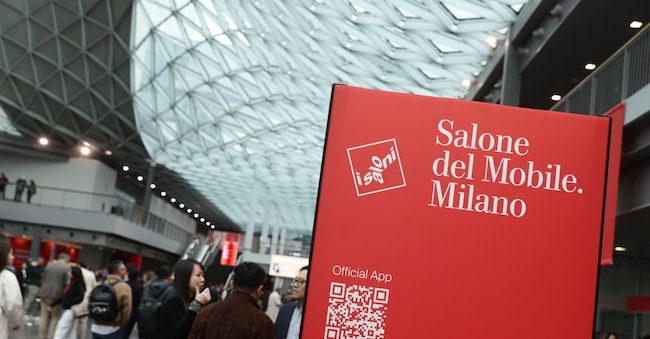
INAUGURAZIONE SALONE DEL MOBILE 2025 FIERA FIERE

4' min read

4' min read

Increasingly fierce global competition, frequent and widespread geopolitical tensions, and increasingly restrictive protectionist policies have forced Italian furniture companies to review their internationalisation strategies in recent years, investing more and more in highly dynamic markets - even if they are not always easy to tackle - and decisively focusing on a premium market positioning that allows Italian-made brands to differentiate themselves from growing Asian competition.

Luxury, 15% of the world furniture market

A recent study published by Csil on the high-end furniture market ('The World Market for High-End, Luxury & Design Furniture') reveals that this segment accounts for almost 15% of the world furniture market and is emerging as a strategic and dynamic driver within the global furniture industry, despite not being exempt from the impacts of international crises and tariffs.

Loading...

North America is confirmed as the largest market, thanks to the high concentration of 'high-spending' consumers, including more than 40% of global millionaires. Asia-Pacific and Europe follow in market size, while India and the Gulf States stand out as the fastest growing regions, driven by wealth concentration, urban development, ambitious real estate investments and evolving lifestyles.

Despite ongoing uncertainty, rapid transformation and geopolitical challenges, the high-end segment has demonstrated greater stability and independence from short-term fluctuations, such as trade shocks, and has been driven by long-term structural trends: the growth of high net worth individuals (nearly 60 million millionaires worldwide, with a 30 per cent growth in Asia-Pacific in the last five years), the urban concentration of wealth (the world's top ten cities are home to more than 15 per cent of the global ultra-rich individuals), and the evolution of consumer preferences towards design, exclusivity and bespoke furniture. These factors have favoured an expanding global customer base.

New Distribution Strategies

.

In this scenario, companies are rethinking their strategies. The global high-end furniture market consists of a fragmented and diversified competitive landscape comprising small artisan workshops and large global lifestyle brands, which seek to distinguish themselves in the market not only through their products or pricing policies, but above all through brand positioning, the values they represent, customer focus and distribution models.

In its study, Csil analysed the distribution strategies of the 45 leading global high-end furniture and design brands, selected on the basis of brand recognition and the presence of an established international distribution network, which includes flagship and monobrand stores as well as a widespread dealer network.

Brands such as Carl Hansen & Søn, Vitra, Fritz Hansen, Calligaris and Cassina currently rank among the leaders in terms of overall retail presence. While Carl Hansen & Søn and Vitra, however, focus mainly on dealer networks, the leading Italian brands (such as Cassina, Kartell, Molteni and Poltrona Frau) prefer to complement their multi-brand distribution with a growing number of mono-brand shops, following a strategy of global distribution and, at the same time, premium positioning.

In general, there is an increasing focus on geographic diversification, particularly towards high-growth regions. While mature markets such as Europe remain important (they account for almost half of all flagship or monobrand locations), they offer limited potential in the short term. In contrast, regions such as India, the Gulf States and South-East Asia are attracting increasing attention, especially in metropolitan areas, driven by growing wealthy consumer bases and architectural projects. Companies are responding by opening new showrooms, strengthening local distribution networks and investing in local partnerships.

Italian Brands and New Markets

.

Italian brands recorded robust growth in India, while European suppliers remain key players in the Gulf markets, where demand is driven by urban expansion, luxury tourism and economic diversification programmes. North America holds 15% of total flagship stores, confirming its relevance for Italian and Scandinavian brands, which are expanding in major US cities.

Large metropolises play a central role in the global high-end furniture scenario: global capitals such as New York, London, Paris, Milan and Tokyo remain key markets for luxury brands and count around 190 design flagship stores, which increasingly take on a role not only of sales, but above all of immersive experience. Brands such as Poliform, Minotti and B&B Italia have invested heavily in iconic showrooms located in central design districts, often collaborating with prominent architects to broaden the experiential impact.

Powerful emerging urban centres such as Dubai, Mumbai, Shanghai and Singapore are also rapidly gaining prominence. Fuelled by growing wealth and ambitious development projects, these cities are investing in luxury real estate, hotels and branded residences, making them prime targets for expansion, particularly in the contract and project sectors. The presence of flagship stores in these markets is expanding, but companies also rely significantly on local partners, joint ventures and project-based channels, especially for contract business.

Emerging design capitals in more mature markets - such as Los Angeles, Miami, Berlin, Seoul and Sao Paulo - play more focused roles: they are becoming hubs for art, culture and creative industries and attract a design-conscious niche clientele, representing ideal contexts for experimenting with new retail formats and designer collaborations.

Copyright reserved ©
Loading...

Brand connect

Loading...

Newsletter

Notizie e approfondimenti sugli avvenimenti politici, economici e finanziari.

Iscriviti