
Home and furniture grants: 26 billion worth of building work awaiting renewal
Plans are under consideration to retain the current structure of tax relief at 50 per cent for the main residence and 36 per cent for other properties. Furniture and household appliances are also set to retain their tax relief.

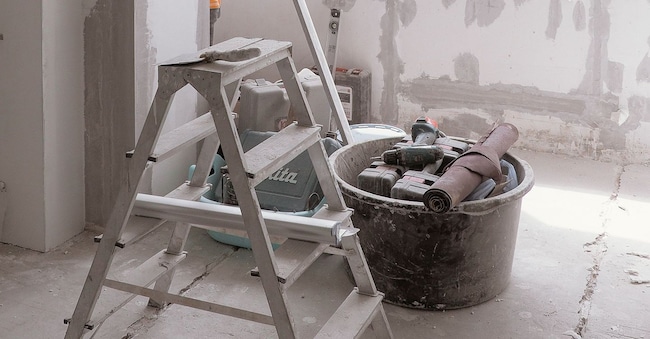
Standard renovation grant, eco-grant and earthquake-proofing grant for building works, and furniture grant for furnishings and household appliances. Among the measures set to be included in the forthcoming Budget Bill is also that relating to housing benefits. This is an extremely sensitive area due to its widespread impact: these tax relief schemes, which were first introduced as far back as the late 1990s, have over time become a cornerstone of household planning. And today, according to the report accompanying the 2025 budget, they involve measures totalling approximately 26 billion euros.
Work to be completed by the end of the year
The willingness to extend the current arrangements, with the most generous discounts now scrapped, starting from from the superbonus, was first signalled last spring by the Deputy Minister for the Economy, Maurizio Leo, whilst always keeping in mind the need to secure the necessary resources from the public budget. The advice for those planning works eligible for the scheme, therefore, remains that of the utmost caution: to avoid changes or cuts – however difficult this may be – it is best to carry out the works by the end of the year, so as not to take any risks. It should be borne in mind that the cash basis principle applies to this type of subsidy: to determine the tax regime to be applied, one does not look at the time the work is carried out but at the time the specific bank transfers are made.
Bonuses currently in play
To describe the options on the table in the budget, we need to start with the tax relief schemes currently in place. Following the reduction in the most generous tax relief schemes, such as the 75 per cent architectural barriers bonus (to be phased out by the end of 2025) and the superbonus (which is being gradually reduced until it is phased out), the range of available tax reliefs has been significantly simplified by the Meloni Government, with effect from 2025. The basic rate for the renovation bonus, eco-bonus and seismic bonus (which cover the majority of home improvement works) is 36 per cent. This level of discount rises to 50 per cent for those carrying out works on their main residence, over which they also hold a real right, such as ownership. Put simply, work on primary residences is subsidised at 50 per cent, whilst other work is subsidised at 36 per cent, until the end of this year.
From 2027, unless there are any changes, the tax relief for main residences will fall from 50 to 36 per cent, whilst that for second homes will fall from 36 to 30 per cent. From next year, however, the furniture bonus will expire; this currently stands at 50 per cent, with no distinction between primary and second homes, and a spending cap of 5,000 euros: unless changes are made, purchases of furniture and white goods will no longer be eligible for the scheme.
Not to mention that, when filing their tax returns, those with incomes in excess of 75,000 euros will also have to contend with a further reduction in the expenses eligible for deduction. And bearing in mind that, from 2028 until 2033, a further cut is already planned: the tax relief will fall to 30 per cent.


