

Home dialysis is available to just 10 per cent of patients: here’s why it benefits both patients and the National Health Service
A 5 per cent annual increase in the number of patients receiving home care would result in savings of close to 100 million euros over five years, but, above all, it would improve patients’ quality of life

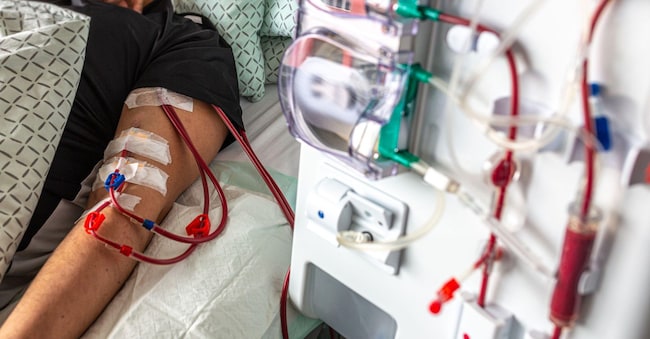
When kidney function fails, a transplant is the best possible treatment, but whilst waiting for one, patients are forced to undergo dialysis. In Italia, however, dialysis is characterised by a paradox: 90 per cent is carried out using the extracorporeal method, namely hospital haemodialysis (HD), and only 10 per cent using the peritoneal method (PD), which is typically carried out at home. We refer to this as a paradox because PD should be the first-line dialysis treatment, from both a clinical and an economic perspective.
Home dialysis for a select few
In fact, peritoneal dialysis is carried out at home and is better suited to the patient’s lifestyle, ensuring greater independence, as it is managed directly by the patient in 80 per cent of cases, or with the help of a carer in the event of a disability. However, to date, 37 per cent of Nephrology and Dialysis Units in Italia do not prescribe peritoneal dialysis, and 22 per cent of these units treat fewer than 10 patients. The result is that PD is used in fewer than 10 per cent of dialysis patients, despite its significant improvements in terms of efficacy and safety, which are also linked to the implementation of remote monitoring via telemedicine.
A paradigm shift
The Italian Society of Nephrology (SIN) is therefore promoting a paradigm shift in favour of peritoneal dialysis (PD), an approach that offers benefits for patients, healthcare expenditure and environmental sustainability. This method is, in fact, 43 per cent cheaper than haemodialysis, with lower energy consumption and less hospital waste.
In order to determine the potential cost to the Italian National Health Service and to society as a whole resulting from a gradual increase in the clinical use of peritoneal dialysis (PD) over haemodialysis in patients with end-stage chronic kidney disease, it has been estimated that the total annual healthcare and social costs for PD and HD are €24,142 and €42,231 respectively; therefore, a 5 per cent annual increase in the number of patients on PD would result in savings of close to 100 million euros over five years.
The aim of the SIN is to translate this scientific evidence into widespread clinical practice, breaking down the organisational and cultural barriers that still limit access to this treatment option: doubling the number of patients on peritoneal dialysis within five years is an ambitious but achievable goal and represents our concrete commitment to patients with chronic kidney disease.

