Facilities

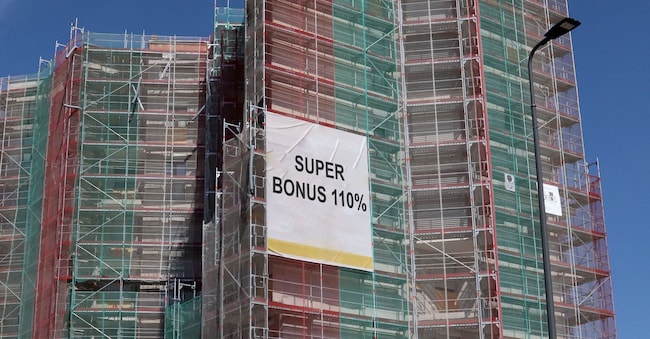
Home, on the superbonus shield to condominiums for IRS checks

In the tax decree, a substitute is coming to save owners from culpable liability for irregularities

by Giuseppe Latour and Giovanni Parente

3' min read

Translated by AI
Versione italiana

3' min read

Translated by AI
Versione italiana

A substitute tax to close one's accounts with the tax authorities. And avoid disputes with the Inland Revenue, effectively returning a portion of what was collected through credit or invoice discount.

The way out

The tax decree being prepared for next week will also contain a save condominiums rule, designed to free property owners from culpable responsibilities related to irregularities in the use of the maxi relief.

Loading...

A safe-conduct that aims to minimise litigation against ordinary citizens (who are considered to be ultimately responsible for the deduction), thus bringing the superbonus season to a close without too much fuss.

And it may not be the only mechanism of this kind: another rule, still being defined, may concern the claims of so-called general contractors. In this case, it is assumed that unduly received subsidies will be repaid, without interest and penalties.

Uncompleted construction sites and irregularities

Returning to apartment blocks, the most frequent problems for them are related to cases of uncompleted construction sites, irregularities in certifications and incorrect assessment of work progress.

In all these situations, a knock-on effect is already being triggered that, under the current rules, overwhelms citizens who, in good faith, gave the go-ahead to the works, hoping to take advantage of the positive momentum of public funding.

It is they, in fact, who are the last (weak) link in the responsibility for tax deductions and it is to them that the tax agency must necessarily turn.

Why you lose the facilitation

The most illustrative and frequent case is that ofunfinished works. One of the essential requirements of the superbonus, and of all house bonuses, is the material execution of the works for which the deduction is collected.

For the former 110%, the path leading to the improvement of two energy classes of the building had to be completed. Whoever does not complete the work loses the right to the deduction and is exposed to disputes by the Inland Revenue, which can retaliate against the beneficiaries of the subsidised work.

They demanded not only the amount of the tax credit but also penalties and interest. Leading to a hefty final bill.

Substitute tax proportional to benefit

Here is the hypothesis on which the executive is working. A sanatorium that, by paying a substitute tax proportional to the benefit irregularly received, would allow the tax authorities to be closed. Avoiding litigation with uncertain outcomes. Instead of risking paying 100, one would pay ten, closing the dispute. The rate of this substitute tax still remains to be assessed.

The other cases to be remedied

But there are also other cases to be remedied with this instrument. It is possible, for example, that the interventions do not coincide exactly with the content of the asseveration communicated to the Inland Revenue.

In situations of this kind for the client (i.e., the condominium) there is forfeiture of the bonus for lack of subjective and objective requirements. Many disputes are, likewise, arriving on one of the most problematic chapters in the application of the superbonus: the counting of materials delivered to the building site and not installed in the Sal. In order to meet the 110% deadline, these products were very often counted. It is precisely this method of calculation that is the subject of the recoveries.

The hypothesis spillover for general contractors

Then there is the chapter of what are commercially referred to as general contractors. In this case, the Inland Revenue Agency is, in a nutshell, contesting the companies that have acted as prime contractor in the superbonus works the benefits collected on the difference between what has been paid by the principal and what has been invoiced by the various subcontractors. A difference which, according to the Ance builders, coincides with the business profit for the main contractor but which, for some regional directorates of the Inland Revenue, is instead an added charge for the mere coordination of the contract.

In this case, too, the executive is working to avoid the explosion of a new strand of litigation. A strand that, moreover, could also involve several public participations that have worked with schemes of this type. The hypothesis, then, is to include in the decree, probably at the time of its conversion, a rule that will remedy these situations through the repayment of unduly received benefits, without penalties and interest.

The aspects to be refined

Even if, on this point, aspects remain to be refined. The companies, in fact, acted as prime contractors to facilitate the use of the superbonus and act as a single interface to the banks, using a scheme that they considered legitimate. It would now be economically indigestible for them to return part of what they earned. The case of those who committed abuses, however, is different.

Copyright reserved ©
Loading...

Brand connect

Loading...

Newsletter

Notizie e approfondimenti sugli avvenimenti politici, economici e finanziari.

Iscriviti