

Community homes and hospitals: in the North there are already five times as many as in the South
The EUR 3 billion investments envisaged by the NRP split the country in two again: out of 944 new facilities already in operation, only 123 in the South. For all of them there remains the knot of dropper services

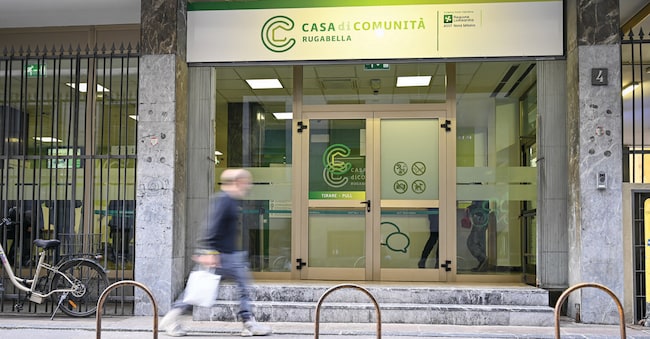
The great fault line that already divides the Italian healthcare system in two - between North and South - could widen even further due to the 'fault' of the NRP. In less than six months - on 30 June next - the new structures of the territorial healthcare system - homes and community hospitals - will reach the milestone set by Europe for the Pnrr investments, and the real risk is that a third of the country, the South, will once again find itself heavily behind.
This is stated by the latest Agenas monitoring data that Il Sole 24 Ore is able to anticipate and that date back to 31 December. Data that photograph this umpteenth split in the country, given that the North currently has about five times as many facilities as the South, and the risk is that the situation will not change even this summer when the line will be drawn on these investments worth a total of 3 billion. The numbers are merciless and speak for themselves: out of a total of 781 Community Hospitals open throughout the country with at least one active service - the maxi outpatient clinics that seven days a week are supposed to guarantee first aid in the area, easing the workload of emergency rooms - the North can count 454 open, compared to only 101 operating in the South and 226 in the Centre (which, however, concern only four regions: Marche, Lazio, Tuscany, and Umbria). It is worse with regard to the new Community Hospitals, the facilities with a mainly nursing traction that are supposed to assist chronic patients who need care and assistance but without resorting to the traditional hospital. Here the situation regarding the North-South divide is even more alarming: out of 163 Community Hospitals opened throughout Italia, there are 112 in the North compared to only 23 in the South and 28 in Central Italy. In practice, out of a total of 944 facilities, 566 are in the North and 124 in the South. This is a debacle, because what the experts are saying in a slightly hushed whisper is that if Italy is to reach the minimum target set by Europe for these facilities - 1038 Community Hospitals and 307 Community Hospitals to be activated by next summer - it will be thanks to the activations made in Central and Northern Italy.
Of course there is always extra time, because according to the national planning there are 1715 Community Hospitals to be opened, while the final target for Community Hospitals beyond June 2026 is 594 facilities. But what will be the final fate of these sites? The risk is that they will drag on for years, leaving a chunk of the country without new community health services for a long time. At the moment, leading the ranking of openings for Community Hospitals are Lombardy with 150 facilities, Emilia with 143, Lazio with 96, and Tuscany with 79. At the bottom are Bolzano and Basilicata with zero openings, only two in Abruzzo, Molise, and Calabria, and then three in Puglia. For community hospitals, activations are still few throughout Italia, but among the best performers are Veneto with 73 facilities, Lombardy with 30, Emilia with 24 and Tuscany with 17.
However, the numbers of openings do not tell the whole story. Because, as in the other reports published by Agenas, what clearly emerges is that these new facilities risk opening with few services available. In particular, in the Community Homes, citizens should find a 'medical presence' 24 hours a day, seven days a week (at least in the Huib homes), together with nurses (12 hours a day, seven days a week). With them also specialists such as the psychologist, speech therapist, physiotherapist, dietician, rehabilitation technician and social worker, but when necessary also the cardiologist or pulmonologist. In addition to medical examinations, community homes should also guarantee first diagnostic examinations such as an Ecg or spirometry and prevention such as vaccinations. But the reality at the moment is very different because on 31 December last year only 66 Community Homes had all the compulsory services provided for, which rises to 219 if we count those with active services with the exception of the medical and nursing presence. That's quite an absence.


