
Housing Plan approved by the Chamber of Deputies: updates on rent controls, foreign funding and support for civil servants
The Chamber of Deputies has approved the bill converting the decree, which is now set in stone

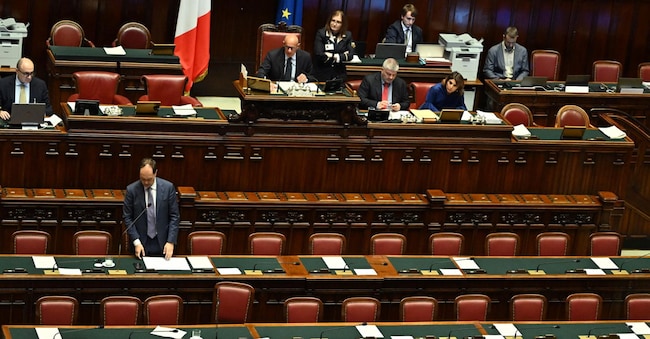
Housing Plan approved with 168 votes in favour of the confidence motion. The law converting the decree that launches the initiative to tackle the housing emergency has secured a vote of confidence in the Chamber of Deputies. This effectively marks the completion of the measure’s parliamentary journey; it is now in the final stages before receiving final approval but, at this stage, its passage is assured.
An end to the fast track for foreign funds
The final version of the decree incorporated a number of amendments. However, several measures anticipated by the market are missing from the final version. First and foremost, the fast-track procedure for funds from abroad has been scrapped: the most significant simplifications in the decree will no longer be reserved solely for such funds, although the one-billion threshold for obtaining the administrative fast track remains in place. This corrects an anomaly in the first version of the text, although there remains a substantial lack of simplifications for small and medium-sized projects.
Other news
This is not the only significant change introduced by the amendment. Access to rent-controlled properties, as regulated by the measure, is also being extended to civil servants: teachers, members of law enforcement agencies, and healthcare staff. Furthermore, local authorities are gaining a greater role in implementing the pillar dedicated to social housing: they will be eligible to receive funds earmarked for the regeneration of uninhabitable properties. A substantial package of resources (around 7 billion), partly comprising funds falling within the remit of local authorities (the 4.8 billion in urban regeneration funds).
Student accommodation
The fund for the rent of students living away from home will be replenished with 8.5 million in 2026. Resources will be allocated to the fund for university students to support those from households with an equivalent economic situation index of no more than 20,000 euros and who do not receive other public housing grants. The measure, supported by both the majority and the opposition, refers to a funding ceiling established in 2021.
Support measures for shops and hotels
Private developments intended for rent-controlled housing may provide for ‘the inclusion of a variety of uses, both residential and non-residential’. In such cases, the minimum percentage requirement of 70 per cent of social housing – which must be met to qualify for the simplifications set out in the decree – will be calculated exclusively on the residential component: that is, by comparing properties at market rates with those at controlled rents. Investments ‘intended for non-residential uses’ will be excluded from this calculation, the amendment states. It will be the agreement with the local authority, which forms the basis of the investment, that defines the scope of the residential component and, therefore, the figures used in the calculation.


