Proof

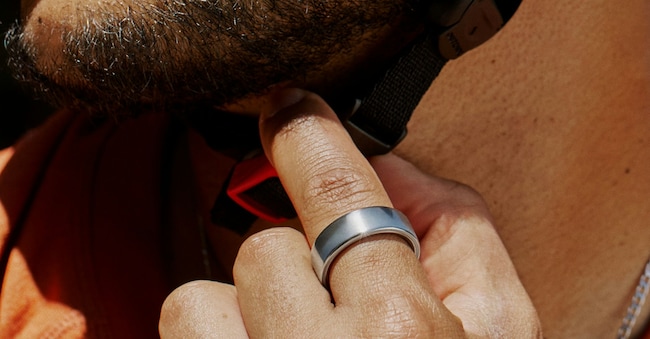
Oura Ring 4: the Finnish smart device dominating the US market

Oura's smart ring monitors health and sleep accurately, but price and political controversy complicate its global deployment.

by Biagio Simonetta

4' min read

Translated by AI
Versione italiana

4' min read

Translated by AI
Versione italiana

There is a smart ring, one of those capable of constantly monitoring certain vital parameters, that has created some debate in recent months. The company that produces it is theFinnish Oura, and the ring is known as the Oura Ring. It has been much discussed because this ring, whose performance is truly remarkable, has also ended up at the centre of political discussions.

Let's start by saying that when Oura presented its first smart ring through Kickstarter (in 2016): it seemed to be a product intended primarily for fitness enthusiasts and sportsmen.

Loading...

Ten years later, however,it has become a symbol of the growing convergence of technology, health and politics. Bipartisan politics, because in the United States it is celebrated by Trumpians, but it is also on the finger of Democrats such as Alexandria Ocasio-Cortez (in Italia it is worn daily by Matteo Renzi).

The Finnish company, founded in 2013, is now the leading player in the smart ring market in the US, where it controls about two-thirds of the industry.

Its valuation has grown rapidly in recent years, to over $10 billion.

A result that places it among the most valuable European start-ups. And which now sees it on the threshold of an Ipo that could arrive as early as this 2026.

We have been testing for two months the penultimate model produced, the Oura Ring 4 (the 5 is being released these days). And what we can say about the ring is that it is probably the most mature device in the smart ring market. Sure, it's not the most feature-rich. Nor is it the cheapest, but it is the one that offers the most convincing software ecosystem today.

The ring monitors: sleep, heart rate, body temperature, heart rate variability (HRV), physical activity and stress levels. It needs a few weeks to 'get to know you', then it becomes infallible.

The difference from many competitors is clearly evident in the application, which organises this data in a coherent manner and turns it into easily interpretable information.

In our opinion, the quality of sleep monitoring remains the main strength. In this respect, it must also be said that Oura has become one of the most studied wearables in academia in recent years.

A 2025 publication showed a sensitivity of over 94% in the identification of the phases of sleep and wakefulness, with results generally comparable to those obtained by actigraphy and, for some parameters, close to polysomnography, which is the clinical reference for the study of sleep.

On the heart rate and Hrv front, the results also appear solid.

On the hardware side,the fourth generation represents an evolution rather than a revolution. The internal sensors have been redesigned to improve comfort and the 'Smart Sensing' technology increases the number of detection paths available to find the best signal based on the position of the ring on the finger. The autonomy, generally between six and eight days, also remains among the best in its class.

Let's be clear: there are limits. The first is the price. Added to the initial cost of the ring is a monthly subscription required to access much of the advanced analysis. It is a choice that continues to divide users and is one of the main obstacles to the spread of the product.

The second limitation concerns sporting activity. Oura is primarily intended as a health and recovery monitoring tool. For those who practice sport intensively, devices such as Garmin or Apple Watch remain generally more comprehensive in collecting training-related data.

Also, if you play tennis (like the writer), it is never a good idea to wear a ring (at least not on your strong arm).

But as we said at the beginning, a broader debate has also developed around Oura concerning the future of digital health.

Oura and politics

In the United States, the subject of wearables has entered directly into the political debate. In 2025, the White House promoted an initiative to foster the integration of health data from apps and digital devices within the US health ecosystem.

The stated aim is to make it easier for patients, doctors and healthcare facilities to share data. Although Oura is not the focus of the project, the growing success of devices such as its ring is often cited as an example of the spread of continuous health monitoring.

At the same time, the company was involved in a controversy linked to relations with the US Department of Defence and with Palantir. The criticism arose after the announcement of collaborations aimed at the defence sector and fuelled fears about the possible handling of users' biometric data. Oura has repeatedly claimed that consumer customer data is not shared with Palantir and that programmes for the Department of Defence operate on separate infrastructures. To date, no evidence has emerged to indicate that private users' personal data are shared with Palantir or government agencies.

The issue, however, is significant because it shows howwearables are moving out of the fitness sphere and into that of public health, prevention and, inevitably, personal data management.

At any rate, the final assessment after two months is positive. Oura Ring 4 seemed to us to be one of the few consumer devices that manages to provide reliable information on sleep, recovery and general physiological state without requiring continuous user interaction. In a still young industry, it is probably the product that sets the benchmark for the category today.

Copyright reserved ©
Loading...

Brand connect

Loading...

Newsletter

Notizie e approfondimenti sugli avvenimenti politici, economici e finanziari.

Iscriviti