

Living longer is not enough: the real challenge is to live better
Ageing cannot be addressed only in health or economic terms: without relationships and dignity there is a risk of a sophisticated form of loneliness

We live in an extraordinary time. For the first time in human history, longevity is no longer just a biological fate or a statistical hope: it has become a scientific, social and ethical project. Neuroscience, regenerative medicine, epigenetics and artificial intelligence are radically transforming the way we understand ageing. But just as the possibilities of extending life are increasing, an even more decisive question is emerging: live longer for what? The real challenge today is not simply adding years to life, but adding life to years. This is the heart of the reflection animating the Vatican Longevity Summit, born in 2025 and now in its second edition, scheduled for 25 and 26 May 2026 in Rome. The Summit represents an original bridge between science, ethics and the humanistic vision of the person. Not a mere medical congress, but an international laboratory of thought on the future of the human being.
Advances in Science
In recent decades, scientific research has made impressive progress. Today we know that ageing is not a uniform and inevitable process as was once thought. Nutrition, exercise, mental health, social relationships, art, sleep quality and the environment profoundly influence the way we age. Added to this are the new frontiers of biotechnology: cellular reprogramming, precision medicine, predictive analysis through AI, the study of epigenetic mechanisms and senescent cells. Today, research is also studying the role of chronic inflammation, the microbiota, cellular stress and brain health in the ageing process. More and more evidence shows how longevity and quality of life depend on the interaction between biological, environmental, cognitive and social factors.
The risk of new inequalities
However, every scientific advance brings with it profound ethical questions. Who will have access to future longevity therapies? Do we risk creating new biological inequalities? What idea of the human being guides life extension research today? And above all: can we reduce longevity to a mere technical optimisation of the body?
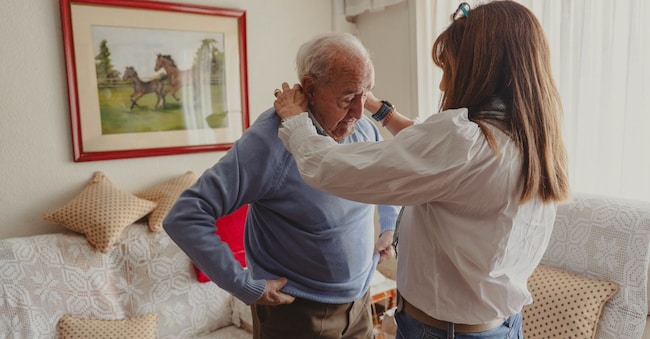
In fact, the decisive question concerns the quality of life. A society that lives longer but without relationships, without meaning, without mutual care or without dignity risks turning longevity into a sophisticated form of loneliness. This is why the issue of ageing cannot be addressed only in health or economic terms. It is an anthropological, cultural and even spiritual issue. The Vatican Longevity Summit stems precisely from this awareness: the person is not a biological machine to be repaired indefinitely, but a relational being, embodied, vulnerable and open to meaning. Longevity, then, cannot be thought of as an escape from fragility, but as a new opportunity to rethink solidarity, intergenerationality and the common good.
An alliance of knowledge
It is no coincidence that Nobel Prize winners, neuroscientists, geneticists, philosophers, doctors, artificial intelligence experts and exponents of the humanities are meeting around the Summit. Indeed, the great contemporary challenge requires an alliance of knowledge. Science offers us powerful tools for understanding and slowing down the processes of ageing; ethics, on the other hand, helps us orient these achievements towards a genuinely human vision of development.

