
How access to social media is changing for teenagers
From Meta to TikTok, big tech has introduced new features to make platforms safer. Mandatory age verification app coming to Europe: sites banned to minors armoured

3' min read
3' min read
For minors, social media have changed: more safeguards and limits. And, consequently, they are also for their parents. All the major platforms, Instagram and Tiktok above all (favoured by minors), restrict the accounts of minors and go to great lengths to see if the user is lying about their age. Tiktok and Instagram put a user's account between 17 and 13 years old 'private'. Under 13, they block it.
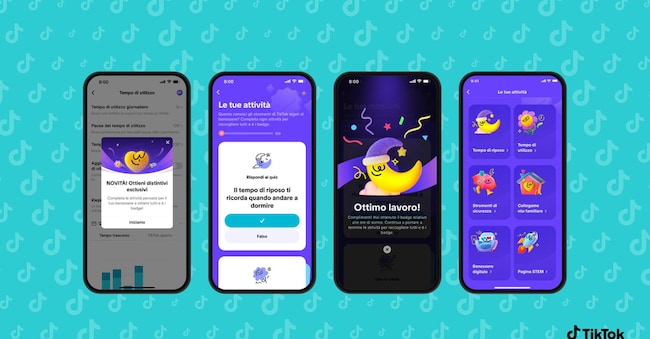
Tiktok alerts parents when a child reports content as inappropriate and, as of recently, also if they post a story or video visible to others. It has very fine parental control tools, as does Instagram, which also limits the interactions possible for a minor on the platform. It has refined algorithms not to show minors content that is dangerous for them (like on diets). Tiktok and Instagram also filter out offensive words and content from minors' accounts.
It will not go unnoticed that if the child manages to lie about his or her age, this whole castle collapses. Tiktok and Meta use AI to catch liars: they analyse account data, behaviour, profile photo, etc. Caught minors suffer restrictions or (if under 13) account bans. In case of mistakes, the user can certify his or her age by sending documents or video selfies. YouTube in July started to do something similar, but only on an experimental basis in the US.
Soon, for us Europeans, these systems to protect minors could apply to all platforms and sites with content that is dangerous for minors, porn, betting, with generally unsuitable content for young people, therefore also on some very 'free' social networks such as X and Discord. Europe wants this and Italy is in the front row to implement it, with an app that will arrive by the end of the summer on an experimental basis. The United Kingdom and France have already implemented similar filters. But the European Commission says it can also regulate on lower ages, for example to prevent children under 13 from accessing social networks.
But how will it work in the EU? The details of the app - somewhat hidden on the European Commission's website, on a page for developers - make some important points.

