
How social leasing can relaunch the electric car in Europe
In order to promote a wider demand for electric cars by fostering European production, the Socialists and Democrats (S&D) group in the European Parliament is strongly calling for the implementation of a European social leasing scheme

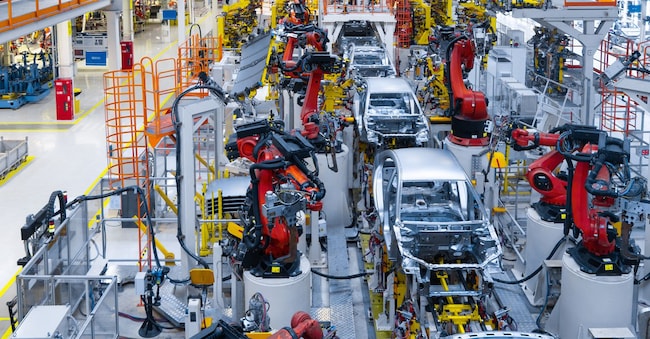
Car production has long been a cornerstone of Europe's economic strength. Today, however, thecar industry on the continent is under pressure, as the shrinking market as a result of demographic dynamics and new lifestyles is compounded by strong competition from Chinese manufacturers and rising energy costs. The European Union has also chosen, as early as 2018, to promote the decarbonisation of the sector by pointing European manufacturers to a demanding transition roadmap centred on the electric car, considering this technology the most effective
This choice has so far been matched, if only to a limited extent, by consumer preference (in a context that has also seen sales of cars with endothermic engines plummet). The electric cars put on the market by European manufacturers, with a few exceptions, have been characterised by their large size and high price, both for technological reasons - first-generation batteries required a lot of space - and for the manufacturers' quest for high profit margins, necessary to absorb the heavy investments required by the transition.
The fact is that the electric car has so far qualified as a luxury good aimed at a segment of the population with a high spending capacity, a status symbol or second family car oriented towards predominantly urban use. With consequently limited sales - also, it must be said, due to the limits of battery autonomy and the insufficient distribution of the recharging infrastructure - except for the offensive of the Chinese manufacturers able to place good quality cars on the market at much lower prices.
A fork in the road for automotive Europe
Europe's car industry is therefore at a crossroads, which clearly does not depend on the outcome of the debate that in the coming months will see the governments of the Member States and the political groups represented in Brussels confronting the European Commission on the possible revision of the regulation on CO2 emissions in the automotive sector; the leading role that electric traction is destined to play in the evolution of the market is not in question (if anything, it is a question of whether it should play an exclusive role in the future, or whether it can be flanked by other low-emission technologies). The crossroads concerns the competitiveness of the European car industry in this strategic segment, its ability to bring quality cars to the roads at affordable prices before Chinese manufacturers take over the whole market. As is clear, there is also an issue of the 'democratic' nature of this option, which is currently not accessible to large sections of the population and first and foremost to many
In her recent State of the Union speech, Commission President Von der Leyen announced a forthcoming 'affordable small car initiative', creating a new category of 'E-car', targeting cheap, light and clean vehicles. This is a clear sign of the times, but not enough. In order to try to overcome inequalities of access, and to promote a wider demand for electric cars, by fostering European production, the Socialists and Democrats (S&D) group in the European Parliament is therefore strongly calling for the implementation of a European social leasing scheme.

