We learn from our mistakes

How to organise an event in an exclusive location (but without damaging it)

The choice of organising corporate events in historical venues creates an exclusive atmosphere, but may entail risks to heritage conservation and public access

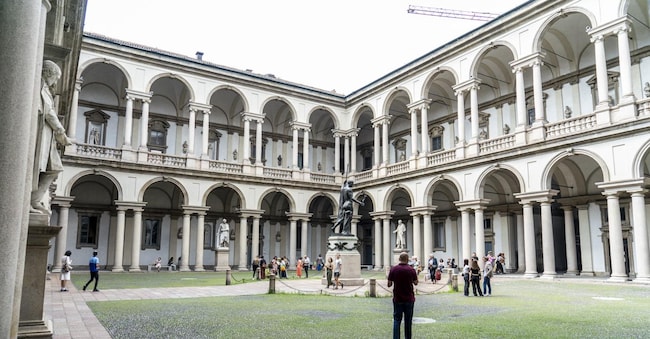
Cortile della pinacoteca di Brera (Imagoeconomica)

4' min read

4' min read

A few months ago, I came across a heated controversy involving, on the one hand, a well-known influencer and entrepreneur and, on the other, students and former students of the Brera Art Gallery, Milan city guides and some of her followers.

The reason for the debate, which developed on the social network pages of the direct interested party, was the decision to organise the launch of its brand on the Spanish market in one of the most important historical/artistic heritages of the city of Milan: DJ set in the courtyard, pizza delivery on white Vespas in the style of La Dolcevita, and dinner inside the Braidense National Library.

Loading...

The indignation stems above all from the use of the latter, a place of culture that is protected by a very strict regulation according to which no food or drink may be brought in and one is obliged to wear white gloves so as not to risk damaging the precious volumes stored inside and the ancient shelves on which they are placed.

The issue particularly attracted my attention because I was 'emotionally' involved on two, if you like opposite sides of the story: my training as an art historian and my current profession as Event Manager.

It was precisely the dual point of view that helped me to make some general reflections to understand and analyse the situation.

Finding out-of-the-ordinary, 'inviolate' and unusual locations is an increasingly frequent request in the briefs that arrive on our desks. How can one deny that a corporate event, be it a convention, a product launch, a workshop, a dinner, organised in an unusual location creates a greater appeal for the guests who attend?

The out-of-the-ordinary experience makes the event memorable and contributes to an atmosphere of exclusivity and distinction. This is beyond doubt!

The positive aspects...

In support of this thesis, we cannot fail to recognise some positive aspects that can be generated, such as the enhancement of the historical/artistic heritage, because through the participating public, a promotion of the asset is necessarily created (in some cases even unintentionally, e.g. by sharing photos on one's social networks) financial support, since the expected rental costs contribute to the maintenance of historical sites (considering the often limited public budgets) and, last but not least, the creation of cultural synergies between the historical site and the organising company, which, albeit in a limited time frame, becomes to all intents and purposes a modern-day 'patron'.

... and the negative ones

.

But as in all situations, alas, there are also cons that should not be underestimated and that can in some way negatively affect the whole affair.

On the one hand, there is the risk of damaging works of art, furniture and everything else that can be found in these places (with the movement of equipment, for example), or of distorting the essence of the place with more or less impactful set-ups and/or installations, or of altering the environmental conditions (humidity, for example) caused by the simultaneous presence of many people; on the other hand, it might not be fully appreciated to 'privatise' the space, effectively limiting access to the visiting public, thus conveying an image of excessive commercialisation and consequent lack of respect for the cultural value of the place.

In both cases, therefore, everyone might have their own reasons, more or less debatable.

I think there is no definitive answer, right or wrong, but looking at the situation from both points of view, I think a strict and careful selection of requests upstream (in my experience, already in place in some cases) would be useful and effective. Incidentally, I would add that this practice would make the sense of exclusivity behind the requests more tangible.

How to adjust

.

This obviously does not mean preferring one company over another on the basis of personal sympathy or towards the brand, but analysing the type of event objectively and scrupulously, making sure that the choice of venue can really give that desired added value by creating situations of connection between 'content and container'.

Underlying everything, it is essential to monitor the application of all possible forms of protection to avoid any risk or damage. Why, for example, not draw up and share standard guidelines to be scrupulously enforced without exceptions of any kind (in the case, for example, of set-ups, use of technical equipment, food and drink dispensing methods, etc.)? Or define usable spaces and impassable limits, spaces in which certain activities can be carried out to the exclusion of others? Or, again, accrediting exclusive suppliers (don't hold it against my colleagues) to whom to turn, thus avoiding the turnover of ever-changing personnel who might not be familiar with the constraints that distinguish these venues from others? Or, finally, why not organise a short training session for the staff who will have to manage the event in which they can explain how to behave and intervene if necessary?

In short, there are many possibilities to find common ground and, as our ancestors used to say, in medio stat virtus.

* Partner of Newton SpA

Copyright reserved ©
Loading...

Brand connect

Loading...

Newsletter

Notizie e approfondimenti sugli avvenimenti politici, economici e finanziari.

Iscriviti