
How to store food in the event of a blackout and which freezer to buy
A few simple rules make it possible to preserve as many supplies as possible in the event of a power failure. And to prevent this, the best performing and most insulated appliances should be chosen

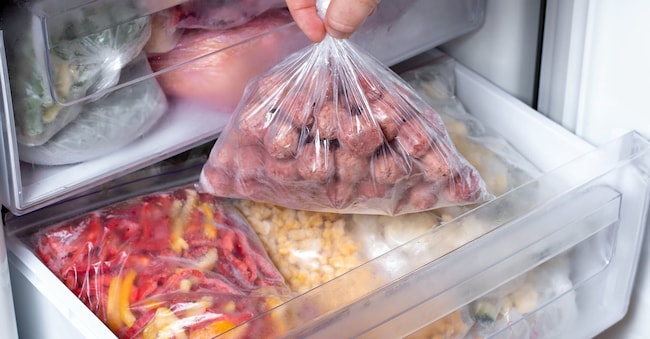
4' min read
4' min read
The maxi Spanish blackout could happen again - as experts warn - albeit in lesser ways and proportions. Climate change with violent thunderstorms, increasingly frequent energy overloads or, in some cases, sabotage by hackers can in fact 'stress' electricity grids.
How to behave during prolonged power cuts for storing food in the fridge and freezer? There are three basic points to consider: how to behave during the blackout, what to do with food afterwards. And then the third, which would actually come first because it is a preventive action: what to know before buying to choose appliances that can save all - or almost all - of your supplies.
The 5 rules during the blackout
.1 -Read the instructions: the manufacturer generally provides information on what to do in an emergency.
2 -Don't open that... door! The loss of cold air raises the internal temperature of the fridge and freezer by several degrees, decreasing the shelf life of food.
3 - Do not remove food that you think can stay out of the fridge, because only a good filling of the space in the fridge keeps the temperature constant for a long time.
4 - in the freezer at least one day's safety. The average freezer will preserve food for at least 24 hours as long as it is of recent technology. The best ones, the well ones, go as far as 50 hours of optimum temperature preservation. The temperature inside the fridge should not exceed 6 degrees, so the fridge - as long as it is of recent manufacture and therefore well insulated - keeps food for at least 7 hours. Class A appliances (according to the new energy label, thus equivalent to the old A++) can do more. If the interruption exceeds six hours, the foods at risk are obviously those in the fridge such as milk, dairy products and soft cheeses, cream and cream-based desserts, ice cream and baby food. Beware, however, that a high ambient temperature such as in summer cuts the theoretical storage time by a few hours.

