
Volkswagen, 44 models to defend market share in China
Ceo and Head of China relaunch 'in China, for China' strategy. Six world premieres and five Chinese premieres at the Beijing Motor Show
4' min read
Le ultime da Radiocor
***F2i: Cdp Equity verso ingresso con il 10% in 2i Aeroporti
Wall Street: apertura contrastata tra pressioni inflazione e Trump in Cina
*** Giorgetti: serrato dialogo con Ue su misure caro-energia, vera priorita'
4' min read
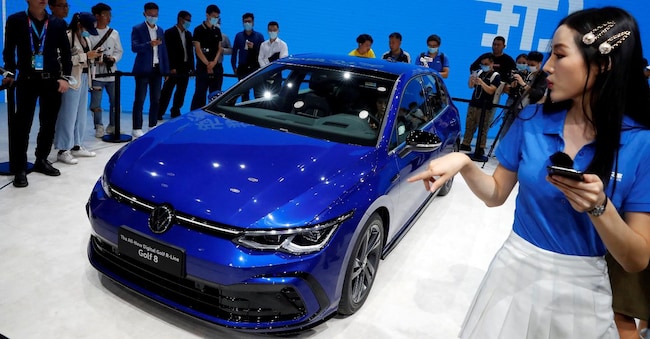
The Volkswagen Group, which includes among its 10 brands Skoda and Cupra but also Audi and Porsche, launched a new offensive in China with no less than 44 models between cars and motorbikes (Ducati) at Auto China 2024, the Beijing Motor Show. These include six world premieres and five dedicated to the Dragon market, as well as aconcept car designed for the tastes of the home market, the gran turismo ID.Code, ready for fully automated Level 4 driving. Too much of a hurry? No. Already today, according to a McKinsey report, 64 per cent of Chinese consumers looking to buy an electric car consider Level 3 'highly automated' driving absolutely essential in a premium car. Also debuting is the ID.UX sub-brand, pure electrics with technologies focused on young customers. The ID. family will grow to a total of 16 models by 2030. And among them, five electric ID.UX.
It was also China Capital Market Day and the CEO, Oliver Blume, described China to investors as the company's 'second home'. "We focus on the expectations of our Chinese customers and accelerating the time-to-market of our products. At the same time, we are pushing pioneering technologies, increasing cost efficiency and strengthening local partnerships,' he explained. It is all part of Volkswagen's 'in China, for China' strategy. The group crosses the 40-year mark this year in China, where VW boasts 39 plants with 90,000 employees (number 1 among European players) and 50 million customers.
Wolfsburg is aiming to keep its market share in China more or less stable until the end of the decade, said Ralf Brandstaetter, a Volkswagen board member and head of the German carmaker's activities in China. The bet is that heavy investment in the country will sustain sales despite the raging price war with local rivals, especially on the electric vehicle side.
One of the most important arrows in the quiver of the German giant, the world's second largest manufacturer after Toyota of Japan, will be a 40% cost reduction with theChina Electrical Architecture (Cea). This is a key aspect of achieving cost parity with local competitors. A philosophy also implemented thanks to the partnership with Chinese manufacturer Xpeng, with whom VW will produce two full-electric models by 2026. Cea is the evolution of the Edward platform used for the Xpeng G9 suv.
The targets, including Volkswagen's ambition to capture a share of around 15 per cent of the Chinese car market in 2030 compared to 14.5 per cent last year, define the challenges facing the leading European carmaker in the world's largest car market (26 million vehicles sold in 2023).


