Go East!

How Western companies need to reinvent retail in China

Why China is no longer consuming as it used to | 4. Chinese consumers are evolving rapidly, prioritising experiences and meaning over material possessions, forcing foreign companies to radically rethink their marketing and retail strategies

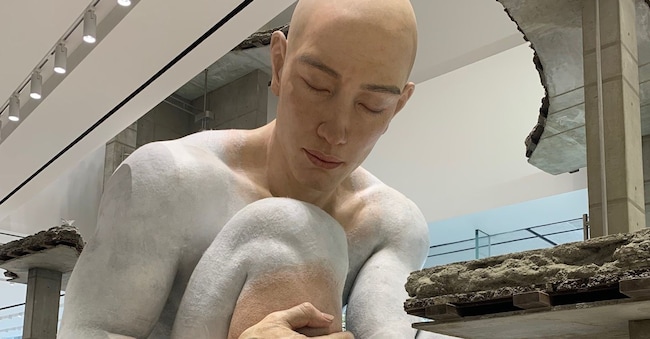
Haus Nowhere a Shenzen (foto di Alfonso Emanuele de León)

5' min read

Translated by AI
Versione italiana

5' min read

Translated by AI
Versione italiana

We conclude this mini-series on the reasons behind the slowdown in consumption in China with one final challenge – the least obvious but perhaps the most insidious of the four.

In fact, it is not only young Chinese people are no longer willing to sacrifice their lives on the altar of consumerism; not only do they buy, but they buy more and more at Chinese brands; not only is the Chinese government pushing for less ostentatious consumerism; but also, and above all, consumers now prefer to invest in experiences rather than buying material goods. This poses quite a problem for us Western companies in China.

Loading...

To understand this challenge, we must first take a small conceptual step back.

As we outlined in the first instalment of this column some time ago, global consumers in every country do not operate in a vacuum, but evolve along a predictable and universal trajectory, closely linked to the growth of individual well-being and per capita GDP. This ‘compass’ reminds us that every market goes through four major phases:

1. Essential consumption: where annual per capita GDP is below $5,000, consumption is dominated by pure functionality and a subsistence economy;

2. As soon as one exceeds $5,000 and begins tentatively to enter the middle class, the Show-off style of consumption comes into play: a form of ostentation in which the eye-catching logo acts as a social passport for the newly formed middle class;

3. Once annual per capita GDP exceeds $15,000, people adopt a rationally divergent lifestyle, in which they learn the art of selectivity and mix-and-match;

4. And finally, in the West, once we have surpassed the $30,000 mark, we have reached experiential consumption, the stage at which the possession of an object gives way to the search for meaning, intangible well-being and a profound narrative of identity.

No country can skip these stages: this is a psychological as well as an economic process.

However, China is travelling along this curve at a much faster pace than other countries: whilst it took the mature European and American markets over thirty years to make the complete transition from the ‘Show-off’ stage to the maturity of the ‘Experiential’ era, China has undergone this exact same transition at supersonic speed, compressing it into less than a decade.

Loading...

Let’s look at a few examples of how Chinese consumer behaviour is already entering the experiential phase.

The first is the decline of ‘suitcases on wheels’ in Hong Kong: until a few years ago, the backbone of Hong Kong’s luxury retail sector was fuelled by cross-border tourism from mainland China. The archetype was the consumer travelling with enormous empty suitcases in tow, with the sole aim of filling them with watches, jewellery and designer leather goods to be displayed as social trophies upon their return. I still remember, during my time in Hong Kong, leaving the office on Canton Road itself and having to literally ‘swim’ through the hordes of shoppers from mainland China with trolleys crammed full of purchases.

Today, that form of tourism has changed fundamentally. New Chinese travellers come to Hong Kong not to stock up on goods, but to seek out niche boutique hotels in Sheung Wan, visit the art galleries in the West Kowloon district (such as the M+ museum), dine in avant-garde restaurants or unearth hard-to-find capsule collections. Shopping is no longer the purpose of the trip, but rather a memento of the experience.

Another example is the proliferation in China of designer hospitality: the heavyweights of the luxury sector have realised that the quality of a product’s craftsmanship is no longer enough to justify its price. In Shanghai, Chengdu and Beijing, we are witnessing a veritable rush to open cafés, tea rooms and haute cuisine restaurants bearing the names of fashion brands. Examples such as Louis Vuitton’s The Hall restaurant in Chengdu (integrated within Taikoo Li, a restored historic complex), Maison Margiela’s cafés or Prada’s experiential pop-ups demonstrate this new recruitment strategy. The brand no longer sells just a handbag: it becomes part of the consumer’s daily ‘me-time’, selling them the time, the atmosphere and the memory of an experience.

Obviously, this shift in consumption towards experiences currently concerns the very top of China’s socio-economic pyramid. China remains a deeply materialistic and consumerist society, not least because there are sections of the population who are only now entering the middle class; therefore, there is still a very strong reservoir of consumerism to be tapped into: tens of millions of consumers in Tier 3, 4 and 5 cities who are only now beginning to experience a certain standard of living, fuelling a trend of classic materialism and old-fashioned ‘show-off’ behaviour that companies can and must still capitalise on.

These two diametrically opposed forces coexist and, in a way, make it more difficult to interpret the current slowdown in the Chinese economy. But the trajectory and its pace are clear; it is merely a matter of time.

For Italian and Western companies, this scenario calls for a radical overhaul of their go-to-market strategies. Traditional marketing, focused exclusively on brand visibility and widespread distribution, is now insufficient. In particular, the retail sector is taking on a fundamental role, evolving from a purely logistical function into an experiential theatre. In China, more than anywhere else in the world, the physical shop has ceased to be a mere display space for collecting goods. It must transform itself into a hyper-immersive theatrical experience.

My favourite example – perhaps the most disruptive retail format in the world – is the Haus Nowhere by the Korean eyewear brand Gentle Monster in Shenzhen: immense spaces dominated by self-moving robotic installations, contemporary art sculptures and conceptual pathways where the product (the glasses) is almost a secondary detail. The consumer does not enter (after queuing for a long time, as if it were an installation at the Expo or the Salone del Mobile) to buy an accessory, but to immerse themselves in an aesthetic. So is it a shop or a museum?

At the same time, retail and the shopping experience must be designed to generate content for posting on Xiaohongshu (the social media platform we refer to as Little Red Book or RedNote): in the mind of the Chinese consumer, the act of purchasing is only complete through social validation from their digital community. If a space does not allow for the creation of visually striking content, then for the consumer, that space does not exist.

The conclusion is that whilst part of China still guarantees sales volumes thanks to the lingering influence of traditional consumerism, the brand’s positioning and future relevance increasingly depend on its ability to deliver experiences to the consumer – in China just as much as here. Anyone who persists in managing the Chinese market using the quantitative approaches of the 1990s or 2000s – based on the idea that simply exporting a Western logo is enough to generate profits – is bound to be seen as a relic of globalisation, quickly replaced by home-grown Chinese brands that know how to build these ‘experience-driven machines’ in real time.

For Western brands seeking to protect their profit margins and brand equity whilst riding the wave of success, the shift towards experience represents the most complex challenge, coming on top of the other three transformations covered in this mini-series of articles.

*Partner at FA Hong Kong Consulting

Copyright reserved ©
Loading...

Brand connect

Loading...

Newsletter

Notizie e approfondimenti sugli avvenimenti politici, economici e finanziari.

Iscriviti