Packaged sweets

Ice cream, production at 1.8 billion and consumption at 2 kg per head per year

Tasting at home accounts for 70 per cent of the total: tubs account for 71 per cent of preferences, biscuits for 63 per cent and ice cream cakes for 58 per cent, while outside the home the classic cones and cups hold out

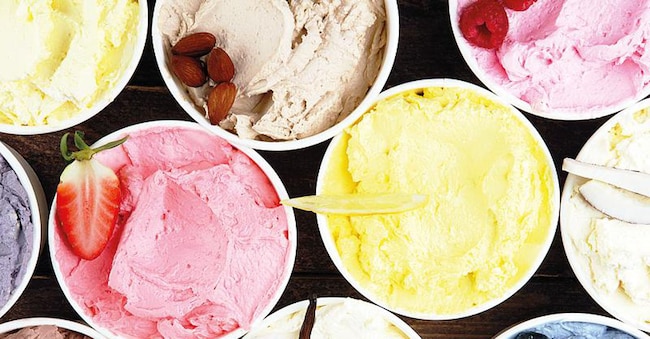
by Maria Teresa Manuelli

4' min read

4' min read

The packaged ice cream market in Italy confirms its solidity with numbers that testify to a healthy sector. In 2024 the national production reached 166,377 tons for a value of almost 1.84 billion euro, according to data from Unione Italiana Food. Per capita consumption stood at 2 kg per year, while total sales in the period January-December 2024 reached 3.7 billion portions, showing substantial stability compared to the previous year.

Three manufacturers in Europe

.

The economic importance of the sector is even greater considering the capillary distribution network that involves over one hundred thousand bars distributed throughout the country. But the geography of Italian ice cream tells a story of excellence that goes far beyond national borders.

Loading...

It is no coincidence that the Belpaese has won the European record for the value of industrial production of ice cream, placing third place by volume behind Germany and France, as certified by Eurostat 2023 data. Exports play their part with 95,348 tons that crossed national borders for a counter-value of 388 million euros, according to processing by Unione Italiana Food on Istat data. Europe remains the favourite backyard, absorbing 65% of exports, but there is no lack of surprises overseas with the United States, together with the United Kingdom, at the top of the destination ranking, followed by Germany, Spain and France.

More consumption in the family and even in winter

But when and how much ice cream do Italians consume? The AstraRicerche research for Igi reveals a love that grows over time: 23.2% of those interviewed admit to having increased consumption in the last five years, with peaks of 36% among young males aged 18 to 34. During the summer, two out of three Italians do not give up at least one ice cream a week, while 40.7% consume three or more.

And beware: it is no longer a summer-only pleasure, as consumption continues into the other seasons as well. Certainly Covid has changed the game, shifting the centre of gravity towards domestic consumption, which now accounts for 70.8% of the total.

Home is the realm of tubs (71% of preferences), biscuit ice creams (63%) and ice cream cakes (58%), while outside the home the classic cones and cups resist. The future promises to be even sweeter: 30.2% of those surveyed expect to further increase consumption in the next three years.

Partnerships with other sectors

.

An important sector that has led a multinational of the calibre ofUnilever to separate the ice cream business (Magnum, Ben&Jerry, Cornetto, Yasso), which in 2024 had generated 8.3 billion in revenue, by creating The Magnum Ice Cream Company with plans to list it in Amsterdam, London and New York within the year.

On the innovation front, the sector is churning out novelties at a rapid pace. Parmalat is playing ahead by launching in May 2025 Gelato da Bere, a drink that turns ice cream into a ready-to-drink liquid format. A 250 ml bottle, three flavours - Cream, Cream and Strawberry, and Kiss - and the promise to take the pleasure of ice cream everywhere, from the fridge at home to the office desk.

On the flavour side, collaborations between historic brands are reshaping the market. Sammontana and Plasmon have joined forces for an ice cream that tastes like childhood, available both in stick format for large-scale distribution and loose for professional ice cream parlours. Valsoia consolidates its leadership in vegetable products (over 75% share according to NIQ) with three new references that focus on zero added sugar and only 102 kcal per cup. Strategic partnerships multiply the opportunities: Tonitto 1939 continues its collaboration with Bauli for Panmoro and Pistachio Croissant ice creams, while the new Galatine ice cream born from the alliance with Sperlari promises to replicate in an ice cream version the success of the famous candy with Italian milk, low-fat yoghurt and honey.
These collaborations represent an expansion strategy for both companies involved. As Fabio Di Giammarco, managing director of Bauli, emphasised: 'The aim is to expand the brand also in other food sectors and the frozen world, in particular ice cream, which from various researches is in line with our investments and strategy'.

The new proposals

.

Tradition finds new expressions in the Anniversary Hazelnut of La Preferita (Comprital brand), celebrating 70 years of history with hazelnuts from Piedmont's Alta Langa region subjected to an artisanal process involving natural sun-drying and quick roasting to preserve every aromatic nuance. Leone 1857 plays the cocktail card with the new Mojito and Bellini sorbets, gluten-free and in collaboration with Cascina Biraga, enriching a range that already includes creative flavours such as Violetta and Spritz.

Success also for Lec, the brand born from the meeting between Formula 1 driver Charles Leclerc and experts Federico Grom, Guido Martinetti and Nicolas Todt, which in its first year of life achieved 3 million euro turnover, 500 thousand cans sold and 25% of sales already abroad. The 2025 target is to reach one million units sold, riding the expansion into the UK and new European markets.

A sector that demonstrates how innovation can be born as much from technology as from creativity, transforming each launch into a new opportunity for pleasure for increasingly demanding consumers.

Copyright reserved ©
Loading...

Brand connect

Loading...

Newsletter

Notizie e approfondimenti sugli avvenimenti politici, economici e finanziari.

Iscriviti